

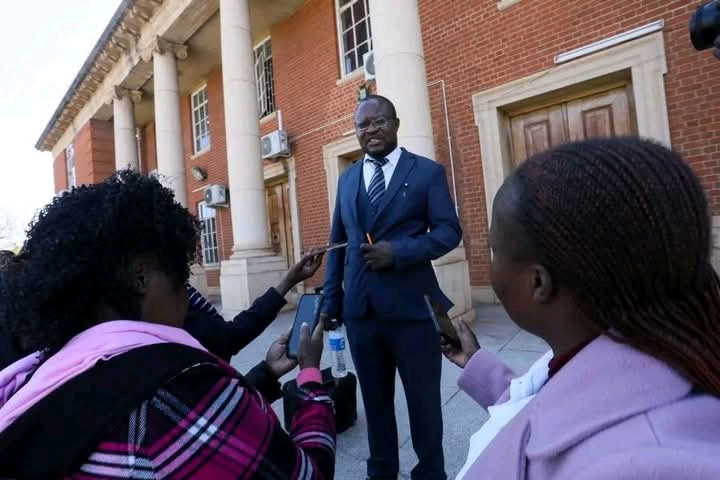
ConCourt to Deliver Judgment on Petauke Central Seat Dispute
The Constitutional Court of Zambia is scheduled to deliver judgment on Thursday, July 17, 2025, in a case challenging the decision to declare the Petauke Central parliamentary seat vacant.
The case was brought before the court by Isaac Mwanza, Executive Director of the Zambian Civil Liberties Union, who sued the Attorney General, Speaker of the National Assembly, and the Electoral Commission of Zambia (ECZ). Mwanza argues that the National Assembly exceeded its authority by declaring the seat vacant a role he says is reserved for the judiciary.
The seat was declared vacant on the grounds of a breach of the Code of Conduct, as outlined under Article 72(2)(c) of the Zambian Constitution. However, Mwanza contends that only a judicial tribunal appointed by the Chief Justice or a court of law can determine such a breach.
Citing the Chishimba Kambwili case, Mwanza argues that the Speaker of the National Assembly, Nelly Mutti, acted outside her constitutional mandate by assuming judicial powers. In that earlier case, the court criticized similar actions by a previous Speaker.
In response, the Attorney General and the Speaker defended their decision, saying the Member of Parliament violated the 2024 Standing Orders of the National Assembly, which they argue constitute the prescribed Code of Conduct. The ECZ stated that it merely acted upon notification of the vacancy and played no role in the decision to declare the seat vacant.
The court is expected to address two critical questions: Did Parliament overstep its constitutional role, and does Article 72(2)(c) refer to the Standing Orders or the Parliamentary and Ministerial Code of Conduct Act?
Mwanza is seeking a declaration that the actions of the National Assembly were unconstitutional and illegal, citing Article 72(2)(c) and Article 119 of the Constitution, as well as provisions of the Parliamentary and Ministerial Code of Conduct Act and the Electoral Process Act.
The outcome of the case is expected to set an important legal precedent regarding the separation of powers and the proper process for disciplining Members of Parliament.
© Kumwesu Media | July 15, 2025
No comments.