

Five things Trump should know about Liberia after he praised leader's
'good English'
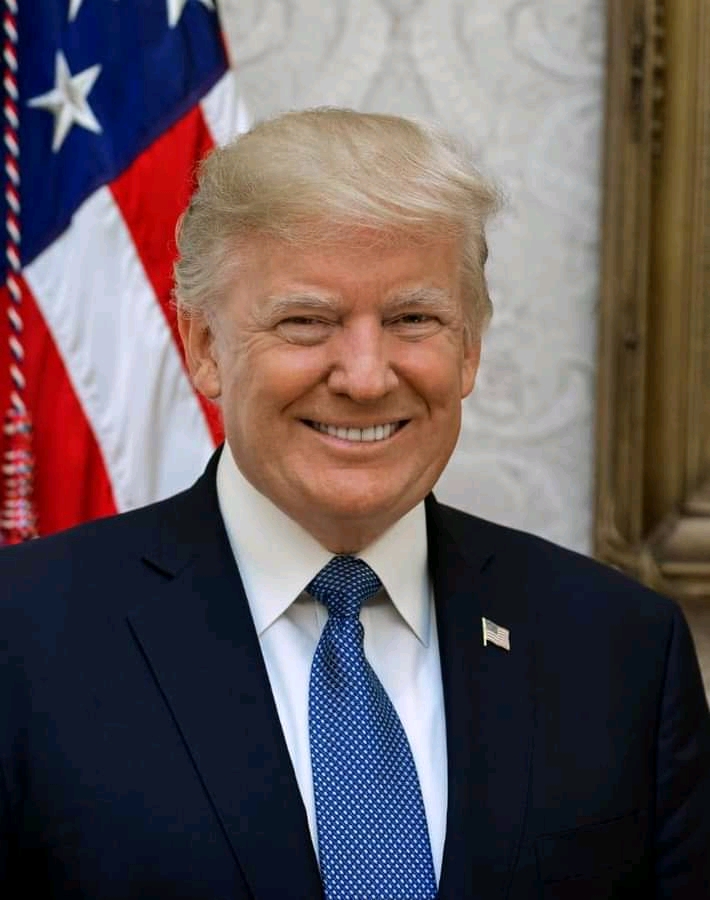
US President Donald Trump has praised Liberian President Joseph
Boakai for speaking “good English” and asked him where he went
to school.
What Trump might have missed is that Liberia shares a unique
and long-standing connection with the US.
English is the country’s official language and many Liberians
speak with an American accent because of those historical ties
to the US.
It may have been this accent that Trump picked up on.
Here are five things to know about the West African country:
1: Founded by freed slaves
Liberia was founded by freed African-American slaves in 1822
before declaring independence in 1847.
Thousands of black Americans and liberated Africans – rescued
from transatlantic slave ships – settled in Liberia during the
colonial era.
Former US President Abraham Lincoln officially declared
Liberia’s independence in 1862 but the country retained a lot
of US heritage and it remained in the American “sphere of
influence” during the colonial period.
Due to this integration, Liberian culture, landmarks and
institutions have a strong African-American influence.
Ten of Liberia’s 26 presidents were born in the US.
The descendants of these freed slaves, known as
Americo-Liberians, dominated the country for more than 100
years.
This was resented by some indigenous Liberians and the last
president from that community, William Tolbert, was overthrown
and killed in a coup in 1980.
They account for about a quarter of the population, according
to the Britannica website, which says more than two dozen
languages are spoken in the country.
President Boakai is from the Kissi ethnic group and so would
have spoken that as his mother tongue, before learning English
at school.
2: The capital is named after a former US president
Liberia’s capital, Monrovia, was named in honour of America’s
fifth President, James Monroe, who was a strong supporter of
the American Colonization Society (ACS).
The ACS was the organisation responsible for resettling freed
African-Americans in West Africa – which eventually led to the
founding of Liberia.
Not surprisingly the early architecture of the city was largely
influenced by American-style buildings.
Many streets in Monrovia are named after colonial American
figures, reflecting the city’s founding and historical ties to
the US.
The city’s main hospital is called the John F Kennedy Medical
Center (JFKMC), named after the former US president.
3: Nearly identical flags
The flag of Liberia closely resembles the American flag. It
features 11 alternating red and white stripes and a blue square
with a single white star.
The white star symbolises Liberia as the first independent
republic in Africa.
The US flag, in comparison, has 13 stripes representing the
original 13 colonies and 50 stars, one for each state.
The Liberian flag was designed by seven black women – all born
in America.
4: Ex-president’s son plays for US football team
Timothy Weah, the son of Liberia’s former President George
Weah, is an American professional soccer player who plays for
Italian football club Juventus as well as the US national team.
The 25-year-old forward was born in the US but began his
professional career with Paris St-Germain in France, where he
won the Ligue 1 title before moving on loan to the Scottish
team, Celtic.
His father, George, is a Liberian football legend who won the
Ballon d’Or in 1995 while playing for Juventus’s Italian rivals
AC Milan. He is the only African winner of this award – and
went on to be elected president in 2018.
5: Former president won the Nobel Peace Prize
Liberia produced Africa’s first elected female president, Ellen
Johnson Sirleaf.
She was elected in 2005, two years after the nation’s bloody
civil war ended, and served as president until 2018.
Johnson Sirleaf has a strong American background as she studied
at Madison Business College and later went to Harvard
University where she graduated as an economist.
She has received worldwide recognition and accolades for
maintaining peace during her administration.
Her story is pitted with remarkable feats of defiance and
courage.
In 2011, along with Leymah Gbowee and Tawakkul Karmān, she won
the Nobel Prize for Peace for her efforts to further women’s
rights.
In 2016, Forbes listed her among the most powerful women in the
world.
What do Liberians make of Trump’s comments?
Foreign Minister Sara Beysolow Nyanti denied it was an awkward
moment, saying there was a “lack of understanding” around the
world about the languages people speak in Africa, which she
described as a “multi-lingual continent”.
“Liberia happens to have the American-English intonation and I
believe President Trump heard something familiar in the way
President Boakai spoke, which is different from the way others
speak on the continent,” she told the BBC’s Newsday programme.
“We were not offended at all,” she said, adding that away from
the TV cameras, there was a discussion of the two countries’
shared history.
But there was a mixed reaction among other Liberians.
Accountant Joseph Manley, 40, told the BBC that Trump should
have been properly briefed before meeting Liberia’s leader.
“Liberia has always been an English-speaking country. Our
president a country with a rich educational
tradition.”
For human resources professional Henrietta Peter-Mogballah, the
US president’s surprise at Boakai’s eloquence reflects a
broader problem about global ignorance with regard to African
nations and its peoples.
“From travel experiences and observations, most citizens of
other nations outside Africa do not know a lot about African
countries,” she said. “The few that know a little, their minds
are clouded by narratives of war, poverty, and lack of
education.”
However, lawyer and politician Kanio Gbala agreed with the
foreign minister that there no insult was meant.
“I believe President Trump’s remark was a genuine compliment on
President Boakai’s command of English,” he told the BBC. “There
is no evidence of sarcasm. Reading it as disrespectful may
reflect political agendas.”