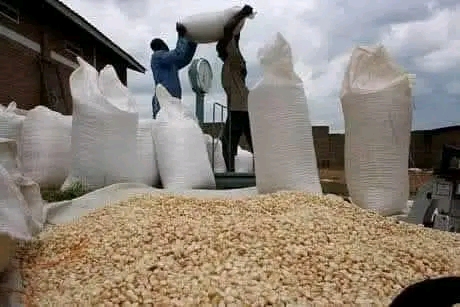
Food Security Paradox: Zambia Records Bumper Harvest but 41 Districts Face Hunger Threat
Zambia has once again found itself caught in a troubling paradox: while the nation boasts of a bumper maize harvest and continues to export mealie meal to neighboring countries, at least 41 districts are projected to face food insecurity during the coming rainy season.
The Disaster Management and Mitigation Unit (DMMU) has confirmed that communities in flood-prone and valley areas remain highly vulnerable. National Coordinator Norman Chipakupaku disclosed that DMMU has partnered with the Zambia Air Force (ZAF) to conduct aerial surveys across Western, North-Western, Southern, and parts of Eastern Province to guide relief distribution.
At first glance, this preparedness signals a proactive approach. However, the underlying contradiction raises questions about Zambia’s food security management and policy priorities. How can a country with surplus maize still leave millions at risk of hunger?
Experts have long warned that bumper harvests on paper do not necessarily translate into food security on the ground. Structural issues — from weak storage and transportation systems to localized climate shocks such as floods and droughts — often erode the benefits of national surpluses. Rural communities in valleys and wetlands are particularly exposed to both poor accessibility and recurring natural disasters.
Chipakupaku assured the public that DMMU is ready for any eventualities, further revealing that chlorine has already been procured to prevent cholera outbreaks, though Mpulungu has already recorded active cases. He insisted the rest of the country remains safe for now.
But with climate change intensifying rainfall patterns and flooding, the DMMU’s assurances face a real test. Moreover, the decision to continue maize exports while vulnerable districts brace for food insecurity could amplify public frustration — especially in a year when the price of mealie meal has already hit record highs.
Analysts argue that Zambia’s food security challenge is not merely about harvest volumes but about distribution, equity, and resilience. Unless deliberate measures are taken to strengthen local safety nets and prioritize vulnerable communities, the bumper harvest narrative risks masking a deeper crisis.
The DMMU’s aerial surveys and preparedness steps are commendable, but the real measure of success will be whether families in the 41 threatened districts can access affordable and adequate food between now and the next harvest season.
For now, the message is clear: Zambia may be feeding its neighbors, but it must not forget its own.
©️ KUMWESU | September 6, 2025