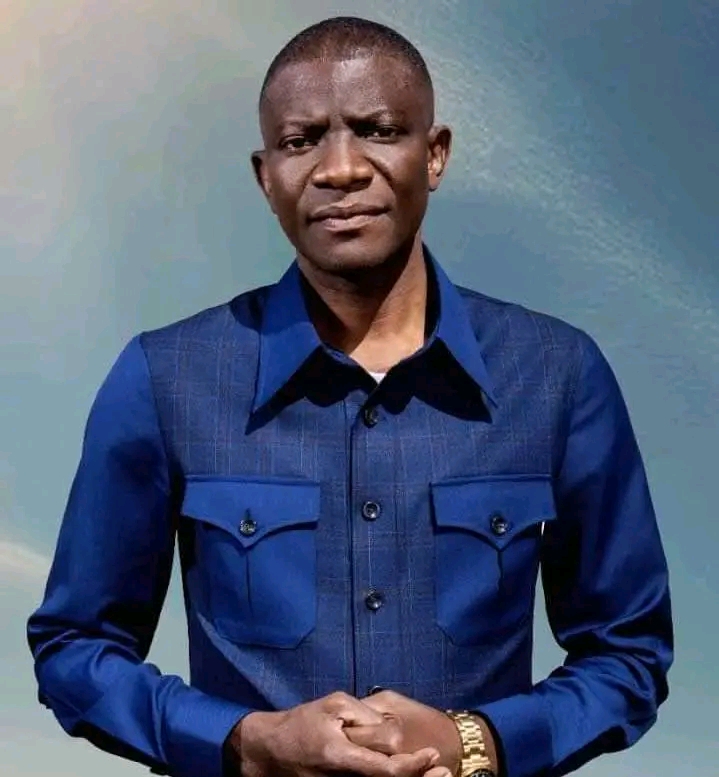
GREYFORD MONDE: GOVERNMENT HAS FAILED ON POWER, PRICES, AND PROMISES
By Brian Matambo
Greyford Monde has walked nearly every path in Zambia’s political terrain. He joined the UPND in its infancy in 1999, ran for Parliament, lost, tried again, and eventually entered the National Assembly in 2011. He served as deputy minister under Michael Sata and later as cabinet minister under Edgar Lungu, portfolios that exposed him to agriculture, energy, and the complexities of Zambia’s economy.
His personal story is one of persistence. From early defeats against seasoned party giants to finally winning adoption and election, Monde frames politics as sanctified work. In his words, a calling “to serve people on behalf of the Creator.” That conviction also explains his break with UPND. He left, he says, because as an MP he was “gagged” from delivering projects through government channels. For him, people could not be asked to wait until his party won power.
Today, as the country reels from blackouts and rising food prices, Monde has emerged as a sharp critic of government performance and a voice urging opposition unity.
THE POWER CRISIS
Few issues define public frustration more starkly than electricity. Monde says what is described officially as 18 hours of loadshedding is in reality often total outage. At his home, he recalls going seven days with barely an hour of supply. “Numbers do not lie,” he insists. “If delivery matched promises, people would not be sitting in the dark.”
He draws a straight line between government rhetoric and delivery gaps. When a government fails to meet its own benchmarks, it turns its energy on silencing opponents, he argues. “When you see any government begin to target the opposition, know for sure they have failed to deliver on their promises,” Monde says.
COST OF LIVING AS THE TRUTH METER
For Monde, the true performance indicator is the market stall and the family table. He points to the leap in mealie meal prices from around ZMK130 in 2021 to as high as ZMK450 today. Cooking oil, relish, and wheat-based products have all risen in tandem.
“This is the betrayal of overwhelming trust,” he says. “Cost of living is a combination of all other sectors. If delivery were real, the numbers would show in household prices.”
He dismisses the government’s boast of having delivered 80 percent of its promises as a “mockery,” asking how such a claim can stand while families skip meals.
AGRICULTURE STUCK AT POTENTIAL
Monde’s experience in agriculture grounds much of his critique. He notes Zambia’s international pledge to allocate at least 10 percent of its budget to agriculture, a target never reached. The share sits at about 7 percent. “It is a very sad picture,” he says, because agriculture is not only about food security but also GDP growth and jobs.
He cites missed opportunities in rice, poultry, and wheat. Zambia continues to import basic produce despite fertile land and water. Some neighbouring countries derive up to 40 percent of its GDP from agriculture, proof that with emphasis and planning, agriculture can be transformative.
Farm blocks are his favorite example. Across provinces, tracts of more than 100,000 hectares lie waiting for roads, power, and irrigation. Properly developed, they could anchor exports to Congo, Angola, and beyond. “Farm blocks are engines for agriculture, but they have remained lip service,” he says.
He credits the expansion of the Farmer Input Support Programme for pushing maize output beyond 2 million tonnes. But he insists consistent investment would lock in 3 million tonnes annually, enabling real exports and stabilizing prices.
TOURISM LEFT IDLE
Agriculture is not alone. Monde laments the stagnation of tourism. Roads left incomplete have cut off access to key sites, and jobs have vanished. “The tourism sector is completely dead in this country,” he says bluntly, arguing that Zambia has ceded visitors and revenue to its neighbors.
DEMOCRACY UNDER STRAIN
Beyond economics, Monde sees a political system closing in on itself. He points to court cases that have stripped opposition MPs of seats, arrests of bloggers, and harassment of critics. In his view, these are not signs of strength but of fear.
“This is a government that got to power democratically,” he says. “But the very things they condemned, they are now practicing at scale.”
He warns that shrinking the space for opposition debate is short-sighted. The ultimate opposition, he argues, is not parties but the people themselves, who will deliver a verdict at the ballot box.
THE ROLE OF THE OPPOSITION
Monde accepts that Zambia’s opposition landscape looks fragmented, with many aspirants vying for visibility. But he insists this is healthy in early cycles of democracy. “Democracy allows everyone the right to aspire,” he says. What matters is the convergence.
The PF, he argues, remains the largest opposition by parliamentary seats, local government presence, and structures. It is undergoing a process to select a new president, and once complete, Monde believes a single leader can be fronted to alliance partners. From there, the opposition should rally behind one candidate for 2026.
“The opposition’s biggest ally is the people themselves,” he says. “And the people will be the verdict.”
Greyford Monde’s critique is unrelenting but couched in the language of service. He returns again to the notion of priorities. “If we put 10 percent into agriculture, the returns will be very high. If we finish farm blocks, they will employ more people than government ever can. If we light homes reliably, the economy will follow.”
His message is less about partisanship than about numbers that speak for themselves. High prices, dark homes, and stalled projects are evidence that delivery has not matched promises. For Monde, the path forward is unity in the opposition, practical investment in food and power, and faith that the people will choose change when the time comes.
Bo Monde, ” mukulwange” Lozi meaning my elder brother. You and your PF could have done a Kariba dam in Luapula if you were serious.Look at Ethiopia, they are officially opening a big dam to day, the biggest in Africa that shall improve the electricity supply in that country.Your PF got involved in looting the resources of the people.UPND just in power for four years and you expect no load shedding amid the waste drought ever witnessed in the country.HH promised a number of things and we have seen a lot of achievements.Just get closer to HH the teacher and you will learn alot and you will be able to see your mistakes.I don’t know how you feel when you drive on the road to Itezhi tezhi especially along the dams.And you promised the people of the area that you will make the road when you were MP.What happened? “Muli ba beshi” Ila language meaning you are a liar.”Kuchenga” Ila to lie.
Monde is very bitter because he regrets dumping upnd for PF and now he is left in the lurch.