

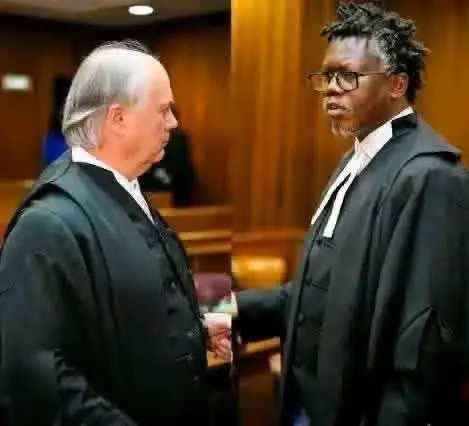
LUNGU BURIAL CASE BECOMES LANDMARK TEST OF STATE POWER
The legal battle surrounding the burial of former President Edgar Chagwa Lungu has evolved into a major constitutional test of state authority, family rights, and the legal status of former Heads of State.
During proceedings before the South African Supreme Court, judges openly challenged the Zambian Government’s reliance on historical precedent and customary practice to justify its authority over the burial process.
“You cannot simply say this is how it has always been done and expect that to pass as law,” the Court remarked, insisting that constitutional authority must be supported by clear legal justification rather than tradition alone.
The bench further questioned the Government’s position regarding Edgar Lungu’s status after his presidential benefits were reportedly withdrawn following his return to active politics.
“What was left of his presidency?” one judge asked during tense exchanges with government lawyers.
The question appeared to expose a central contradiction in the State’s argument — whether a former president whose benefits were suspended during life could still be treated as fully entitled to state authority and ceremonial control after death.
Government lawyer Ben Stoop maintained that Edgar Lungu remained a national figure whose significance extended beyond family interests.
“The deceased was a national person. He was not for his family but for the nation,” Stoop argued, adding that Ubuntu required public interest to outweigh private wishes.
The Court also examined the Government’s claim that military honors and state funeral procedures require presidential involvement in the constitutional role of Commander-in-Chief.
However, proceedings revealed that the Lungu family reportedly had no objection to President Hakainde Hichilema attending the funeral in a personal or diplomatic capacity, raising questions over whether the dispute is truly about attendance or state control.
With judgement now reserved, the case is increasingly being viewed as a landmark constitutional confrontation over the limits of executive authority, customary law, and the balance between national symbolism and family rights.
What began as a funeral dispute has now become a defining legal battle over power, legacy, and the meaning of the presidency itself.
Chongwe Times – 29.05.2026
#ourlandourstoryourvoice
The one thing that must be understood is the reason of withholding benefits of former Presidents when they are active in politics and with intent to come back for power.The idea was not for punishment or hate, it is an old action and matter of the constitution of Zambia.The logic behind this is no one receives more than one pension from a pension fund of government in Zambia.If benefits are given to a President who lost an election but he intends to come back to power, the question shall come as what is he working for when he has already gotten paid the pension.I believe the fear is on abuse of public funds when a retiree President is brought back to power knowing that he already got his pension.There is no civil servant who is paid pension twice by the government in Zambia.And I believe it is the same with South Africa, however, I accept to be corrected if my belief is wrong.The reason of not willing to bury in Zambia based on withholding of the benefits is a lame excuse honestly and must not be intertained by any Zambian who understands the trends, culture and tradition of how Presidential funerals are handled in our country.Military honours are extremely paramount on Presidential funeral it is a Zambian tradition that has never been ignored ever since.And any person who doesn’t respect the traditions values and virtues must not dream of being a leader of this nation Zambia.