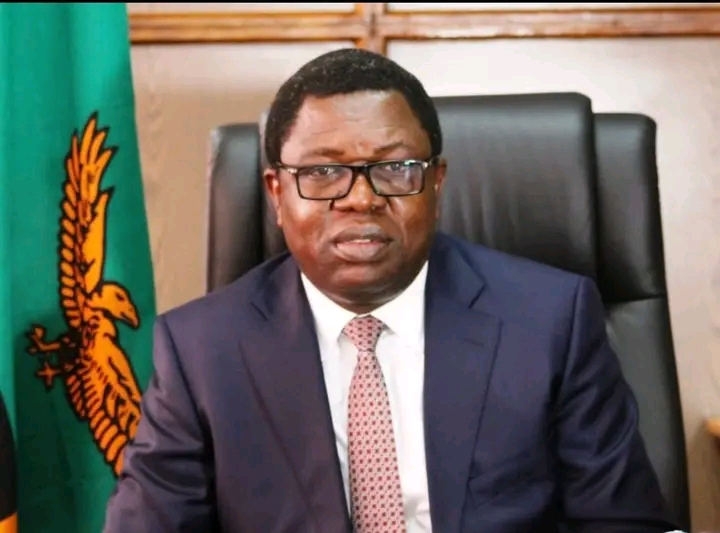
MALANJI CORRUPTION RULING EXPOSES SCALE OF TRANSNATIONAL FINANCIAL CRIMES
Lusaka, Zambia – The conviction of former Foreign Affairs Minister Joseph Malanji and ex-Secretary to the Treasury Fredson Yamba has revealed the far-reaching nature of corruption networks, with Zambia’s Drug Enforcement Commission (DEC) stressing the importance of international cooperation in bringing the case to justice.
Court records showed that Malanji used the Presidential Jet to ferry millions of dollars in cash from Turkey, later depositing the funds in unusually large amounts over a short period.
Investigators said he went on to acquire two helicopters, a Bell 430 and a Bell 206 Jet Ranger, along with several high-value real estate properties.
Malanji was convicted on seven counts involving more than US$11 million in stolen public funds and sentenced to four years imprisonment with hard labour. Yamba was found guilty on two counts of abuse of office for deliberately bypassing financial accountability systems at the Treasury. He received a three-year sentence with hard labour.
DEC Director General Nason Banda said the convictions mark a turning point in Zambia’s fight against organised corruption.
“These convictions signal a new era where complex transnational organised crimes actuated by public officers will be met with even more sophisticated and determined investigative and prosecutorial interventions,” Mr. Banda said.
He added that the case was successful thanks to unprecedented cooperation between Zambian authorities and international partners.
“This outcome represents the fruits of diligent internal, regional, and international collaboration, from intelligence gathering to investigation and prosecution,” Mr. Banda said.
He also disclosed that not all funds tied to the case have been recovered. “More money remains unaccounted for, and our investigations are ongoing. We have strong leads that may implicate additional high-profile individuals,” he noted.
The DEC extended special gratitude to governments in South Africa, Zimbabwe, the Democratic Republic of Congo, and Turkey, alongside international partners such as the Asset Recovery Inter Agency Network of Southern Africa (ARINSA) and the Basel Institute’s International Centre for Asset Recovery.
© Falcon News