

NGONI SUCCESSION
The Ngoni are a patrilineal society. Succession follows the male line, unlike matrilineal groups such as the Chewa and Bemba, where heirs are determined through the mother’s lineage.
From the time of Zwangendaba Jere, founder of the Ngoni Kingdom 1820s–1848, the death of an _iNkosi_ (king) was treated as a state event.
Early Ngoni oral accounts record that a king “never died alone.” Enslaved attendants were sometimes killed and buried with the ruler, and a prominent warrior or noble would be designated to accompany him as a symbolic “pillow” in the afterlife.
Certain clans were traditionally selected for this role among different Ngoni factions. This practice was later abolished and replaced with the sacrifice of cattle.
During the mourning period, warriors performed ngoma war dances and competitive wrestling to honor the deceased.
Black oxen were slaughtered. The hide served as a shroud for the king’s journey to join the ancestors. The meat was reserved for grandchildren of the late king.
Rendered fat was used in the preparation of the body. The iNkosi was customarily interred in a seated position.
Ngoni society is polygamous. A man may have multiple “houses,” each established by marriage. The senior house is the iKhanda or Kuka the second is the iNyumba or Nyeke.
Within one house there may be several wives, but rank matters.
The heir is the eldest son of the “Great Wife,” the senior wife of the Kuka. This principle of primogeniture from the senior house is known as uNhlanza or shanzi
If the Great Wife bore no sons, a practice of “raising seed” was used. A younger woman, often a sister or kin of the Great Wife, could be placed in the Kuka to bear children for the house. Those children were regarded as full heirs of the Great Wife’s line.
The first Mphezeni Ntutu Jere, was born under this custom. Zwangendaba took Sosera Ngumayo, a younger sister of Queen Loziba/Lozibha, as unhlanza wife. Ntutu was thus recognized as the son of the Great House.
Historians note that this custom contributed to division after Zwangendaba’s death in 1848.
Competing claims arose between Ntutu (Mphezeni), Zwangendaba’s eldest son by the unhlanza arrangement, and Mmbelwa (M’mbelwa), son of the second wife. Oral tradition holds that Loziba had earlier been banished after being accused of attempting to bewitch Zwangendaba, when she offered him a calabash of beer with a strange residue. She was recalled only after Zwangendaba learned she had borne a son. The dispute over legitimacy and seniority helped fragment the Ngoni into separate kingdoms:
Mphezeni’s in present-day eastern Zambia, and Mmbelwa’s in present-day northern Malawi.
Five main factions emerged after Zwangendaba died in 1848. Some historians group them into 3 major kingdoms, but 5 distinct migratory groups are usually recognized.
When Zwangendaba Jere died near Mapupo in present-day Tanzania, the kingdom fractured. The dispute over succession between his sons after pressure from famine and local enemies caused the nation to break up during the “great march” north and south.
Mpezeni’s Ngoni – Led by Ntutu/Mpezeni, son from the unhlanza wife Sosera. Settled in present-day Eastern Province, Zambia. This became the Ngoni of Chipata.
M’mbelwa’s Ngoni – Led by Mmbelwa, son of Zwangendaba’s second wife. Moved into northern Malawi. Capital at Mzimba. Largest Ngoni group in Malawi today.
Gwangwara or Magangara’s Ngoni – Led by Zulu Gama, a senior induna. Broke off and settled in southwestern Tanzania near Songea. Largely destroyed in the Maji Maji Rebellion, 1905–1907.
Mshope’s Ngoni– Led by Ntabeni,Zwangenda’s nephew also called Mshope. Settled in central Tanzania, Dodoma/Iringa area. Absorbed into local populations over time.
Maseko Ngoni– Not directly Zwangendaba’s sons, but a related Ngoni group under Mputa Maseko that had split earlier during the Mfecane. Some traditional historians claim he had an affair with one of Zwangendas wives and forced to move. They settled in southern Malawi/Northern Mozambique. Sometimes counted separately because they left Zwangendaba before his death.
All the factions in different countries still regard Mphezeni as the supreme iNkhosi.
When the British redcoats executed Crown Prince Nsibgo in the AngloNgoni war, of 1898 his brother Madzimawe tried to claim the throne , however the council of regents instead appointed a nine year old Xhloa as the Mphezeni II.
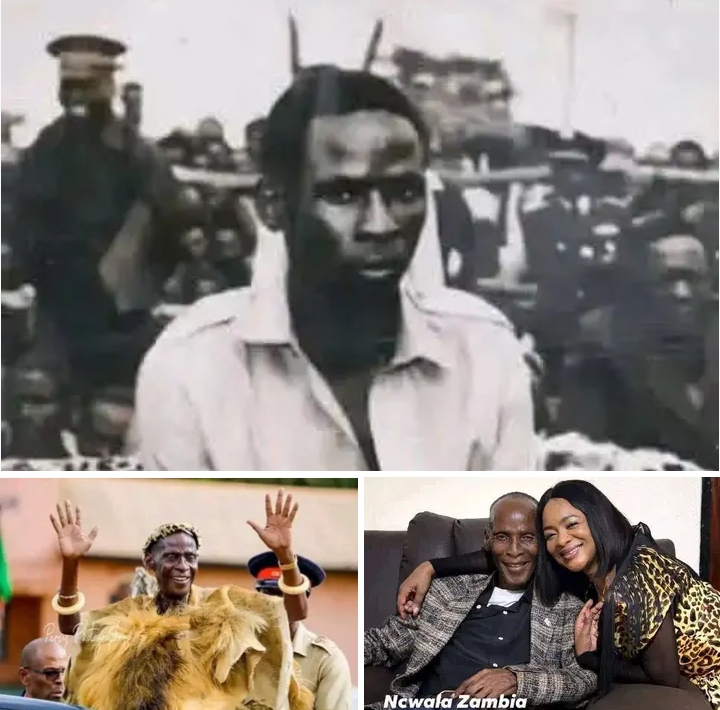
What is interesting is that the current iNkhosi was said to have had one wife and a daughter.
Sources:
J.D. Omer-Cooper, _The Zulu Aftermath_, 1966
Y.M. Chondoka, _A History of the Tumbuka and Senga under M’mbelwa_, 2007
M. Read, _The Ngoni of Nyasaland_, 1956
E.A. Ritter, _Shaka Zulu_, for Mfecane context
AJ wills History of central Africa
KD Philip onani angoni
– Prime TV