

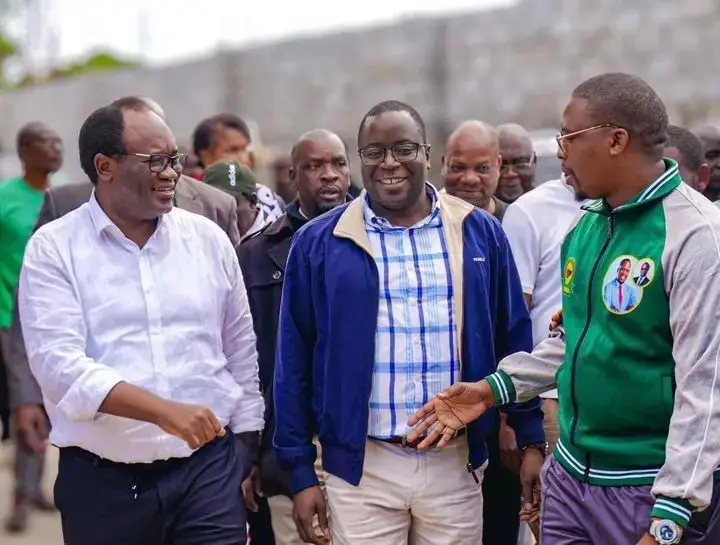
🇿🇲 BRIEFING | “One Will Stand for All”: Makebi Zulu Signals Opposition Unity
Opposition appears to be entering consolidation ahead of the August 13 general elections, with presidential aspirant Makebi Zulu declaring that the merger between the Tonse Alliance and the PF/Pamodzi Alliance has already shifted political momentum against the ruling United Party for National Development.
Speaking Saturday during a joint opposition media briefing, Zulu argued that public reaction to the alliance announcement had convinced opposition leaders that the race was becoming increasingly competitive.
“When we announced that the two alliances were coming together, the overwhelming response from Zambians told us that we have won this election,” he said.
The remarks reflect a growing recognition within opposition circles that fragmentation remains their biggest electoral threat in a race where the incumbent enters with structural advantages, state visibility, and consolidated strongholds across the southern, western, and north-western blocs. Opposition actors are now attempting to counter that dominance through coalition arithmetic and strategic consolidation.
Zulu said leaders within the alliance had agreed to subordinate personal ambition in favour of a single presidential ticket.
“We are going to stand for one, and one is going to stand for all,” he stated, presenting the arrangement as a collective survival strategy rather than a conventional political alliance.
The statement is politically significant because Zambia’s opposition landscape has, for months, been characterised by competing coalitions, parallel presidential ambitions, and multiple candidates positioning themselves as the principal challenger to Hakainde Hichilema.
More than 25 presidential aspirants are expected to contest the election, a factor analysts say risks splitting the anti-incumbent vote.
The Tonse–PF/Pamodzi alignment therefore signals an attempt to rebuild electoral concentration within what was historically the PF’s “green corridor” — the northern, Muchinga, Luapula, and parts of Eastern Province voting blocs that once delivered dominant margins to the former ruling party. However, that base has become increasingly fragmented since 2021, with recent by-elections exposing divided loyalties and gradual UPND inroads into areas previously considered politically closed.
Still, opposition unity alone may not automatically translate into electoral victory.
The alliance continues to face unresolved questions around leadership hierarchy, candidate selection, and ideological coherence.
While unity messaging may energise supporters emotionally, the eventual choice of a single candidate could equally reopen internal rivalries among competing factions and presidential hopefuls.
Zulu nevertheless insisted that opposition parties had “finally listened” to citizens demanding cooperation instead of endless competition. He disclosed that a unified presidential candidate would soon be unveiled, a decision likely to shape the next phase of Zambia’s rapidly intensifying electoral contest.
For now, the opposition is betting on one calculation:
That a divided opposition guarantees continuity for UPND. But a consolidated opposition could transform the election into a genuine national contest.
© The People’s Brief | Goran Handya
Criminals are planning to come back and steal more and default more than twice these buffens.Makebi has got hard heart
This is just a grouping of criminals.Their businesses can’t survive without government tenders and contracts.This how they depleted the Eurobond and treasury money leaving Zambia in ICU. Wake up Zambia