

⬆️ BRIEFING | Opposition Torn Over Tribal Politics As Tembo Defends Mumbi, DPP Warns Against Division
The weekend’s political discourse left Zambia’s opposition exposed and divided, after outspoken Patriotic Front stalwart Mumbi Phiri’s remarks on tribal voting patterns triggered a wave of backlash, defence, and moral grandstanding across the spectrum.
Her statement that “if a Bemba picks an Easterner as running mate, we will win,” has reignited the long-suppressed debate on whether Zambia’s opposition politics is driven by national vision or regional arithmetic.
While many within civil society condemned the remarks as dangerously tribal, People’s Party president and Tonse Alliance spokesperson Sean Tembo rushed to her defence, insisting that Mumbi Phiri’s comments were “strategic, not tribal.”
“Those who say this is a tribal statement, can you explain how it amounts to one? She simply made a political strategy statement,” Tembo argued in a lengthy post Sunday evening.
He likened Zambia’s regional voting patterns to the United States, where candidates often balance tickets with running mates from “swing states.” Tembo said the same principle applied in Zambia, claiming a Bemba–Easterner combination had “the greatest chance of removing the UPND.”
Tembo’s defence has deepened existing fractures within the Tonse Alliance, which has been struggling to present a united face since last week’s chaotic meeting at his Ngwerere residence. His remarks appear to align him with the Mumbi Phiri–Brian Mundubile faction, which has been quietly lobbying for a northern-eastern ticket ahead of next year’s elections.
Tembo’s comments mark a deliberate break from Given Lubinda’s camp, which has called for neutrality and inclusivity in leadership selection. Raphael Nakacinda, PF Secretary General, recently admitted that tribal tensions exist within the party, a rare acknowledgment after years of denial.
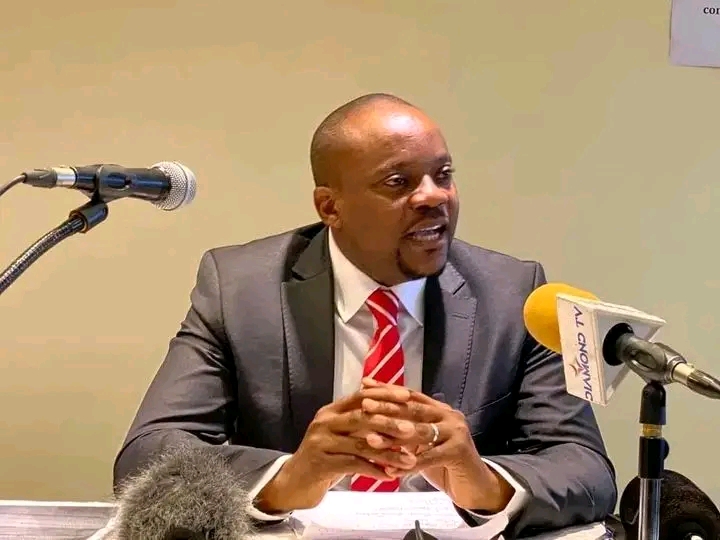
But the debate has also drawn reaction from outside the PF. In a sharp counterpoint, Democratic Progressive Party (DPP) president Antonio Mwanza condemned the growing tribal rhetoric, warning that such politics offer “no food on the table and no progress for the nation.”
“Tribalism has never built a school, created a job, reduced the cost of mealie meal, or ended load-shedding,” Mwanza said. “Those who use tribe as a weapon do so to hide their failures.”
He invoked history, recalling how Zambia’s founding president Kenneth Kaunda was driven to declare a one-party state in 1972 to contain ethnic fragmentation. Mwanza said tribal politics are now “a shield for incompetence” and that the country’s young generation, largely shaped by intermarriages and urban diversity, rejects such divisions.
“Our real enemies remain corruption, poverty, unemployment and bad governance, not tribe,” he said.
The timing of these exchanges is politically charged. With PF internally split and the Tonse Alliance struggling to coordinate, the opposition’s focus on regional alliances rather than governance proposals risks alienating the undecided middle class.
Analysts warn that this fixation on ethnicity could undermine opposition unity ahead of the 2026 elections. What started as a comment on “winning combinations” has evolved into a full-blown reckoning about the moral and ideological foundations of Zambia’s opposition.
As the noise grows, one truth stands clear: Zambia’s opposition is now fighting on two fronts — against the ruling UPND, and against the ghosts of its own tribal contradictions.
© The People’s Brief | Briefing