

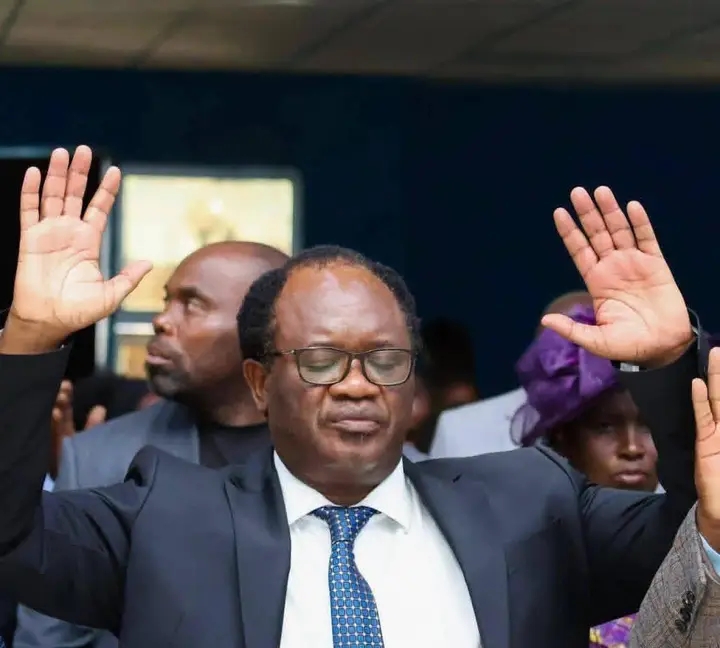
“The Dilemma of Brian Mundubile on Tuesday”
…Zambia’s Democracy Faces a Litmus Test
Amb. AM.18th May 26
On Tuesday morning, Zambia’s democracy will awaken to a test as sharp as a surgeon’s scalpel and as heavy as a millstone.
Hon. Brian Mundubile, Tonse Alliance President, and leading contender in the August 13 polls, approaches the Electoral Commission with nomination papers in hand, yet the air is thick with apprehension.
His dilemma is not merely bureaucratic; it is existential. Will the system allow him to run, or will the dice be loaded from the start?
On one corner stands incumbent President Hakainde Hichilema, seeking re‑election under a cloud of crippling three‑year load‑shedding that shut down butcheries, poultry businesses, barber shops, and salons — the lifeblood of ordinary Zambians.
On the other corner stands Mundubile, younger than HH, carrying the hopes of a restless populace. Tomorrow morning becomes a cautionary tale: a regime that has shown it can bulldoze its will against a people resilient, prayerful, and forever yearning for a better democratic outcome.
The region offers grim lessons. In Senegal, Ousmane Sonko was barred, sparking unrest. In Tanzania, under President Samia Suluhu Hassan, opposition leaders were jailed or blocked from running, leaving fresh sores that the US and EU condemned as a debacle of democratic betrayal.
Could Zambia, a Christian nation since 1964 with seven presidents and a proud record of peaceful transitions, slide into that rogue category?
ZAMBIANS AND PEACE, RULE OF LAW PREVAILS
History reminds us that Zambians have always been guardians of democracy. Dr. Kenneth Kaunda cut short his term in 1991 to let democracy breathe.
Dr. Frederick Chiluba’s illegal third‑term bid was crushed by citizens who protested, some paying with their lives. Edgar Lungu, the sixth president, hung up his gloves when 2.8 million voters rooted against him.
He capitulated gracefully, still unburied
Yet today, the situation appears trickier: cyber laws muzzle dissent, the Speaker of the House dances the funky chicken when government bills pass, and the Constitutional Court contradicts itself with decisions that erode trust, their own trust.
Ambassador Michael Gonzales, outgoing US envoy, warned bluntly: “The democratic space in Zambia is shrinking, and corruption is crippling governance.” His words echo like a trumpet blast, reminding us that democracy cannot survive on slogans alone.
The irony drips: President HH, who once contested five times before finally winning, must now prove he will let democracy rise rather than see it burn.
Placate him if you will but remind him that democracy is not a monopoly, with your own money and rules, its about people, about a nation with divergent views.
As Montesquieu, the French philosopher, declared: “Liberty is the right to do what the law permits.” And scripture whispers from Galatians 5:1: “It is for freedom that Christ has set us free. Stand firm, then, and do not let yourselves be burdened again by a yoke of slavery.”
Daily Nation Zambia Smart Eagles Daily Revelation Newspaper
The threats facing President HH are manifold.
Economic Front: He touts debt restructuring that reduced annual debt service from $2.3 billion to $900 million, foreign reserves at $6.4 billion, and inflation down to 6.8% in April 2026.
Yet poverty remains stubbornly high — 50–70% nationally, up to 76% in rural areas. Youth unemployment persists despite teacher recruitment and mining reforms. Rising living costs and food/fuel prices erode confidence.
Social Front: HH’s government expanded free education to 2.5 million children and boosted the Constituency Development Fund from K1.6 million to K40 million per constituency.
But critics argue these gains have not translated into poverty reduction or job creation. Mundubile counters with promises of jobs, unity, microfinance for entrepreneurs, and rural development and debt swap for civil servants.
The stage at Mulungushi International Conference Centre (MIC) becomes symbolic on Tuesday.
I watched live as Mr. Charles Chanda, a seemingly gentle aspirant, went ballistic when ECZ rejected his presidential nomination.
If heavy hitters like Mundubile, Kelvin Bwalya Fube, Harry Kalaba, or Fred M’membe are thrown out, what happens? Democracy becomes a race without competition, a coronation rather than an election.
Niemöller’s haunting words resurface: “First they came for the socialists, and I did not speak out… Then they came for me — and there was no one left to speak for me.” MLK’s voice thunders: “Injustice anywhere is a threat to justice everywhere.”
Why the fear for Brian Mundubile and Makebi Zulu as a pair? Why, why, why? Because they represent a credible challenge, a reminder that democracy thrives on contestation. To deny them is to deny Zambia itself.
Zambia’s democracy goes to test on 19 May 2026. Will democracy lose or win? The answer lies not in the corridors of power but in the resilience of its people.
Give democracy a chance. Prove speculators wrong. Let Brian run like the wind and let democracy prevail.
Zambia is better known for democracy, not suppression. Or is that about to change? Who will guard the guards of democracy? Lovers of peace and stability must rise.
The world watches, the heavens pray, and the people wait.
Amb. Anthony Mukwita, Author & International Relations Analyst.
Sorry Sir, Mr. Mundubile does not carry any hope for anyone. He has been close to power before, and there is no record of anything brilliant that he did. And Zambia has not been “a Christian nation since 1964”. It was declared a Christian nation by an adulterous thief only in the 1990’s. My wish is that Mundubile be allowed to stand so that he can lose properly. No one from the brutal and stealing PF deserves another chance. Your heavy hitters are only heavy on insults. You are campaigning for a post which you will never get because none of your heavy hitters can win..
People like Ambassador Anthony Mukwita, who now presents himself as an international relations analyst, often rely on positions they once held to create the impression that they are authorities on democracy and diplomacy. However, holding the title of ambassador does not automatically translate into credibility, consistency, or a genuine understanding of democratic governance.
The leadership confusion, legal disputes, and internal wrangles currently affecting the PF involving figures such as Brian Mundubile, Miles Sampa, Robert Chabinga, Dr. Chitalu Chilufya, Makebi Zulu, Chishimba Kambwili, Emmanuel Mwamba, Kafwaya, and others are the result of hypocrisy, pretense, and hidden political agendas within the party itself. Many of these individuals publicly claimed loyalty to former President Edgar Chagwa Lungu, yet their true intentions became evident after his death when internal divisions, leadership disputes, and legal battles intensified, causing deep fractures within the PF.
These self-inflicted conflicts cannot honestly be blamed on the UPND government. The PF’s current instability is a consequence of unresolved internal power struggles, political opportunism, and a lack of genuine unity among its own members.
Secondly, only those who are either uninformed or deliberately misleading the public can completely condemn the enactment of Cyber Security and Cyber Crimes laws without understanding the broader global context. In today’s digital era where data protection, data privacy, artificial intelligence, digital governance, and cross-border information flows are shaping international relations and geopolitics. Therefore, every serious nation is strengthening its cyber security framework to protect both citizens and state interests.
Even Western countries, including the United States, have comprehensive cyber security and digital governance laws embedded within their national security and foreign policy strategies. Through major technology companies and digital platforms, these countries influence global digital systems, innovation, and information flows. Therefore, Cyber Security laws are not meant to suppress freedoms or violate human rights; they are also about protecting national digital sovereignty, securing sensitive data, combating cybercrime, and ensuring responsible use of technology.
Ambassador Anthony Mukwita should therefore avoid cheap propaganda and politically motivated narratives. It is contradictory for individuals who remained silent when democracy and human rights deteriorated during the PF administration to now position themselves as defenders of democracy and governance. Before lecturing others on democratic principles, they should first reflect on their own record and contribution they made during the period they served in the PF government.
Bo Lubinda is zeeeee…..they used racism on him like they did guy Scott.
Kkkkkk…..mundubile and makebi our hope?!!!Kkkkk..ikalenifye
PF and their allies still believe that the laws and regulations of Zambia donot apply to them. They operate on emotions. So they expect that what they feel should happen is what should be done. If Mr. Mundubile falls short of the electoral requirements, that is it. He will be disqualified just like Mr. Chanda has been disqualified. The law must apply equally to all presidential candidates. Mr. Mundubile or any other candidate for that matter cannot be treated as a special case. That would be defeating the cause of democracy itself.
We have not forgotten how Mr. Mukwita and Mr. Mwamba abandoned their ambassadoral work stations to come and campaign for the late former president, Mr. Lungu in 2021. So these are not men who speak with an objective mind. They were beneficiaries of the PF regime and have an axe to grind with the UPND government.