

SPECIAL REPORT
US Military Signaling as Xi Jinping Visits Washington
Chinese President Xi Jinping’s visit to Washington is unfolding against a backdrop of unusually prominent US military signaling.
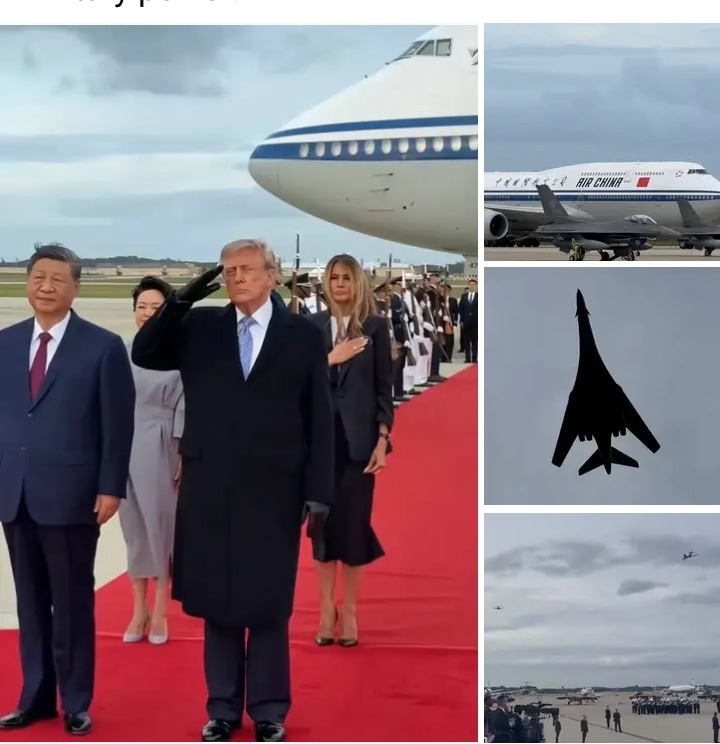
During Xi’s arrival at Joint Base Andrews on September 23, two B-1B Lancer bombers conducted a flyover, while F-22 Raptors and F-16s were displayed on the ground. A further ceremony on September 24 was scheduled to include B-2 bombers and additional F-22s.
The aircraft themselves carry strategic significance. The B-1B represents long-range strike and power projection, while the F-22 symbolizes air superiority, stealth and advanced military technology.
Strategic Signaling, Not Direct Threat
There is no confirmed evidence that Washington intended the display as a direct military threat to Beijing. The aircraft were formally presented as part of the state-visit ceremonies.
Nevertheless, in geopolitical terms, the symbolism is significant.
Washington is effectively communicating two messages at once:
Diplomatic engagement remains open — but it is backed by military power.
This reflects a classic great-power strategy of deterrence through strategic signaling: maintaining dialogue while demonstrating credible military capability.
The Taiwan Dimension
The symbolism is particularly relevant to Taiwan, one of the most sensitive issues in US-China relations.
Beijing continues to regard Taiwan as part of China, while Washington maintains security ties with Taipei and supports its defense capabilities.
The display therefore reinforces the broader US position that negotiations with China will take place from a position of strategic strength rather than military vulnerability.
The Broader Balance of Power
The visit illustrates the central contradiction of contemporary US-China relations: strategic competition alongside selective cooperation.
Washington seeks cooperation with Beijing on trade, technology, critical minerals and global crises, while simultaneously maintaining military deterrence across the Indo-Pacific.
The message is therefore less about confrontation than calibrated deterrence:
The United States is willing to negotiate with China — but it wants Beijing to understand that diplomacy is backed by substantial military power.