

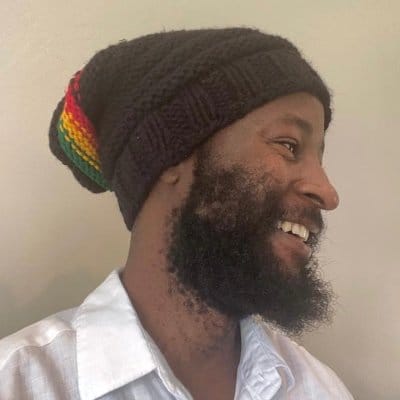
Before anyone starts calling for my arrest, please read this opinion piece first in its entirety. I know that the title of the article alone may easily trigger some people, who, without reading further or beyond it, may either jump to premature conclusions, which they will deploy in the service of the expression of uninformed views, or rush to accusing me of incitement and demanding for my immediate arrest. Such is the age in which we live that many people find no shame in confidently commenting on what they have neither read nor understood and in proudly showcasing their inability to read long posts by demanding that the writer must learn to summarise their output, as if the article comes with the legal requirement that everyone who comes across it must read it.
People who are busy, surface readers, or those with limited attention span are free and most welcome to scroll past my writings in search of shorter posts. There is a reason why I am not on TikTok and Instagram. I write. I write for those who read. I write long reads and that is part of my identity. I write to express myself on matters of public interest. I write to be understood. In this specific article, my goal is to avert potential instability or conflict by identifying the underlying causes of societal tension and proposing possible ways of reducing that tension.
Far from incitement or calling for an uprising, I am using my research expertise to bring to public attention my concerns — shared by many — about the dangerous direction of political life in Zambia today ahead of a key election. I believe it is both my right and patriotic duty to bring such concerns into the public eye. Article 20 of the Constitution of Zambia guarantees me and all other Zambians freedom of expression, that is to say freedom to hold opinions, receive ideas and impart or communicate ideas and information without interference.
I plead with those who have a dubious distinction of commenting on what they have not read to please read the article first and understand its contents. Afterwards, they are most welcome to make their comments, informed by what they would have read and understood. Now, let us begin.
Voters in Zambia are heading to the polls on 13 August. Incumbent President Hakainde Hichilema, elected in August 2021 with 59 percent of the total votes cast, is seeking a second five-year term. Ahead of the general election, and since the start of 2026, the authorities have, so far, prevented seven opposition parties – including all the three former ruling parties – from fielding candidates for all elected public offices: president, Member of Parliament (MP), mayor, council chairperson, and councillor. Below, I discuss the legal instruments being used to arrest political competition, the affected opposition parties, the motivations behind the orchestrated exclusions, and the danger of barring opponents from the ballot, as informed by history.
The legal instruments
In implementing its scheme to exclude political opponents from the ballot, the ruling party has primarily relied on two sources of legal autocracy. The first is the Electoral Process (Amendment) Act No. 12 of 2026. Hours before its dissolution on 13 May, the National Assembly passed the Electoral Process (Amendment) Bill which President Hakainde Hichilema assented to on 15 May. The Act provides that any aspiring candidate for election to the office of president, MP, mayor, council chairperson or councillor shall “produce an adoption certificate signed by the president and secretary-general of a political party, as prescribed”. This law now empowers the Electoral Commission of Zambia (ECZ) to reject the nomination papers of any prospective candidate who fails to present such a certificate.
The second is the Societies’ Act, which establishes the office of Registrar of Societies under the Ministry of Home Affairs and Internal Security. This department registers and regulates societies such as political parties, pressure groups, professional associations, and religious groups. It requires political parties to keep an updated list of office bearers including the president and secretary general who, following the changes to the electoral law, now occupy a decisive role in the nomination process. For instance, if a candidate presents an adoption certificate that is not signed by the president and secretary general of the sponsoring political party as reflected in the latest records held at the Registrar of Societies, the Electoral Process (Amendment) Act empowers the ECZ to reject that candidate’s nomination papers.
The excluded
Using the two legal instruments discussed above, the government has to date excluded several opposition parties from the August election.
The first casualty was the Movement for National Renewal (MNR), a political party founded by John Sangwa in March this year. Sangwa created the MNR as a civic group in October 2025 before transforming it into a political organisation. The police immediately blocked the MNR from conducting public assemblies until after it was registered. However, when the prominent and highly regarded constitutional lawyer attempted to register his political outfit, the Registrar of Societies frustrated his efforts by demanding that he obtains a clearance letter from the police before his movement could be registered as a party.
After Sangwa applied for the clearance, the police sat on his application in perpetuity. This status hindered the MNR’s ability to raise funds and carry out its political work. In a bid to resolve the matter before the start of nominations, Sangwa wrote to President Hichilema on 7 April 2026, raising concern about the effect of such legal manouvres on the exercise of constitutionally protected political rights. He also requested Hichilema “to provide public assurance that citizens were free to support political organisations of their choice without fear or apprehension.” The president neither responded to his letter nor addressed his concerns, forcing Sangwa to quit politics altogether.
The second casualty was the Economic Freedom Fighters (EFF), formed in March 2020 by Kasonde Mwenda who competed in the 2021 election. A week before the start of nominations on 18 May this year, Mwenda was arrested for stating that Hichilema’s presidential motorcade had briefly lost its way while on a recent trip to Chinsali, about 940 kilometers from Lusaka. Police interpreted this innocuous assertion as a serious offence, arrested Mwenda in Lusaka, dragged him away from his family to Chinsali, kept the opposition leader in detention for almost two weeks, and only released him after the election nominations had closed. The extended and unlawful pretrial detention prevented Mwenda from taking part in the nomination exercise and meant that the EFF could not field any candidate for all five of Zambia’s elective positions since there was no president to sign the certificates of adoption.
The third casualty was the Patriots for Economic Progress (PeP), an opposition party, formed in October 2016, that took part in the 2021 election. The party’s president, Sean Tembo, arrived at the nomination centre but was blocked from completing his nomination papers after discovering that details of his ten-year-old political organisation’s mandate and its office bearers, as reflected at the Registrar of Societies, had been altered without his knowledge on 8 May. ECZ officials told Tembo that according to information in their possession from the office of the Registrar of Societies, PeP was no longer a political party but a religious institution whose principal activities were now “ministry and preaching”. This unauthorised change meant that fielding candidates in electoral contests was suddenly outside PeP’s legal mandate.
Tembo further learnt that the names of his party’s office bearers including the secretary general had been altered. The party’s founding secretary general, in office since October 2016, was now an ordinary member while two ordinary members, including a deceased one, were designated as the co-Secretary Generals. When he approached the Registrar’s office and demanded evidence showing when the party requested that the changes be made, the opposition leader was told by the officials that according to their investigations, the alterations were made by a third party named “Prince Care” who accessed the government system at an unknown internet café. The Registrar however declined Tembo’s request to correct the unauthorised changes so that he and his party could complete the nomination processes and participate in the election. The government officials argued that reinstating the removed secretary general would be a lengthy process requiring fingerprint clearance with the police and lasting a minimum of one month. Tembo was instead advised to formally request the redesignation of PeP to a political party and to recognise one of the two unauthorised secretary generals so that either of them could sign the adoption certificates.
The opposition leader did as guided. Since one of the two secretaries had died, Tembo formally informed the Registrar of this fact and chose the living one as the secretary general. The PeP leader was assured by the Registrar that the changes would reflect the following day, and that the updated records of the party would be sent to the ECZ nomination centre a day before the close of nominations to enable him and his organisation to complete the exercise. When he next appeared before the ECZ, Tembo discovered that the Registrar had submitted a printout of PeP office bearers bearing the name of the deceased official as the secretary general. After he confronted the Registrar over the latest ‘anomaly’, the opposition leader was told to appeal to the Permanent Secretary of the Ministry of Home Affairs and Internal Security who, it was explained to him, had made the decision to designate a deceased individual as the secretary general.
By this time, the nominations were closing. Running out of time, Tembo appealed to Hichilema to intervene, but the president, as in Sangwa’s case, ignored him. Although Tembo, who is still recognised by the Registrar as the president of the party, could sign the adoption certificates, having a dead secretary general among the formally recognised office bearers meant that there was no one to co-sign his own adoption certificate and the certificates of the party’s candidates for all the other elective public offices. Like the MNR and EFF before it, PeP was knocked out of the August election this way.
The fourth, fifth and sixth casualties were the three former ruling parties, namely, the Patriotic Front (PF), United National Independence Party (UNIP), and Movement for Multiparty Democracy (MMD). Since the election of Hichilema in 2021, the governing United Party for No Democracy (UPND) has instigated divisions in all the three former ruling parties, with the executive backing at least one of the resulting factions. In all instances, even as the wrangles persist, the pro-ruling party factions have secured formal recognition from the Registrar of Societies. In turn, such pro-UPND factions have endorsed Hichilema for re-election and vowed to never field candidates against the ruling party in any contest for elective public office.
In fact, some of the Hichilema-supporting opposition leaders are seeking election to the National Assembly on the ruling party ticket, not on the platforms of the factions they formally lead. This means that the authentic but formally unrecognised leaders of UNIP, MMD, and PF cannot present candidates for election to any office. This is because any person seeking to use these platforms to challenge Hichilema and the UPND would require an adoption certificate signed by the Registrar-recognised president and secretary general of these parties’ factions for his or her nomination to be considered valid by the electoral management body.
Attempts by the displaced anti-ruling party factions to have the leadership disputes resolved by the courts have been frustrated by pro-executive judges who have delayed determining the matters decisively. This prolonged failure by the judiciary to settle the disputes has in turn empowered the ECZ to refuse to accept nominations from the anti-UPND factions leading UNIP, the MMD and PF. It does not help that the ECZ, whose commissioners are appointed by the president, is led by the president’s former personal lawyer. Two other commissioners have widely known ties to the ruling party. In fact, one of the commissioners had launched his campaign for parliamentary office in this year’s election on the UPND ticket and only abandoned his bid a few days before the president redeployed him to the ECZ.
Thanks to what appears to be a coordinated scheme between the executive, a judiciary that defers to executive interests, and a pliant leadership of the electoral management body, UNIP, the party of Kenneth Kaunda, the pro-democracy MMD, and, until recently, the main opposition PF have all been prevented from presenting candidates in this year’s general election. Tellingly, nearly all the judges who are complicit in this orchestrated exclusion of political opponents were recently rewarded with promotions to superior courts by the president.
The seventh casualty is the opposition United Prosperous and Peaceful Zambia (UPPZ), which competed in both the 2021 election and most of the parliamentary by-elections held since then. The UPPZ was prevented from filing its nomination papers on two grounds. First, the details of the party’s secretary general, as reflected at the Registrar of Societies, had been altered from the one known by the UPPZ. As a result, the ECZ refused to accept the adoption certificate of the party’s presidential candidate, Charles Chanda, since it was signed by a secretary general who does not appear in the records held by the Registrar of Societies. The absence of the government-recognised secretary general meant that the party could equally not field candidates for all elective public offices. Second, the ECZ claimed that Chanda, who was also the UPPZ’s presidential flagbearer in 2021, was bankrupt.
Zambia’s constitution states that “A person is disqualified from being nominated as a candidate for election as President if that person is an undischarged bankrupt.” The problem here is twofold. First, how did the ECZ reach the conclusion that Chanda is bankrupt? What proof did the Commission have before it since it has no authority to investigate prospective candidates? Second, soon after he was denied the chance to file his nomination, the UPPZ leader publicly complained that he had been disqualified without being afforded the opportunity to be heard. This violates the principles of natural justice. For instance, assuming a third party had formally asked that Chanda be disqualified because a court had previously declared him an undischarged bankru
Altogether, this orchestrated exclusion of seven opposition parties shows the extent to which legal autocracy – the abuse of the law by the executive to achieve partisan goals – is being implemented in Zambia ahead of the August election. In carrying out these manouvres, Hichilema’s administration is manipulating legal mechanisms to reduce political competition. UPND supporters have dismissed most of the excluded parties as inconsequential, overlooking the point that even inconsequential parties have their supporters and the right to participate in political life. It is not for the government to choose opponents for the ruling party or decide which political party appears on the ballot.
Moreover, the requirement for aspiring candidates to present adoption certificates, though administratively convenient for the ECZ, is arguably unconstitutional. The grounds for qualifications and disqualification for seeking elective public office are provided for in the Constitution. To illustrate, Article 100 provides that “A person qualifies to be nominated as a candidate for election as President if that person —
(a) is a citizen by birth or descent;
(b) has been ordinarily resident in Zambia;
(c) is at least thirty-five years old;
(d) is a registered voter;
(e) has obtained, as a minimum academic qualification, a grade twelve certificate or its equivalent;
(f) is fluent in the official language;
(g) has paid that person’s taxes or has made arrangements, satisfactory to the appropriate tax authority, for the payment of the taxes;
(h) declares that person’s assets and liabilities, as prescribed;
(i) pays the prescribed election fee on, or before, the date fixed for the delivery of nomination papers; and
(j) is supported by at least one hundred registered voters from each Province.”
The provision further states that “A person is disqualified from being nominated as a candidate for election as President if that person—
(a) is a public officer;
(b) has dual citizenship;
(c) is holding or acting in a Constitutional office or other public office;
(d) is a judge or judicial officer;
(e) was removed from public office on grounds of gross misconduct in the immediate preceding five years;
(f) has a mental or physical disability that would make the person incapable of performing the executive functions;
(g) is an undischarged bankrupt;
(h) is serving a sentence of imprisonment; or
(i) has, in the immediate preceding five years, served a term of imprisonment of at least three years.”
This means a person seeking election to the office of president cannot be disqualified for any other reason other than those outlined in the supreme national law. Nowhere does the Constitution state that an aspiring candidate who is sponsored by a political party needs to have an adoption certificate signed by the president AND secretary general for purposes of filing nominations for presidential, parliamentary and local government elections. I am aware that Parliament is empowered under Articles 48 and 49 of the Constitution to pass laws or make regulations for the management of elections, but it is NOT empowered to prescribe qualifications for candidates or political parties to participate in these elections beyond the requirements stipulated in the Constitution.
In other words, the Constitution does not leave any room for executive-driven involvement in the electoral process. The framers of the Constitution ensured that it empowered a supposedly independent ECZ to carry out the functions of making the elections work, including working out the nitty gritty or mechanics. The situation now is that the ECZ is captured and doing the bidding of the executive in ensuring that political competition is neutralised or eliminated. This is being done by introducing administrative barriers which the ECZ can deny but are clearly engineered by it.
Now, the Registrar of Societies is an active participant in the electoral process by exercising control over the adoption certificates. The signatories are under the control of the Registrar of Societies. ECZ then stipulates that a political party candidate must have an adoption certificate, thereby imposing an additional qualification outside the Constitution, and that such adoption certificate is valid only if it is signed by the President and General Secretary of the sponsoring political party as reflected in the records CURRENTLY held by the Registrar of Societies. All these legal mechanisms have been introduced by the current administration and were never implemented in previous elections. The result is restricted political participation and competition.
Even the move by the ECZ to refuse accepting more than a single nomination from one political party has no legal basis. Under the current Constitution, a political party can sponsor one or any number of candidates for one elective seat and issue adoption certificates to each one of them; it simply means competition among members of the same party and there is nothing in the Constitution that says a party can sponsor only one candidate per seat. It only says each constituency (or ward) can only return one member for each seat. It does not matter if there are 10 or 100 members of one party competing for that seat – the political party must deal with its members.
In other words, the Constitution does not empower the ECZ to limit the number of candidates that a party may field for each seat. Doing so will amount to restricting the right of citizens to vie for election to any office in the land if they meet the requirements for election to that office. The adoption certificate is therefore an unconstitutional mechanism that can easily be outlawed if the Constitutional Court was not susceptible to executive influence. The question of adoption should be left to the parties as opposed to making them a commodity through the ECZ and Registrar of Societies, who have turned an administrative convenience into an additional qualification outside those stipulated by the Constitution.
The motivations
At the close of nominations last Friday, the ECZ announced that a total of 14 presidential candidates had been validly nominated. Under normal circumstances, this would be the final number of candidates who will be on the ballot on 13 August. However, last year, Hichilema amended Zambia’s constitution to create room for the exclusion of rival candidates after the close of nominations through court-engineered disqualification of duly nominated candidates. Before the amendment, Article 52 (6) of the Constitution stated that:
“Where … a court disqualifies a candidate for corruption or malpractice, after the close of nominations and before the election date, the Electoral Commission shall cancel the election and require the filing of fresh nominations by eligible candidates and elections shall be held within thirty days of the filing of the fresh nominations.”
Hichilema deleted this clause and replaced it with the following:
“Where a candidate has been disqualified by a court, after close of nominations, the candidate shall not be eligible to contest the elections, and the election shall proceed to be held on the date prescribed for holding the election.”
The consequence of this constitutional change is twofold.
The first is that unlike in the past where validly nominated presidential candidates could only be disqualified for reasons of either corruption or malpractice, the Constitutional Court now has been given the sole and unregulated discretion to determine the grounds for disqualifying any candidate from running for public office. Before the nominations, Hichilema totally reconstituted the court that will hear any nomination challenges. He dismissed three of the court’s judges who had been appointed by his predecessor and previously ruled against him.
The president then replaced the judges he had sacked with loyalists who have a track record of deferring to executive political interests. Of the court’s current total of 11 judges, seven have been appointed by Hichilema since 2023 while one has been promoted by him. Given the many pro-executive judges now on the bench, any remaining strong opposition candidate can easily be disqualified for any reason the judge deems fit, making it possible for Hichilema to run unopposed or with weaker candidates.
The second consequence is that once disqualified, the affected political party will not be given an opportunity to present an alternative candidate for election, as the poll will go ahead. To illustrate: if any of the remaining opposition presidential candidates were to be disqualified for whatever reason (s) the majority Hichilema-appointed judges on the Constitutional Court can invent, the president may easily be re-elected unopposed or after defeating relatively weaker candidates. This means that in addition to those that have already been excluded from the August election, there is a possibility that more opposition candidates may be barred from running for presidential office using the judiciary that now effectively operates as an extension of the executive. Until now, however, Hichilema has successfully excluded NRM, EFF, PeP, UNIP, MMD, PF and the UPPZ by relying on the use of adoption certificates.
There are two motivations behind this crude strategy.
The first is to reduce the number of presidential candidates challenging him in the hope that doing so would help him avoid electoral defeat. Zambia’s Constitution requires a winning presidential candidate to secure more than fifty percent of the total votes cast. Unlike in 2021 when he was elected on the promise of what he said he would deliver once in power, voters will this time evaluate Hichilema based on his performance over the last five years.
Deepening ethnic-regional divisions, widespread corruption in government, the high prices of basic goods and services, lack of adequate farming inputs and delayed payments to farmers, prioritisation of programmes and projects that do not benefit ordinary citizens, and the pervasive perception that Hichilema is in office to primarily enrich himself and serve the commercial interests of foreign entities led by mining companies have reduced his approval ratings.
Faced with an electorate disenchanted by this generally poor record in office, the incumbent president knows that many voters may decide to adopt an ‘anyone but Hichilema’ voting attitude. Outright opposition to one candidate rather than genuine support for the candidate voted for appears to be becoming the norm across democracies in the world. This was certainly the case in 2021 when Hichilema won power, and there is emerging evidence that it might be the case even this year.
For instance, in the second half of 2025, elements of the Zambia Security and Intelligence Services conducted a ‘privately’ commissioned and nationwide opinion poll that I have seen, which asked voters to indicate their voting preference between Hichilema and an unspecified candidate simply known as “The Alternative”. In six of the country’s ten provinces, at least 70 percent of voters chose “The Alternative”, with the Copperbelt leading the table of discontent at 76 percent. This high rate of disapproval shows the vulnerability of Hichilema – whose odd decision to block the burial of his predecessor Edgar Lungu has not endeared him to many voters – to defeat, even in the absence of a clear opposition challenger.
By reducing the number of presidential candidates against him through electoral exclusion, Hichilema’s thinking is that such a move would help him secure an outright majority in the first ballot. If no presidential candidate secures a clear majority, the president hopes the sliced number of candidates would position him among the top two contestants ahead of a possible runoff where the ability of his MPs and other party figures to campaign for his re-election would not be distracted by their own campaigns.
This strategy does not guarantee success, however. In 2021, there were 16 presidential candidates on the ballot, but voters united behind only two of them, namely, Hichilema and then president Lungu who, between them, obtained 98 percent of the total votes cast. This suggests that if the revulsion against the president persists, or if voters truly want him out of office and the opposition can employ strong vote protection measures, then Zambians would do well to start rehearsing saying, ‘former president Hichilema’.
The second motivation behind the use of adoption certificates is to increase the ruling party’s chances of winning more parliamentary and local government seats as the UPND will now be competing against candidates standing either as independents or under relatively unfamiliar or unestablished parties. This strategy has already produced adverse consequences on political participation and competition. Following the elimination of especially the three former ruling parties from the ballot, the UPND has already won at least five parliamentary seats even before the first vote is cast, as its candidates have gone unopposed in several constituencies.
Pitted against new or smaller parties, the ruling party may obtain a clear majority in due course. The implication is that Zambia may effectively emerge from the August election as a defacto one-party state. This is because the UPND is likely to retain most of the 89 parliamentary seats it won in 2021, win the additional 31 seats in its safe zones that were created recently through gerrymandering, and, through the orchestrated exclusion of the immediate past main opposition party from the ballot, secure the majority of the 54 seats that were previously held by the PF.
If the UPND gets a super majority in the National Assembly, Zambia will become, except in designation, a one-party state. I do not think Hichilema will be bothered. If anything, he will be pleased with any election that will produce a UPND-controlled parliament because such an outcome would make it easier for him to make further changes to the Constitution such as empowering the National Assembly rather than the voters to elect the president, or either removing or extending presidential term limits.
The clear and present danger
By excluding over a dozen political parties from challenging him and his party, President Hichilema is not only playing dangerous political games; he is also effectively subverting peaceful and democratic means of removing him from office through electoral means. Unless urgently corrected, this continued disregard for constitutional norms and democratic principles risks driving the country towards instability. A careful reading of the country’s recent history shows that when an incumbent president blocks avenues of legitimate transfers of power or excludes rivals from electoral contests, they inadvertently empower elements of the military to consider removing them through illiberal means. For instance, in 1996, Zambia’s then President Fredrick Chiluba, fearful of defeat, employed legal manouvres to exclude two of his main rivals from the ballot. Pitted against weaker candidates, he easily won a second term of office.
In the aftermath, elements of the military attempted to seize power through a coup and justified their actions on the ground that the re-elected president lacked legitimacy as he had excluded his key rivals. This example shows the importance of winning power through a level playing field. The best way of preventing unrest or unconstitutional changes of government is by creating conditions that are conducive for a fair and free election so that even the losers can easily accept the outcome since it would have been secured by a credible process. I call upon the authorities to reinstate the excluded parties, allow the opposition to work freely, and prevent a possible repeat of history. As Elias Chipimo Snr., one of Zambia’s freethinking politicians once noted, a competitive “multiparty system… [is] the surest way of avoiding coups and eliminating the disgraceful tendency of presidents ending up with bullets in their heads.”
In saying all this, I am not advocating violence or a military coup nor am I fanning the flames for civil unrest. I detest violence and do not support military seizures of power, just like I hate dictatorship. This opposition to violence, coups, and authoritarianism explains why I am doing everything possible to prevent us from arriving at a situation where unrest or coups becomes inevitable. The danger is that the current trajectory does not lend itself to historical comparison, i.e., what happened last time when the situation was like this. Until the 2011 election, Zambia had a strong democratic culture maintained by functioning state institutions that retained the trust of citizens. The government generally respected civil and political rights (right of public assembly, freedom of expression, right to life, freedom of association, etc.) and citizens were able to hold their leaders to account.
There also existed an independent press, represented most notably by The Post newspaper and a functioning judiciary that was able to protect human rights. Those who lost elections could either turn to the Supreme Court or more likely look forward to the next election since they had relative confidence in the formal institutions. Civil society organisations and opposition parties went about mobilising citizens or conducting their activities without undue restrictions from the government.
At the helm of the electoral commission was an effective leadership that sought to build consensus in times of divisions and was respected even by the opposition. The police service had its challenges, but it still retained its primary character as a professional institution out to maintain law and order, protect members of the public and their property, prevent the commission of offences and to bring the offenders to justice. The head of the executive branch of government (be it Kenneth Kaunda, Frederick Chiluba, Levy Mwanawasa or Rupiah Banda) was an individual who was constrained as much by institutions as by their own character, who reflected diversity (ethnicity, gender, race, disability, etc) and inclusiveness in their appointments to public office, who recruited people to think and find solutions to the country’s problems, and who brought some kind of vision and competence to the presidency.
Previously, all these factors served as countervailing forces against civil strife. This is exactly what changed ahead of the last election in 2021. Like much of the situation is today, our democratic credentials and culture collapsed after 2016, and the executive came to be headed by a president who had neither restraint nor respect for the rules of the game. Critical media outlets (e.g., The Post newspaper and Prime Television) were shut down while others faced intimidation. Civil society became severely undermined, opposition parties were obstructed from conducting their political activities, and the government enacted terrible legislation to coercively control the use of digital space.
Public confidence in the autonomy and authority of the police became seriously eroded. Far from being seen as an apolitical and professional body that is out to protect individual liberties of all Zambians regardless of their political affiliation, the police was seen as nothing more than a sword for the elites in power and their supporters. This is because the executive branch of government corrupted the police, as it did other state institutions.
More importantly, the key institutions that offer the long-term hope for democratic consolidation – elections, the constitution, the judiciary, etc. – came under increased threat than they were before. Captured by the executive, these were the institutions that previously could be relied upon to rise above partisan considerations and successfully mediate conflict between those holding state power and those seeking to acquire it. Added to this was the degree and forms of poverty especially among the youth, and the political usage of this impoverished layer by virtually all political parties, the intolerable levels of unemployment, extreme inequalities, and the fact that we had, like now, an executive arm of government that stoked ethnic divisions – the majority of all Cabinet ministers, permanent secretaries and members of parastatal boards in Zambia hailed from one half of the country in a Republic that prides itself as a multi-ethnic nation.
All considered, we entered the realm of the unprecedented and actively brew a bonfire that could have roasted us in 2021. What decisively helped prevent bloodshed was that President Lungu never abused state institutions to the extent of excluding the opposition from the ballot. For this and other reasons, Lungu lost the poll and peacefully conceded defeat. Had he won that election under the conditions that he created in the run-up to it, the country may have burnt. The commonality between Hichilema’s Zambia and Lungu’s is that many of the peace-threatening conditions that existed in the run-up to the 2021 election exist today. Were Hichilema to win the August election, it is possible that such an outcome may be regarded as a result of the exclusion of his rivals and trigger instability.
How to avert possible civil strife or a military coup
The other day, I read a statement from the British High Commissioner to Zambia in which she was appealing to Zambians to uphold peace after the election. Like many people, Rebecca Terzeon is overlooking a basic truth: What stops countries from erupting into civil strife is the quality of state institutions and the political culture that grows from them. We saw this in 2020 in the United States where even the judges who had been appointed by Donald Trump stood above partisan politics at a decisive moment to uphold the rule of law, protect the country from burning, stand up to presidential power, and help preserve the constitutional order of the Republic. Can the current judiciary in Zambia do this? History will tell.
One thing is clear though: Peace or violence occur not as a result of wishful declarations or prayers but a set of human-made conditions that make them inevitable. Based on the current governance trajectory, illustrated by a set of observable scientific facts – as they have accumulated thus far – it is reasonable to say that Zambia is moving towards a flawed election that may give rise to unrest or instability. It is a fact that Hichilema’s administration has: made a mockery of Zambia’s democratic tradition and effectively eliminated constitutional and lawful means of political competition; effectively destroyed the vestiges of autonomy in all state institutions outside the executive arm of government for the purposes of establishing an authoritarian regime and a slide into a fearful dictatorship; and loaded the courts with judges loyal to the regime.
It has also turned the police into a partisan militia or political tool to be unleashed on critics and political opponents; worsened the cost of living crisis, turning millions of Zambians into fearful beggars easy to corrupt and bribe; increased poverty; frightened much of the country into silence by creating a climate of fear; deeply polarised Zambia on ethno-regional and political lines; weakened the trade union movement to a point of rendering it useless to the working class; intensified mass youth unemployment, increased youth dependence on alcohol and drug abuse, swelled the ranks of street kids and orphans, exploded the number of violent crimes, and significantly contributed to the production of young people without hope eager to be deployed for political violence.
The regime has further paved the way for bribery and corruption to thrive on a widespread scale and to destroy even the moral fibre of the leaders of the church, many of whom have been reduced to silence or converted into praise singers; co-opted some of the private media and regularly insulted the Catholic Church; used sustained neglect, financial strangulation and bullying to turn public universities led by the University of Zambia into upgraded secondary schools and ghost institutions; made changes to the voters’ roll that have not been audited by an independent body and may make it nearly impossible for Hichilema to be evicted from the government through elections; primed the regionally-divided military to be ready to crush citizens, overlooking the fact that many of its rank and file have different political preferences and asking them to protect a leader seen as illegitimate may trigger civil war; and enacted a punitive cybercrime law to police the use of social media, legalise spying on citizens and arrest-free speech.
These are observable facts, tied to several events or incidents that are well-known by any sane person who follows national affairs. The net result is a country waiting to explode because of collapsing institutions, deep polarisation, mass poverty, intolerable levels of unemployment outside the education and health sectors, extreme inequalities, and violent party cadres who have now started attacking even their own ruling party members. In this context, a flawed outcome in the August election may turn out to be the spark that lights the simmering discontent.
Anyone who hopes that Zambians will easily accept a Hichilema victory in the August election, however secured, because they are, historically speaking, a peaceful people overlooks the point that a people’s past behaviour is not the definitive basis for how it will behave in the future. It may be instructive, but it is not automatic. The belief that because Zambians did not turn violent in any other election, they will therefore not become violent in any future election – whatever the quality of that election – does not lend itself to logic and the credence of social science. I have explained the factors that are different this time, chief among which is the exclusion of so many opposition parties from the ballot. While useful as a reference point, we cannot copy and paste the past into the future. The context and variables matter.
Much as we do not have a history of violence to use for a definitive forecast, it would be naïve to rely on our famed ‘peace-loving people’ refrain as the basis for ruling out with certainty the possibility for national unrest, post the elections. We have examples of Sierra Leone and Cote d’Ivoire (Ivory Coast) as countries that were once celebrated as peaceful and non-violent. Where are they today? They are unstable and have endured civil strife and political instability.
The best and most effective way of preventing the drive towards violence is by identifying the potential causes and addressing them in real time. It is not by relying on the mythical non-violent character of a people. In fact, the illusion that we Zambians have a non-violent gene is simply that: an illusion. The notion that anyone can ride roughshod over us, that we can bear and tolerate whatever indignity we are subjected to – because we are a pacified, cowardly and permanently whimpering lot, wedded to ‘peace’– is insulting. With the right triggers, we can erupt.
We Zambians are a proud people, like any other, capable of fighting repression and injustices. Pressed to the wall, we are bound to behave like any other normal human being: to resist, especially if the formal institutions that should serve our interests and adjudicate disputes lose their legitimacy. To state this with certainty is not to fan the flames of violence. It is to define a human quality. It is natural to resist anything that diminishes our humanity. This is the ontological vocation of all human beings – to always grow to higher status, all round, to strive to defeat all things which dehumanise us and retard our full expression and full lives, and work towards the pursuit of more freedoms and greater fulfilment.
Let me restate the point in a different way. There are no people who are inherently peaceful or violent. We peaceful Zambians are as violent as anyone else. We kill each other in homes. Every day, we read or hear of stories of spouses being battered by their partners and even killed in many instances. The only difference is that the violence is yet to be organised at a national political level. If the drivers of possible instability that I have laid out above are not addressed, how the dominant social class in Zambia today – that unfortunate mass of unemployed workers known as the lumpen proletariat – reacts to a flawed election victory by Hichilema will determine whether the country will graduate to full-blown national violence or large-scale political unrest, post August.
Ahead of the election, Hichilema has declared that no one will remove him from the seat of power after only five years in office because his buttocks are glued to it. In a way, this is what makes Hichilema extremely dangerous: his reckless lack of restraint. Drunk on his own power and lost to the vanity of self-focused ambition, the President appears increasingly unconstrained, pursuing policies that have deepened divisions in the country, and totally disconnected from consequence. Given the misery he has unleashed on poor ordinary Zambians, where does Hichilema get the confidence to effectively declare that voters would return him to power this August? Is he confident of not being removed because he knows what he has done to make sure that he gets the result he wants – he now has an unaudited voters’ register that favours him, controls the police, has terrorised the opposition and is now excluding his political opponents from the ballot?
Or is it because he thinks no one can stop him since there are very few constraints in his path – timid citizens, weak institutions, and the confluence of forces that have shaped us into who we are: a strange, pacified and frightened lot that has unacceptable tolerance for enduring indescribable humiliation and pain, which has allowed politicians like Hichilema to trample on us with impunity? Addressing his supporters after filing his nomination papers last Friday, Hichilema called on soldiers and the police to be on high alert so that they can quickly crush any possible unrest. He also advised Zambians to reject violence, tribalism, corruption, and lawlessness. Ironically, these are the vices that his administration has delivered in bulk since his election and which make him largely indistinguishable from his predecessor. Fortunately, many Zambians have discovered the key to understanding the President: believing what he does, not what he says, and knowing that he almost always means the opposite of what he says.
We Zambians must learn to think freely and deeply for and about ourselves, and stop being blackmailed by partisan considerations, historical experiences, or the fear of anything and anyone. We are not objects of history. We are subjects of history and can shape it. We must never allow ourselves to suffer intolerable forms of indignity out of fear. It is public leaders in government and politicians who must be afraid of the response of Zambians to the violation of the rights of citizens.
I appeal to President Hichilema to exercise considerable restraint in speech and conduct, and to change course or take concrete steps and actions that are necessary to prevent rivers of blood and broken skulls after the election, especially if he wins in controversial circumstance. I will suggest at least seven essential steps that can help avert unrest or even a coup. The first is to reverse the orchestrated exclusion of Hichilema’s political opponents from the ballot. The second is to completely abandon any plans that may be in the offing to exclude more opponents of the president through the courts. The third is to completely keep the security forces out of electoral politics. This includes keeping soldiers in the barracks and allowing the police to operate professionally.
The fourth is to create a level playing field that should include unhindered access to the public media by all political contestants. The fifth is to allow civil society and interested groups to freely conduct parallel vote tabulations in all the constituencies that would help capture the election results at polling station level, ensuring that any manipulation would be exposed. The sixth is anything else that would help contribute to an electoral process that is credible in the eyes of all the contestants. This includes the need for the electoral commission and the judges of the relevant courts to help avert a possible catastrophe by exercising independence and refusing to be the sledgehammer of the executive. The seventh step is for President Hichilema to publicly pledge that he will easily concede defeat if he lost the election.
Alongside these steps is the need for voters to examine, objectively and honestly, the manifestos, policies, internal democratic cultures and practices, and the quality of leaders of all existing political parties and measure them against how far they promise to take us away from the status quo that has reduced us to rubble. We owe this exercise to ourselves. I do not subscribe to saying “no more” to something, without at the same time saying “yes” to what must replace it. Without this dialectical thinking and practice, we are condemned to always lurch from one horrible political experiment to another. This is not the way.
No matter how unpopular and weak the alternative to the status quo is, it remains an alternative. It is the duty and full responsibility of a genuine and progressive individual to be fearless and think about practical, better alternatives that could move us beyond the current dependent economic system — with its roots in our colonial capitalism — which breeds the likes of Hichilema in the first place, not to mention a pathetically timid, apathetic and impoverished population. Anyone who seeks to consolidate this system must be fought against with the tenacity of a wounded tiger.
By Sishuwa Sishuwa
Has he really said this? Why insult the Zambian military? They’re loyal professionals who know their role. They’re not going to mount a military coup. Sishuwa is wishing Zambia ill.
He has already smoked.He is hiding in South African wishing war in Zambia.May your evil and hatred you carry never see the light of day.You are a very evil person hiding behind your education but we see…
This idiot is not even a Zambian. There is no tribe with Sishuwa Sishuwa name in Zambia. This moron is from Angola!!!
You might be right.This guy is not a Zambian.Possibly having a Zambian mother but an outsider
So you think being in South Africa ,you’re in hiding?
You can be smoked like a rat in a house.
Being stupid.
HE IS A STUPID IDIOT
Another long-winded tedious diatribe so that the author presents as an extremely intelligent and educated person
This time around, Sishuwa has crossed a line. Does Zambia have an extradition agreement with South Africa? Oh eh oops, I forgot, we have a matter in the South African courts that is yet to be resolved…Sishuwa will continue prattling. By the way, isn’t this the same reason why Chilufya Tayali fled Zambia?
This is a foolish man, no two ways about it, he needs questioning. He crossed the line already. I don’t care anything he says. Shushu shushu is a idiotic person.
I have just finished reading your long writing and it is full of misleading information. You have talked about freedom of expression as inshrined on the constitution but you are forgotting that you only have one vote.
Sangwa wanted to prove a point but ended up shooting in his foot. The other political parties you chosen to cite all of them never held the conventions to be current with the records at the Registrar of Societies. The Registrar of Societies is a product of the constitution that you claim to know and understand but problem ni hatred chabe.
There are Acts of laws that work hand and hand and in support of the supreme law of the land the constitution.
Please do not mislead the citizens and you know what you are doing is inciting the citizens and the military to rebel against the Government but that is just in your mind after maybe taking some hard stuff.
You will cry one day.
No need to read this piece if rubish. The gentleman is a psycopath alright, the signs are there. At least he acknowledges that he deserves to be arrested.
This Sishuwa character needs a life. He’s a very troubled, lonely soul. And for his information, there’ll be no violence & there’ll be no military coup.
I dont NEED to read his Garbage……this one is worth locking up.
He has gone too far with his demononsence, this has crossed the line for freedom of expression. This is INCITING
Too much of this fellow….
Your dreams have gone too far Sir. you are supposed to be a historian, now you sound like a futurian
I truly agree with an American writer, who stressed that people who claim to be highly educated, are actually the most foolish ones. Whatever he writes doesn’t make any sense at all. It’s like he always wants to transfer his personal created frustrations, which have made him to be a docio-economival nomad. No one forced him to resign from from a stable job of a lecture at UNZA.
Frightening!!!
I have not bothered to read the whole nonsense,because the headline itself is pathetic.What an idiot this guy is.
Someone must just bewitch the idiot so that he walks naked and people see his small toothpick.
Ba Chester, there is no need to use insulting language against Dr. Sishuwa. He is merely expressing his frustration with the UPND government. He has not used insults to drive his point home.
Resorting to insults is a clear indication that you have reached a dead end in terms of your capacity to debate the issue.
The problem with Dr. Sishuwa is that he is perpetually staring into his crystal ball and coming up with nightmarish revelations about Zambia.
There will be no large scale violence or military coup after the August 2026 elections.
Dr. Sishuwa should also learn to condense his articles. The essence of his writing is to communicate. Effective communication means readers working through the whole article. Very few of us have the luxury of reading his lengthy articles. We are pressed for time. So he has lost us.
In the multitude of words, sin is not absent.