

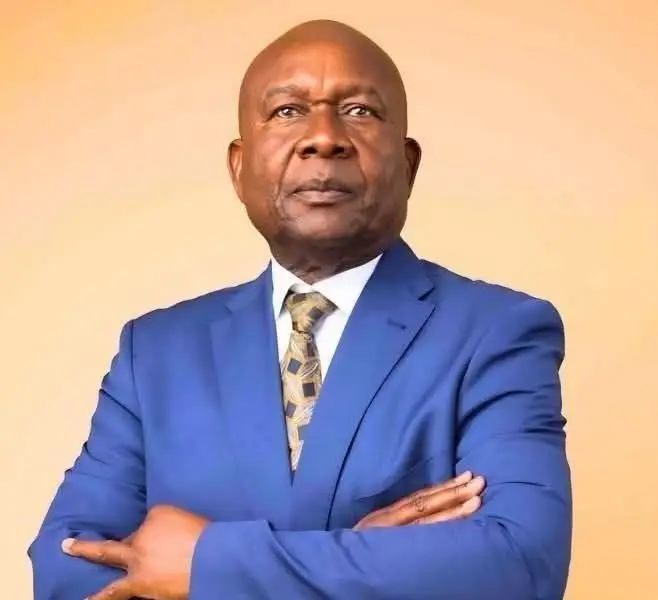
🇿🇲 BRIEFING | Chungu Sparks Backlash After Questioning Free Education Law
Remarks by Liberal Democratic Party president Xavier Chungu questioning Zambia’s free education policy have triggered sharp reactions online, with many citizens defending what has become one of the UPND government’s most politically powerful reforms.
Speaking on Capital FM, Chungu argued that there is “nothing free” about free education, insisting that parents still spend money on uniforms, books, pens, and other school requirements despite government removing tuition fees in public schools.
“If there is a policy for free education, I would like to know what is free about that education,” Chungu said. “Everybody is paying for their children. They are buying them clothes, they are buying pens and papers.”
The former intelligence chief further argued that the policy [law] has overstretched public schools, pointing to overcrowded classrooms and pressure on teachers following the sharp rise in enrollment.
“They are taking them to a classroom that is tailored for 25 students, now accommodating 120 students,” he said.
“The teacher cannot teach.”
But the remarks quickly ignited backlash across social media, where many users accused Chungu of appearing detached from the realities faced by ordinary families before free education was introduced.
Others argued that while free education has exposed infrastructure gaps and congestion challenges, millions of children who were previously excluded from school have now gained access to education.
For many citizens, free education remains one of the ruling UPND’s clearest and most measurable political achievements since taking office in 2021. The law not only removed school fees but was later anchored into law, making it one of the administration’s signature reforms alongside expanded CDF allocations and mass recruitment of teachers and health workers.
Critics of Chungu’s position also noted that no education system in the world is entirely cost-free for parents, arguing that the policy was specifically meant to eliminate tuition barriers rather than personal household responsibilities such as uniforms and stationery.
Still, the debate has reopened wider questions around sustainability, infrastructure, and quality. While enrollment numbers have surged under free education, many schools continue struggling with shortages of classrooms, desks, and teaching materials as government races to expand capacity.
Politically, however, the reaction online revealed something deeper: free education has moved beyond policy and entered the territory of political identity. For many lower-income families, it is no longer viewed as a campaign promise. It is seen as direct economic relief.
And in an election season, challenging such a policy without offering a convincing alternative carries significant political risk.
—Stay with The People’s Brief for verified, contextual, and timely reporting.
Share our stories. Follow our coverage. Join the national conversation.
© The People’s Brief | Ollus R. Ndomu
For an intelligence officer I thought intelligence was a prerequisite