

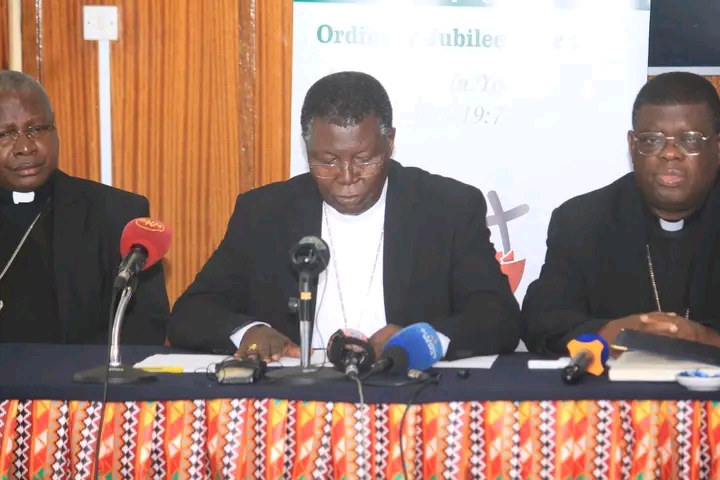
“Zambia’s Debt Crisis: ZCCB Demands Accountability and Transparency as Nation Faces Mounting Financial Burden”
The Zambia Conference of Catholic Bishops (ZCCB) launched a nationwide campaign calling for debt cancellation, accountability, and transparency in the management of Zambia’s crippling debt. The campaign, unveiled during the global Jubilee Year 2025, comes as Zambia’s external debt surpasses $20 billion, with little to show for the billions borrowed over the past two decades.
Archbishop Ignatius Chama, President of the ZCCB, delivered a scathing critique of both global financial systems and Zambia’s leadership, urging immediate action to address the country’s deepening economic crisis. “We cannot continue on this path,” he declared. “Debt cancellation is not just a financial necessity; it is a moral imperative.”
Zambia’s current debt crisis is eerily reminiscent of the early 2000s, when the country was among the beneficiaries of the Heavily Indebted Poor Countries (HIPC) initiative. Billions of dollars in debt were forgiven, offering what was supposed to be a fresh start. Yet, two decades later, Zambia is once again grappling with unsustainable debt levels.
“We acknowledge that Zambia’s debts were forgiven 20 years ago, yet here we are again, seeking relief,” Archbishop Chama stated. “This is not just a failure of the global system but a failure of our own leadership. We must confront our internal issues of fiscal mismanagement and lack of accountability.”
The Archbishop’s remarks underscore a growing frustration among Zambians, who have seen little improvement in their living conditions despite years of borrowing. Roads remain in disrepair, hospitals lack essential supplies, and schools are overcrowded. Meanwhile, allegations of corruption and mismanagement continue to plague the government.
At the heart of the ZCCB’s campaign is a demand for greater transparency and accountability in how Zambia’s debt is acquired and managed. Archbishop Chama outlined several key measures, including parliamentary oversight, open reporting, and independent audits.
“The people of Zambia have a right to know how their money is being spent,” he said. “Every loan, every project, every dollar must be accounted for. Without transparency, there can be no trust.”
The Archbishop’s call comes amid mounting concerns over the government’s opaque financial practices. Recent reports from the Auditor General have revealed billions of kwacha in unaccounted funds, yet little has been done to address these discrepancies. Critics argue that without meaningful reforms, any future debt relief will only lead to further mismanagement.
The ZCCB’s campaign also highlights a pervasive culture of impunity that has allowed corruption and fiscal irresponsibility to flourish. High-profile corruption cases are rarely prosecuted, and those implicated often escape accountability due to political connections.
“We cannot continue to borrow recklessly while our people suffer,” Archbishop Chama emphasized. “The government must be held accountable for every dollar, every kwacha it spends. Parliament must rigorously review and approve all loans, and citizens must have a say in how their future is being mortgaged.”
Civil society organizations have echoed these sentiments, calling for greater public involvement in debt management. “This is not just a government issue; it is a national crisis,” said one activist at the launch. “We need inclusive policy dialogues and stakeholder committees to ensure that debt-funded projects align with the needs of the people.”
While much of the blame lies with Zambia’s leadership, the ZCCB also pointed to the role of the global financial system in perpetuating the country’s debt crisis. Unfavorable loan terms, tied aid, and exploitative trade practices have left developing nations like Zambia trapped in a cycle of debt.
Archbishop Chama called on international lenders to demand greater accountability from borrowing nations. “Debt relief without reform is like giving a drunk another drink,” he said. “We need systemic change, both at home and abroad.”
The ZCCB’s campaign aligns with Pope Francis’s global call for debt forgiveness during the Jubilee Year 2025. The Pope has emphasized the moral and ethical necessity of addressing global inequalities and relieving the debt burdens that stifle the growth and well-being of developing nations.
It must be noted that the ZCCB’s campaign is a rallying cry for Zambians to demand better from their leaders. With debt servicing consuming a significant portion of the national budget, there is little left for essential services like healthcare, education, and infrastructure.
“We cannot afford to continue on this path,” Archbishop Chama warned. “Debt cancellation is crucial—it is not just a financial adjustment but a step toward uplifting the Zambian people. By reducing our debt, we can invest more in health, education, and infrastructure, improving the quality of life for all Zambians.”
The Archbishop also called on religious leaders, civil society, and ordinary citizens to join the movement for debt cancellation and systemic reform. “This is your campaign,” he said. “Together, we can secure a brighter future for ourselves, our children, and our nation.”
As Zambia enters the Jubilee Year 2025, the ZCCB’s Debt Cancellation Campaign offers a glimmer of hope for a nation burdened by debt and despair. However, the success of this campaign will depend on the government’s willingness to embrace transparency, accountability, and meaningful reform.
Archbishop Chama’s closing words serve as both a challenge and a call to action: “Together, let us pursue economic and ecological justice, ensuring a debt-free future where the promise of our land is realized for all Zambians.”
Kumwesu January 31, 2025.