

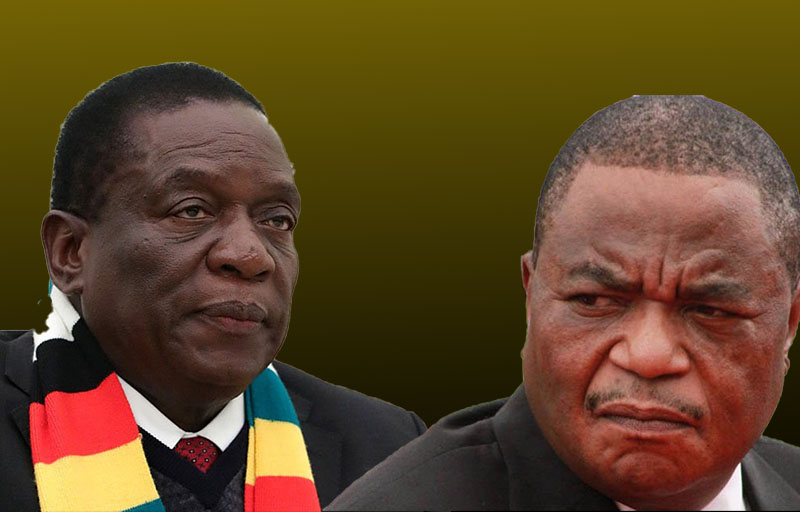
Chiwenga’s King Hezekiah Parable Raises Eyebrows As Mnangagwa Clings To Power
Vice President Constantino Chiwenga has set tongues wagging across Zimbabwe after delivering a pointed biblical sermon that many interpret as a direct rebuke of President Emmerson Mnangagwa’s determination to extend his hold on the presidency.
Addressing a Roman Catholic Church gathering in Murewa on Saturday, 26 April 2026, Chiwenga recounted the tragic downfall of King Hezekiah, a ruler who begged God for more years on the throne only to spend that borrowed time in ruin and imprisonment.
Though Mnangagwa’s name never passed Chiwenga’s lips, the parable landed with explosive force just as parliament tables the Constitution of Zimbabwe Amendment (No. 3) Bill 2026, a legislative package designed to abolish direct presidential elections and close off any path to succession for the country’s two vice presidents.
A Sermon Steeped In Political Meaning
Chiwenga began his address by praising Saint Francis of Assisi, urging leaders to adopt what he termed a “balanced leadership framework” grounded in humility, radical simplicity, peace building and compassionate outreach to the most vulnerable.
The tone shifted markedly when he opened the Book of Isaiah and began narrating the story of King Hezekiah.
“When God asks you to do something, never question why. Why has God done this?” Chiwenga told the hushed congregation.
“Hezekiah reigned over Judah for a very long time, and became a very prominent king. He began to see himself as not fit for death and thought he was supposed to reign over Judah forever.”
The Vice President, a known practising Catholic, described how God sent the prophet Isaiah to inform Hezekiah that his days were numbered and he must put his affairs in order. The king reacted with fury and defiance.
“Hezekiah would have none of it, hitting on the walls of the palace: ‘What kind of a God are you? There is no any other king who can reign like me.’”
God relented and granted Hezekiah an additional 15 years. What followed, Chiwenga explained, was disaster. The king, his judgment fatally compromised, revealed his kingdom’s military secrets to spies from Nebuchadnezzar. The Babylonians later returned and crushed him utterly.
“He never managed even three months of the extended period,” Chiwenga said. “He spent the extended 15 years down in jail. God did not take away the 15 years, he let him have them, but he was in jail.”
Chiwenga’s choice of scripture has raised eyebrows precisely because the Constitution of Zimbabwe Amendment (No. 3) Bill 2026 proposes changes that fundamentally alter who can reach the presidency and how.
The bill abolishes the direct election of the president by popular vote. Instead, the president would be chosen by members of parliament sitting in a joint session of the Senate and National Assembly, with a candidate requiring more than half the valid votes cast.
The legislation also dismantles provisions on automatic succession by a vice president should the president become incapacitated, resign or die. This directly affects both Chiwenga and Kembo Mohadi, the second vice president.
Political analysts have warned that the amendments could turn the presidency into a commodity, with leadership rivals prepared to bribe MPs to seize control of both Zanu PF and the government.
Parliamentary and presidential terms would be extended from five years to seven under the bill. Lawyers and opposition parties have branded this unconstitutional, insisting any such change benefiting incumbents requires a referendum.
The bill’s authors offer a governance argument, claiming longer terms “eliminate election mode toxicity” and allow “sufficient time for project implementation.”
Mnangagwa’s current term runs to 2028, and the constitution bars him from seeking another. His supporters maintain the proposed amendments merely extend terms and do not breach term limit provisions. MPs are expected to vote on the bill in late May before the president signs it into law.
The General Who Helped Build The Throne
Chiwenga, a former Zimbabwe Defence Forces commander, is widely acknowledged as the co-architect of the November 2017 military coup that swept Mnangagwa to power. Long considered the natural successor, his path to the top now appears deliberately blocked by the very man he helped install. According to ZimLive, the Vice President’s homily carried unmistakable resonance, a coded but unmistakable signal delivered from the pulpit of a Murewa church rather than the podium of a political rally.
No names were uttered. No accusations levelled. Yet the image of a king who refused to let go, and paid for it with a prison cell, lingered long after the congregation dispersed.