

🇿🇲 BRIEFING | Kalaba Unveils ‘Orange Alliance’ as Opposition Reconfigures Ahead of 2026 Poll
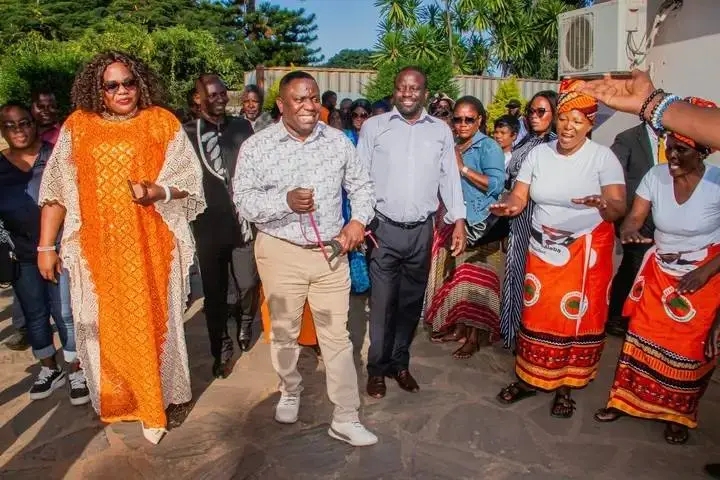
Zambia’s opposition landscape is undergoing another recalibration, with Harry Kalaba formally launching the Citizens First (CF) Orange Alliance, a coalition bringing together the National Democratic Congress (NDC) and the Revamp for Development Change (RDC) ahead of the August general elections.
Positioned as both a political vehicle and a symbolic project, the alliance is being framed around unity, consolidation, and electoral survival. Kalaba, now installed as Alliance President, described the formation as “a patriotic and encouraging step towards restoring hope, integrity, and effective leadership,” signalling an attempt to reposition himself as a central opposition figure in an increasingly fragmented field.
The arithmetic behind the alliance is clear.
Opposition parties, weakened by internal fractures and poor coordination since 2021, are now under pressure to pool limited political capital. Kalaba acknowledged this reality directly, stating that “no single party can overcome the nation’s challenges in isolation,” a tacit admission that standalone bids are unlikely to mount a serious national challenge against the ruling UPND.
Support from coalition partners has been swift and deliberate.
Saboi Imboela confirmed that the NDC would rally behind Kalaba, arguing that the alliance is “not just an endorsement but a structured coalition with a clear identity.” Her remarks reflect a strategic shift among smaller parties, moving away from parallel candidacies toward negotiated leadership under a single banner.
The choice of branding is also intentional.
Imboela noted that the term “Orange Alliance” was selected to symbolise “strength, unity, and resilience,” an effort to construct a recognisable political identity in a crowded opposition space. In Zambia’s electoral history, alliances often collapse under leadership disputes. This coalition is attempting to pre-empt that by settling the presidential question early.
But the messaging goes beyond structure into symbolism.
Kalaba has increasingly leaned into a biblical political narrative, presenting himself as a “David” figure confronting a dominant political establishment. That imagery, reinforced by his public appearances with a catapult, is designed to frame the election as an underdog contest rather than a conventional policy battle.
Robert Chansa, representing RDC, amplified this framing, declaring that Zambia stands “at a crossroads” and describing Kalaba as a divinely positioned leader. Such rhetoric signals a deliberate appeal to faith-based constituencies, a critical demographic in Zambia’s political ecosystem.
Still, beneath the rhetoric, structural questions remain.
The alliance has outlined ambitions to secure not only the presidency but also a parliamentary majority and control of local government structures. However, like many opposition formations, it faces the enduring challenge of translating elite agreements into grassroots mobilisation. Zambia’s electoral politics are historically anchored in regional strongholds before expanding nationally, a factor that has historically disadvantaged newer or loosely structured coalitions.
This is where the real test lies.
While the Orange Alliance presents a unified front on paper, its effectiveness will depend on its ability to penetrate established political bases, organise at ward and constituency level, and present a coherent alternative that resonates beyond messaging.
For now, the launch marks an important moment in the opposition’s attempt to regroup.
Whether it evolves into a competitive electoral force or joins the long list of alliances that failed to convert unity into votes will be determined not by declarations, but by organisation, discipline, and ground-level traction in the months ahead.
© The People’s Brief | Chileshe Sengwe
Mr. Kalaba should consider changing the CF symbol to a catapult since he fancies himself to be a David.