

Russia Launches Major Tactical Nuclear Exercise With Belarus Amid Rising NATO Tensions
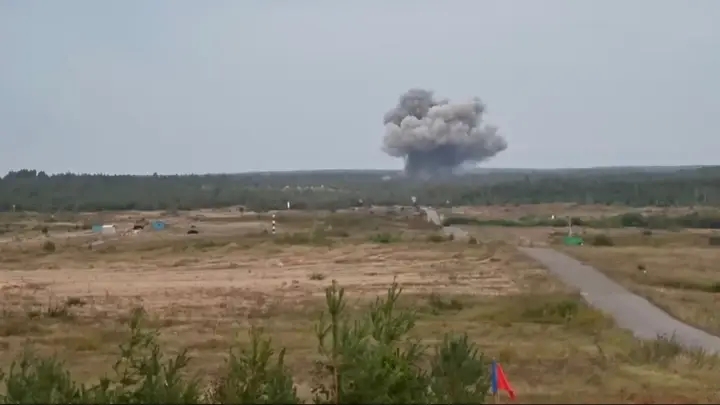
Russia and Belarus have launched a large-scale tactical nuclear exercise from May 19–21, marking one of the most significant joint strategic drills between the two allies in recent years as tensions with the West continue to escalate.
Images released by the Russian Defense Ministry showed missile units transporting simulated tactical nuclear warheads before loading them onto Iskander-M short-range ballistic missile systems at concealed deployment sites.
The images also showed military crews moving launch vehicles into forested areas under camouflage as part of preparations for rapid deployment and strike operations.
The 9K720 Iskander-M missile system is capable of carrying conventional or tactical nuclear warheads and is known for its high-speed maneuverability and ability to evade air defense systems during the terminal phase of flight.
At the same time, Belarus deployed modified Su-25 attack aircraft capable of delivering tactical nuclear gravity bombs during joint air operation drills.
According to Russian defense officials, the exercise involved more than 64,000 personnel, approximately 7,800 military vehicles and systems, over 200 missile launchers, and more than 140 aircraft. Naval assets from Russia’s Northern Fleet and Pacific Fleet were also reportedly placed on heightened operational readiness.
Moscow described the exercise as preparation for scenarios involving “threats to the survival of the state,” while analysts view the drills as a direct strategic warning to NATO following growing disputes over military activity near the Baltic region and Kaliningrad.
The exercise also comes shortly after sharp rhetoric between the Kremlin and Lithuania regarding NATO’s posture near Russia’s western borders, adding to fears of further escalation between Russia and Western military alliances.
Major Tactical Nuclear Exercise With Belarus Amid Rising NATO Tensions
Russia and Belarus have launched a large-scale tactical nuclear exercise from May 19–21, marking one of the most significant joint strategic drills between the two allies in recent years as tensions with the West continue to escalate.
Images released by the Russian Defense Ministry showed missile units transporting simulated tactical nuclear warheads before loading them onto Iskander-M short-range ballistic missile systems at concealed deployment sites.
The images also showed military crews moving launch vehicles into forested areas under camouflage as part of preparations for rapid deployment and strike operations.
The 9K720 Iskander-M missile system is capable of carrying conventional or tactical nuclear warheads and is known for its high-speed maneuverability and ability to evade air defense systems during the terminal phase of flight.
At the same time, Belarus deployed modified Su-25 attack aircraft capable of delivering tactical nuclear gravity bombs during joint air operation drills.
According to Russian defense officials, the exercise involved more than 64,000 personnel, approximately 7,800 military vehicles and systems, over 200 missile launchers, and more than 140 aircraft. Naval assets from Russia’s Northern Fleet and Pacific Fleet were also reportedly placed on heightened operational readiness.
Moscow described the exercise as preparation for scenarios involving “threats to the survival of the state,” while analysts view the drills as a direct strategic warning to NATO following growing disputes over military activity near the Baltic region and Kaliningrad.
The exercise also comes shortly after sharp rhetoric between the Kremlin and Lithuania regarding NATO’s posture near Russia’s western borders, adding to fears of further escalation between Russia and Western military alliances.