

Hopewell Chin’ono writes:
A borderless Africa is a powerful idea, but at this stage it remains fanciful because African countries have not yet reached an equilibrium in their economies. If Zimbabwe were to embrace it today, neighbouring countries would need to have comparable economic indicators.
Without that balance, you would not have a dual flow of people between Zimbabwe and South Africa, Botswana, Zambia, or Mozambique. Instead, you would only have one-way traffic of desperate citizens flooding into the country that appears more functional.
This is the problem South Africa faces. Africans from across the continent move there in huge numbers, while there is no corresponding flow of South Africans moving elsewhere. Pan-Africanism cannot exist in one country alone; it must be spread across the continent, built on shared stability and economic prosperity.
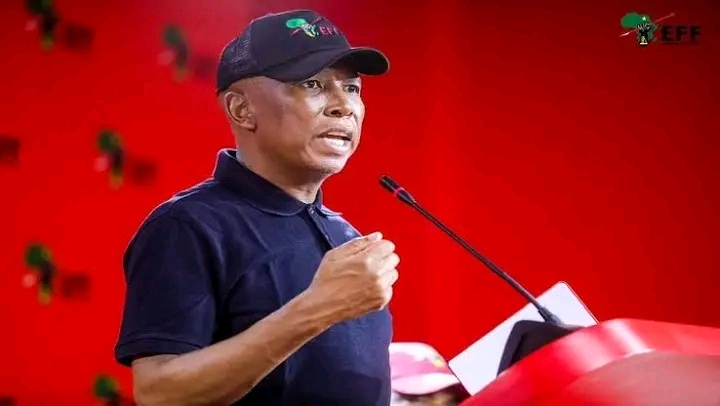
What Traoré and Julius Malema are advocating sounds noble, but at present it is utopian. Without improvements in governance, corruption, and economic growth, it cannot work.
When I holiday in France, I often fly to Geneva because the town where I stay in France is only 30 minutes away. I drive from Switzerland to France without realising I have crossed a border, because there is no imbalance.
There are no desperate French citizens fleeing into Switzerland for jobs, and no Swiss escaping into France for survival. The flow is balanced. That is what makes the European Union possible.
Even then, many countries that aspire to join remain outside because they have not yet aligned their economies with those of existing members.
Contrast that with Africa. If borders were removed while one country cannot provide its people with basic medicine, while its neighbour has working industries, the stronger country would be overwhelmed with economic refugees. This is already the reality between Zimbabwe and South Africa, and between South Africa and several other African nations.
A borderless Africa must be more than a slogan. It must be grounded in fixing economies, tackling corruption, and building industries. Only then can we dream of an Africa where one can drive from Harare to Kinshasa without a passport, just as one drives from France to Germany today.
Until then, to call for open borders in a broken continent is not liberation, it is a recipe for collapse. Pan-Africanism will only be meaningful when underpinned by justice, prosperity, and equality across the continent and not just in one country.
Several countries are waiting to join the European Union but their membership has been delayed because of corruption, weak institutions, or economic imbalances. Bosnia and Herzegovina, though granted candidate status, still struggles with judicial reform, tackling organised crime, preventing conflicts of interest, and protecting media freedom.
Serbia has been pressed to address corruption, strengthen its judiciary, and reform election and media laws. Other Western Balkan states such as Montenegro, North Macedonia, and Albania also face challenges with corruption, state capture, and rule of law, which continue to slow their progress to join the EU. Beyond the Balkans, Georgia’s EU membership process has been frozen due to laws seen as suppressing civil society and independent media.
These examples highlight the EU’s insistence on strong governance, rule of law, and economic stability before expanding further, since admitting countries that fall short risks creating instability within the union.
Now let me ask you a rhetorical question, my brother Brendon. How can a country like Uganda or Zimbabwe be in the same union with countries like Egypt and South Africa that have functional economies?
What it means is that Ugandans will run to Egypt and Zimbabweans will run to South Africa without a two way flow where Egyptians can also go to Uganda and South Africans can go to Zimbabwe. That is not pan-Africanism, that is the result of dysfunctional economies that create poverty and force people to flee.
You cannot lift restrictions on borders and passports until that reality is resolved. The rest of what you hear is just fashion. I call it fashion Pan-Africanism; rhetoric without substance, not rooted in real substantive debates or meaningful and practical realities.