

All 116 districts to benefit from cash for work jobs – Cabinet
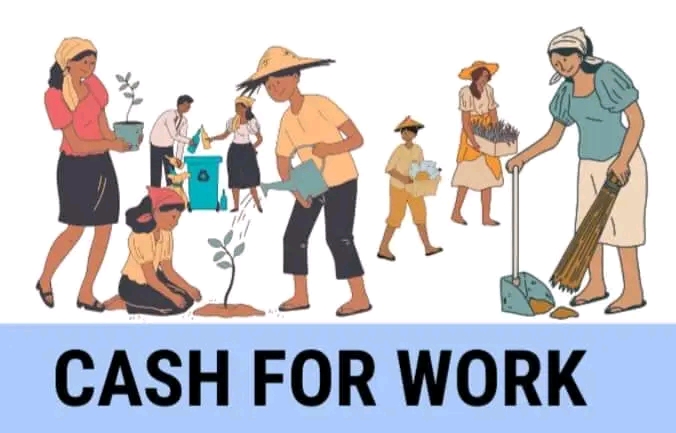
ALL 116 districts in the country will now benefit from the revised cash for work programme, bringing temporary jobs and income opportunities to vulnerable citizens nationwide.
The expansion was approved by Cabinet in their 24th meeting of 2025, which was chaired by President Hakainde Hichilema.
Chief government spokesperson Cornelius Meeetwa said the programme allows citizens to earn cash wages while contributing to community projects.
Speaking at a press briefing yesterday, Mweetwa said the revised programme addresses previous challenges in targeting, safeguards, payments and grievance redress management, as it particularly targets citizens not part of the other cash transfer schemes, aiming to reduce poverty and vulnerabilities across urban, peri-urban and rural areas.
He emphasised that the cash for work programme is more than temporary income, it is about building lasting community assets and enhancing local productivity.
“Government undertakes public works which are expected to promote skills development, public health and mitigate disease outbreaks, such as cholera by clearing drainages, improving community assets such as rural bridges, and enhancing environment conservation, natural resource management for enhanced climate resilience and adaptation,” said Mweetwa.
“At the same time, community assets such as dip tanks, roads, storage facilities and dams under the Revised Cash for Work Programme contribute to increased productivity of targeted communities.”
Cabinet has also given a green light for the Tobacco Control Bill of 2025, to be published and introduced to Parliament during the current sitting, aiming to protect the health of Zambians now and in the future.
Mweetwa revealed that the Bill seeks to shield people from harmful effects of tobacco and nicotine products, including addiction, exposure to toxic emissions and other social, environmental and economic consequences.
“Currently, the country does not have specific legislation to protect present and future generations from the health, social and environmental consequences. Cabinet also agreed on the need to enact legislation that reflects international best practices in the governance of the use of tobacco products, tobacco devices, nicotine, nicotine products and nicotine devices,” he stated.
In a separate move, Cabinet approved the Zambia Wildlife (CITES) regulations, 2025, to bring the country’s wildlife trade laws in line with the Convention on International Trade in Endangered Species of Wild Fauna and Flora (CITES).
Zambia has been part of CITES since 1981, and the new regulations aim to strengthen legal framework for protecting endangered species and ensuring responsible wildlife trade.
By Sharon Zulu
Kalemba December 10, 2025