

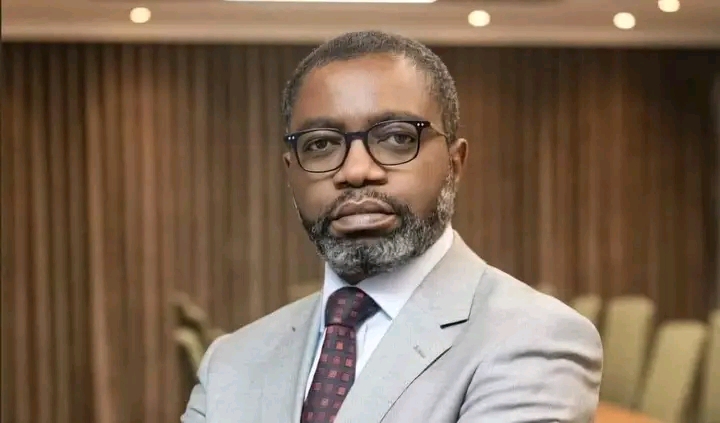
🇿🇲 ANALYSIS | Sangwa Steps Aside, MNR Confronts Political Reality
A significant shift has occurred in Zambia’s 2026 electoral landscape.
Elite constitutional lawyer John Sangwa has formally withdrawn from the presidential race, stepping away from his leadership role in the Movement for National Renewal (MNR). In his own words, the environment had become “practically impossible” for meaningful participation, citing delayed party registration, restricted mobilisation, and funding challenges driven by fear among potential supporters.
The movement itself has moved quickly to stabilise the narrative.
In an internal communication, MNR confirmed Sangwa’s exit but insisted continuity remains intact. “The Movement still stands. The mission continues,” said founder Hayden Kapandula, urging supporters to remain “calm, united, and resolute” as the organisation prepares its next steps. It is a message of reassurance, but also one that quietly acknowledges a leadership vacuum at a critical political moment.
These developments bring clarity, but also raise deeper questions.
Sangwa’s entry into politics had generated attention because of his credibility in law and governance. He is elite, structured, and intellectually grounded. He may very well possess the temperament of a President. But elections are not won in courtrooms or conferences. They are won in markets, villages, compounds, and rallies. This is where the first limitation emerges.
Sangwa is not a rally politician.
Zambian politics rewards visibility, repetition, and physical presence among the people. It rewards the ability to stand on a dusty field and convert policy into emotion. Figures like Michael Sata mastered this. Hakainde Hichilema learned it over time. Sangwa, like Fred M’membe, operates from a different space. One of ideas, not mobilisation.
This difference is not minor. It is decisive.
Zambian presidential politics is not built nationally first. It is built regionally, then scaled. Strong parties begin with a clear geographical base, a voting bloc that delivers consistent numbers before influence spreads outward. The Patriotic Front built its strength in the Northern circuit. UPND consolidated across the Zambezi region. From those anchors, both parties expanded into urban centres and national relevance.
This is the political formula. Sangwa and MNR do not have that base.
There is no identifiable heartland. No region where the movement commands loyalty strong enough to guarantee votes before campaigning even begins. Without that foundation, every election becomes an uphill battle. Mobilisation becomes expensive. Messaging becomes scattered. Momentum becomes difficult to sustain.
Starting from Lusaka makes it even harder.
Urban politics is fragmented. It is influenced, but rarely anchored. Building a party from the capital without a rural or regional base requires enormous resources, time, and organisation. It is not impossible, but it is one of the most difficult routes in Zambian politics. That is the terrain MNR attempted to navigate.
The structural barriers Sangwa cites are real.
But they are also part of a system that seasoned political actors anticipate. Delays, restrictions, and funding constraints are not new. They have been navigated before by those who built patiently over years. What distinguishes successful contenders is not the absence of obstacles, but their preparation for them.
Politics does not reward readiness in principle. It rewards readiness in structure.
MNR now finds itself at a crossroads. Without Sangwa, the movement must prove it was never just a vehicle built around one man. “MNR belongs to the people,” the statement declares. That is a powerful line. But movements survive only when leadership depth and grassroots presence already exist.
Such depth is now under scrutiny. There is also a harder truth.
Sangwa may have been misdirected into a space that demanded a different kind of preparation. His strength lies in constitutional argument and legal clarity. Zambia needs that. But converting that strength into electoral victory requires machinery he did not build. Elections are not won by entering them. They are won long before they are announced.
His refusal to join other political formations preserves his integrity.
But it also closes off the most viable pathway into power. In Zambia, alliances are not optional. They are often the bridge between credibility and electability. Rejecting them keeps one principled, but politically isolated.
This is where law and politics part ways. One demands consistency. The other demands adaptation.
The result is now clear.
A credible legal mind exits the race. A movement remains, but without a defined base. And an election cycle continues, largely shaped by parties that understand the regional-to-national pathway of power.
This is not the collapse of MNR. It is a correction.
A reminder that in Zambia, leadership alone is not enough. Structure, geography, and time remain the true currency of political success.
© The People’s Brief | Ollus R. Ndomu
Dolika Banda is the natural leader of MNR just like Chiluba was for MMD. What Dolika needs now is a rubble rouser, a bull dozer like Sata, a king maker who connects with the grassroots. In am thinking of Gary Nkombo. He would be the right person unless HH has dirt on him. Chishimba Kambwili needs a revival and if he ditched PF he would be good as chairman of MNR. Ms Banda has her work cut out. One day, Sangwa may return as Justice minister in an MNR government.
Otherwise, it is sad for Zambian politics.
Correct.
I think I just have to move from cyber space into the physical space and dictate things.
This is no time to be on the wings.
Ive told Sangwa that his landing won’t be good, but embarrassment. Look, now I hear people want there donations, they feel like you scammed them. Anyways, go try something else, good luck. Hope you’ll be useful politically in future, of course if you come back with a better strategy
MNR never was. It was a lie from the beginning. Nobody was fooled by Sangwa and no one is being fooled by his remnant. They’re just imaginary entities