

Bill 7 Takes Shape as Zambia Expands Constituencies Ahead of 2026 Elections
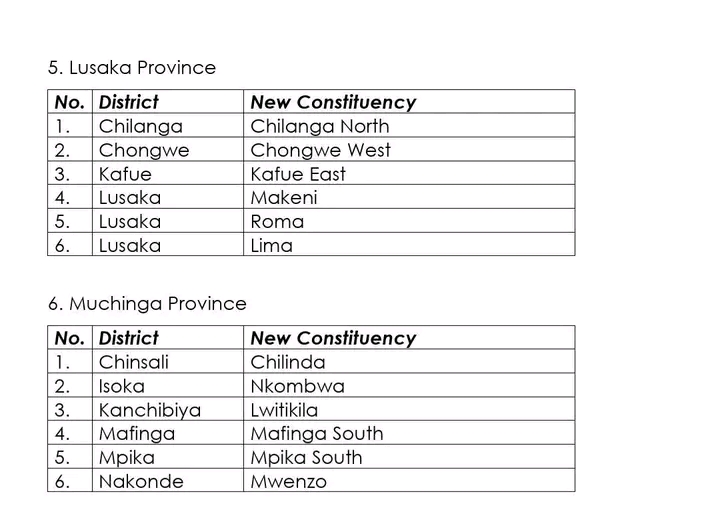
Zambia’s governance reform agenda is steadily transitioning from legislative debate to practical implementation, with the Electoral Commission of Zambia (ECZ) unveiling 70 new constituencies a move widely seen as a direct manifestation of the once-contentious Bill 7 reforms.
The announcement, made by ECZ Chairperson Mwangala Zaloumis at the Mulungushi International Conference Centre, marks a significant milestone in the country’s democratic evolution. The newly created constituencies will increase the total from 156 to 226, fundamentally reshaping representation ahead of the 2026 general elections.
At the heart of this development lies the Constitution of Zambia (Amendment) Act No. 13 of 2025 legislation that echoes provisions initially proposed under Bill 7, a constitutional amendment bill that sparked intense national debate during its introduction.
From Controversy to Implementation
Bill 7, though politically polarizing at the time, sought to address structural gaps in governance, including parliamentary representation, delimitation, and electoral reforms. While it faced resistance and was not fully enacted in its original form, key elements have re-emerged in the current constitutional amendments now taking concrete shape through ECZ’s delimitation exercise.
The creation of 70 new constituencies reflects one of the central arguments of Bill 7: the need to align political representation with Zambia’s growing population and evolving settlement patterns.
According to the ECZ, the delimitation process was grounded in constitutional principles and involved extensive consultations across all 116 districts. Factors such as population density, geographical challenges, and community cohesion were considered to ensure fair and balanced representation.
The expansion of constituencies is more than a technical electoral adjustment it is a governance shift aimed at decentralizing political power and bringing leadership closer to the people.
“This is not the beginning of the journey, but the culmination of a national process rooted in law and citizen participation,” Zaloumis stated during the announcement.
Analysts argue that this move strengthens Zambia’s democratic architecture by improving accessibility to elected leaders, especially in remote and densely populated areas that have historically been underrepresented.
The implementation of these reforms is likely to influence political dynamics ahead of the 2026 elections, with new constituencies opening space for increased competition, new political entrants, and a reconfiguration of electoral strongholds.
However, the process has not been without skepticism. Concerns around misinformation and alleged pre-allocation of constituencies were raised, but the ECZ dismissed such claims, reaffirming its commitment to transparency and impartiality.
Historically, Zambia has undertaken incremental constituency expansions — from 75 at independence to 156 prior to this reform. The addition of 70 constituencies at once represents the most significant single increase in the country’s history.
This moment signals a broader shift: governance reforms that were once theoretical and politically contested are now being operationalized within the constitutional framework.
As Zambia heads toward the 2026 general elections, the rollout of new constituencies stands as a clear indication that elements of Bill 7 have not disappeared they have evolved.
What was once a divisive proposal is now, in part, a lived reality shaping the country’s governance landscape.
The challenge ahead lies not only in implementing these reforms effectively but in ensuring they deliver on their promise: a more inclusive, representative, and accountable democracy.