

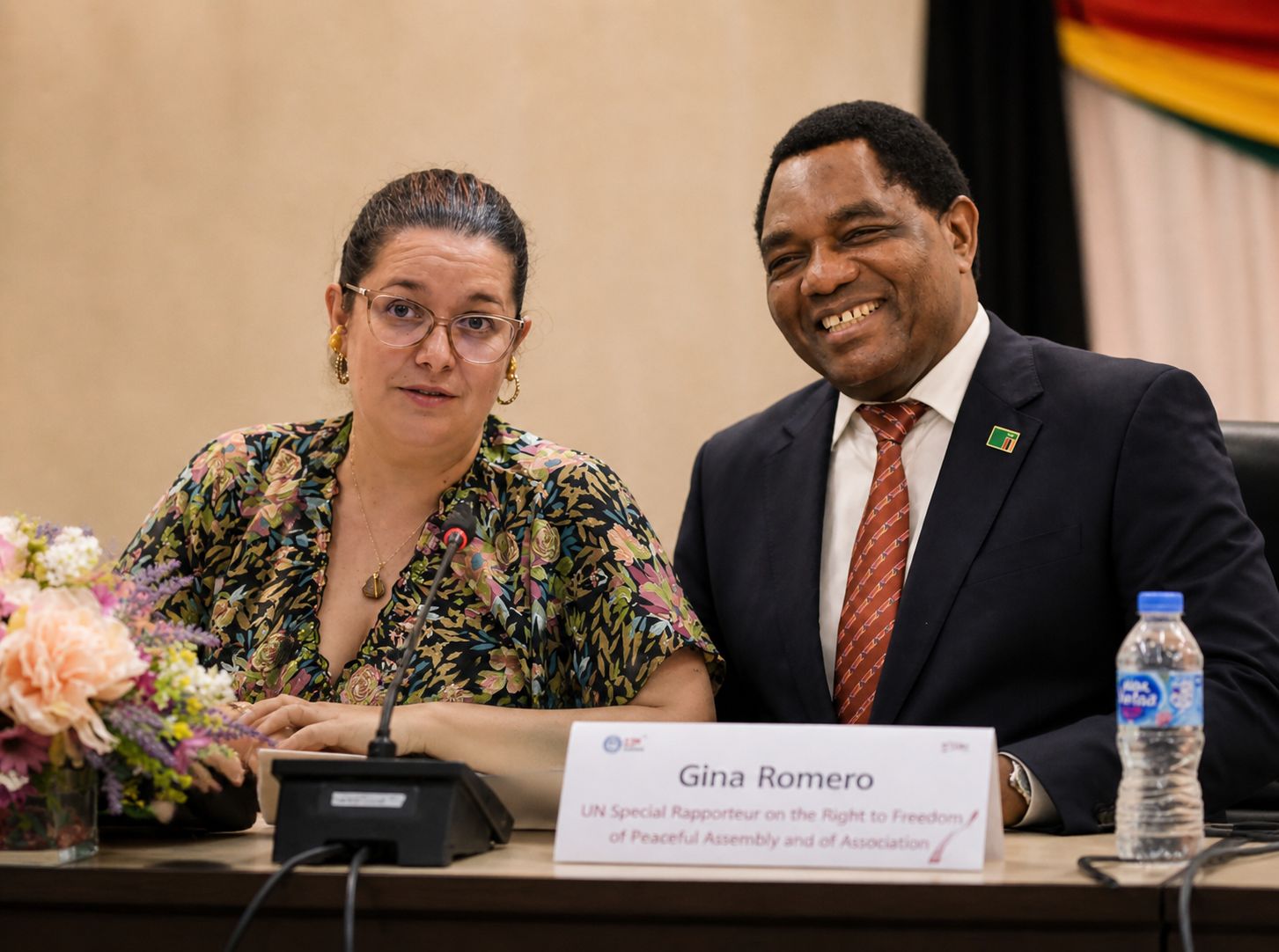
DEAR MS. ROMERO: ZAMBIA IS NOT A UN COLONY
By Our Correspondent
How refreshing. A United Nations official has discovered Zambia on the map, and she is not happy with what she found.
Gina Romero, Special Rapporteur on Freedom of Assembly and Association, has released a strongly worded statement rebuking the Zambian government for postponing RightsCon. She says the move violates international standards. She says it creates a chilling effect. She says it sets a troubling global precedent.
What she forgot to mention is that Zambia is a country. A sovereign one. With its own government, its own laws, and — brace yourself, Ms. Romero — its own right to decide what happens on its own soil.
WHEN DID LUSAKA BECOME GENEVA?
Let us get one thing straight. The United Nations does not govern Zambia. President Hichilema was elected by Zambians, not appointed by the UN Human Rights Council.
Every sovereign nation on earth maintains the right to regulate gatherings on its territory. That is not authoritarianism. That is called governance. The same governments that send their diplomats to Geneva to lecture Zambia about assembly rights have their own permit systems, their own national security reviews, their own bureaucratic hoops that foreign-organised events must jump through.
France does it. The United States does it. The United Kingdom does it. When Zambia does it, suddenly it is a human rights crisis.
THE SENSITIVITY OF TIMING
Ms. Romero raises the August elections as evidence of a chilling effect. Here is another way to look at it. Zambia is heading into a general election. The government has every legitimate reason to be cautious about who is convening on its soil, what agendas are being coordinated, and whether the country’s national interest is protected during a sensitive democratic period.
That is not suppression of civil society. That is a government doing its job.
Would Ms. Romero walk into Washington D.C. three months before a U.S. presidential election and demand that the American government wave through a foreign-organised summit of five thousand people discussing political rights, without any review? We would love to watch her try.
NATIONAL VALUES ARE NOT A DIRTY PHRASE
The Special Rapporteur appears personally offended that Zambia asked for alignment with national values and policy priorities. She calls it a pretext. We call it sovereignty.
Every nation filters international engagement through the lens of its own interests and values. This is not radical. This is the entire basis on which the international system was built. The United Nations Charter itself, the very document that created Ms. Romero’s position, is founded on the principle of sovereign equality of states.
You cannot cite the UN to argue against a country’s right to govern itself. The logic collapses before the ink dries.
FINANCIAL BURDENS AND CROCODILE TEARS
We are told the postponement caused financial and logistical burdens on attendees. This is unfortunate. Genuinely so. But if the organisers of a summit involving five thousand participants and five hundred sessions cannot absorb a postponement without catastrophic consequences, that is a planning and insurance conversation, not a human rights indictment of the Zambian state.
International organisations routinely reschedule events. When they do it, it is called operational management. When Zambia does it, it is a violation of the right to association.
A WORD ON PRECEDENT
Ms. Romero warns that Zambia is setting a troubling global precedent. Perhaps she is right. The precedent being set is this: African governments will not be lectured into surrendering their sovereign authority over their own territory. If that troubles the international community, the international community is welcome to host their summits in Geneva.
Zambia is not a venue for hire. It is a nation. And nations make their own rules.
Ms. Romero should update her notes accordingly.
Zambian Angle