

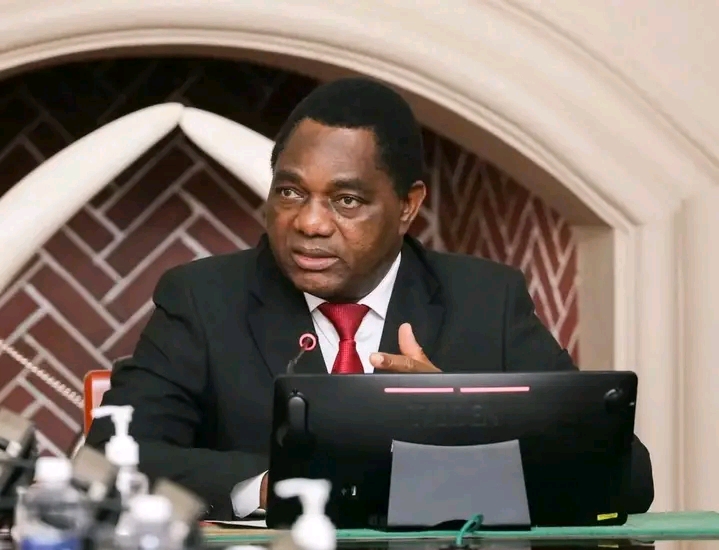
DOES PRESIDENT HAKAINDE HICHILEMA HAVE A LEGACY IN ZAMBIA?
By Aibuh News Connect | Zambia
The question of President Hakainde Hichilema’s legacy is not just a political debate—it is a matter of national discussion across all ten provinces. Many Zambians are asking whether the Head of State’s leadership has left a lasting footprint in their communities and in the country at large.
THE CRITICS’ VIEW
Some citizens argue that while government policies are well-intentioned, more still needs to be done on the ground. They cite the high cost of living, limited road infrastructure, and delays in implementing certain projects as evidence that the President’s promises have not yet been fully realized by ordinary households.
THE SUPPORTERS’ VIEW
Supporters, however, highlight visible achievements that are already shaping HH’s legacy nationwide:
✓ Health Sector: Delivery of ambulances, improved medical supplies, and increased staffing levels in hospitals and clinics.
✓ Education: Expansion of classroom blocks through the Constituency Development Fund (CDF) and the free education policy, which has eased the financial burden on parents.
✓ Employment: Thousands of teachers and health workers recruited, providing opportunities for young professionals across the country.
✓ Community Empowerment: CDF-funded projects including skills training, youth and women empowerment initiatives, and small-scale infrastructure development.
✓ Improved Governance: A decline in cadre violence and greater civic freedoms compared to previous years.
✓ Mining Sector: Restructuring of the mining industry through debt resolution and renewed investor confidence. Agreements with major players like First Quantum Minerals and Mopani Copper Mines have restored production stability, safeguarded jobs, and attracted fresh investment into Zambia’s copper belt.
✓ Agriculture: Timely distribution of farming inputs under the Farmer Input Support Programme (FISP), increased investment in irrigation, and support to smallholder farmers aimed at transforming Zambia from a food-deficit to a food-secure nation. Export of surplus maize and policy measures to strengthen agro-value chains are also part of HH’s agricultural footprint.
THE BALANCED REALITY
To understand HH’s legacy, Zambians must also remember where the nation was coming from before the UPND took over in 2021. At that time, the country faced heavy debt distress, high levels of political violence, and limited civic space. Service delivery in many sectors was struggling, with unpaid salaries, shortages in schools and hospitals, and citizens losing confidence in public institutions.
Today, some of those challenges remain—especially the high cost of living—but the government has managed to stabilize key areas, restore investor confidence, and improve governance. Foundations have been laid in education, health, mining, agriculture, and community empowerment.
CONCLUSION
Whether President Hichilema is remembered fondly across Zambia will depend on how effectively his government turns these policy foundations into everyday economic relief and visible infrastructure before the end of his current mandate.
AIBUH NEWS CONNECT-
CONNECTING YOU TO THE REAL PULSE OF THE WORLD-
YOU DESERVE CLARITY!!!
You cannot talk of legacy before the man finishes his mission. Talk things which make sense.