

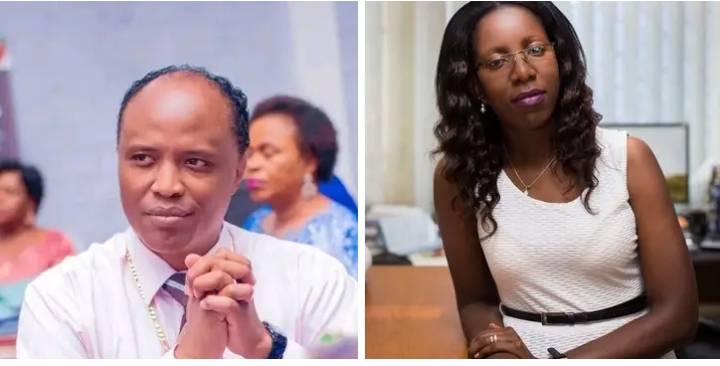
DOES THE REVEREND FINALLY HAVE FOOD IN HIS MOUTH? WALTER MWAMBAZI AND HIS DEFENCE OF AUTHORITARIAN DRIFT IN ZAMBIA
By Thandiwe Ketiš Ngoma
….When Clergy Choose Power Over Truth
Rev. Walter Mwambazi appears to have found a new calling: defending the wrongs of those who abuse and rob people of their rights, and trivialising the experiences of those complaining about injustice. In recent weeks, the good Reverend has been saying regime-praising things that are normally associated with individuals generally seen as turncoats, like Nevers Mumba. What has happened to Rev. Mwambazi? To paraphrase Thabo Mbeki, empty stomachs are good or bad teachers. The problem with our Zambian reverends is that they too have stomachs, in addition to their excellent mouths. It is becoming increasingly difficult to listen to Rev. Mwambazi nowadays without thinking that he has become the new Nevers Mumba or that he has, at the very least, finally got food in his mouth, which makes it hard for him to speak with the clarity he once had. Perhaps I should address the Reverend directly over his latest troubling remarks, which are, however, consistent with his seemingly new role.
Rev. Mwambazi, your assertion that “people who think Zambia is turning into a dictatorship have absolutely no clue what it means to live in one,” followed by your taunt that critics should “try what they do here in Rwanda or Uganda,” is not an innocent opinion. It is a calculated dismissal of legitimate civic alarm and a thinly veiled defence of state overreach.
This is not ignorance. It is complicity.
Your words do not educate the public. They ridicule it. They do not clarify democracy. They distort it. Coming from a religious leader, they represent a profound moral failure. You have chosen to position yourself between citizens and their right to question power, not as a neutral observer, but as a shield for those who govern.
Dictatorship is not defined by how brutal other countries are. It is defined by how rapidly a society is trained to accept intimidation, selective justice, and shrinking freedom as normal. Your argument depends on a grotesque standard, one in which repression only counts once it becomes catastrophic. By that logic, warning signs must be ignored until the damage is irreversible.
That is not wisdom. It is surrender.
Normalising Repression Is a Political Act
When you tell Zambians that their concerns are exaggerated because it is worse elsewhere, you are not defending democracy. You are lowering its threshold. You are instructing citizens to tolerate abuse until it becomes unbearable. You are telling them that fear, surveillance, arrests, and legal intimidation are acceptable so long as they are not yet lethal.
This is precisely how authoritarianism survives: not through force alone, but through voices of respectability that urge silence, patience, and comparison instead of resistance.
History has a name for clergy who behave this way. They are not remembered as peacemakers. They are remembered as collaborators.
Comparisons That Insult Intelligence
Invoking Rwanda and Uganda as your measuring stick is intellectually dishonest and morally obscene. Zambia is not competing to be the least oppressive state in the region. Democracy is not a regional ranking exercise. The absence of extreme brutality does not equal the presence of freedom.
By your reasoning, no citizen has the right to object until journalists vanish, opposition leaders are permanently jailed, or blood is spilled. That position is not only absurd; it is dangerous. It turns democracy into a corpse that may only be mourned after it is dead.
Democracy is defined by limits on power, not by the patience of the oppressed.
Authoritarianism in Legal Disguise and Clerical Applause
Modern authoritarianism does not announce itself with coups. It advances through laws that sound reasonable and are defended by people who should know better.
The Cyber Security and Cyber Crimes Act is one such law. Its vague provisions grant the state extraordinary power to police speech, monitor citizens, and criminalise dissent. In any honest analysis, this law is a tool of intimidation. Yet instead of questioning it, voices like yours dismiss public concern as hysteria.
When laws are selectively enforced, used against critics while allies of power enjoy immunity, law itself becomes a weapon. Those who defend such systems from pulpits are not guardians of morality. They are accessories.
Bill 7: Contempt for the Constitution Enabled by Silence
The Constitution of Zambia Amendment Act No. 7 of 2025 is a blatant example of executive arrogance. After the Constitutional Court ruled the original bill unconstitutional due to the absence of adequate public consultation, the government did not respect the judgment. It manoeuvred around it
This was a direct assault on constitutionalism.
Civil society, including the Zambia Conference of Catholic Bishops, spoke out. You did not. Instead, you chose to deflect, minimise, and redirect attention away from the abuse of process. Silence in the face of constitutional vandalism is not neutrality. It is endorsement.
Selective Justice Is Not an Accident
Opposition figures are arrested swiftly. Politically connected individuals are shielded. Police enforcement follows party lines. Public assemblies are blocked selectively. Elections exist, but participation is punished.
This is not coincidence. It is design.
A system that criminalises opposition while protecting loyalty is authoritarian by definition. Anyone who denies this reality is either wilfully blind or actively invested in preserving that imbalance.
The Criminalisation of Dissent
In functioning democracies, opposition leaders hold rallies without begging permission. Citizens boo their leaders openly. They insult them. They express anger publicly. Leaders endure this because public office is not a throne.
In dictatorships, rallies are banned. Booing is criminalised. Anger is treated as rebellion. Pelting leaders with stones, however symbolic, is met not with ordinary policing but with overwhelming force, often involving the military under the authority of the commander-in-chief.
When a state fears booing, it has already lost moral authority. When clergy defend that fear, they betray their calling.
Fear Is the Real Censorship
Yes, Zambians still speak, but increasingly with caution. Journalists self-censor. Activists calculate risk. Ordinary citizens weigh words against consequences. This is how repression functions without mass arrests.
Dictatorship is not only about what the state does. It is also about what people stop doing because voices like yours told them their fears were imaginary.
Gratitude Is the Language of Subjects, Not Citizens
Citizens owe governments nothing but scrutiny. Democracy does not require gratitude for restraint. It requires resistance to overreach.
Sermons that urge silence, obedience, or comparison with worse regimes do not protect peace. They protect power. History has never been kind to religious figures who sanctified authority while freedom eroded.
Conclusion
Zambia does not need to resemble Rwanda or Uganda to justify alarm. It only needs to exhibit centralised power, shrinking civic space, selective justice, constitutional manipulation, and intolerance of dissent.
It already does.
Rev. Mwambazi, when the full cost of this moment becomes clear, it will matter who warned and who mocked, who spoke and who silenced, who challenged power and who defended it for the wrong reasons.
Authoritarianism is not defined by how bad things are elsewhere.
It is defined by who stands in its way and who clears the path.
Mwambazi just highlighted the positive things the current government is doing, but no, because you’re full of yourself and full of hate for hh, you can’t see nothing right about him. This is why I can’t read your write up because I can tell from the title, keeps me off.
he term AUTHORITARIAN is nonexistent in Zambia, nor does dictatorship prevail. HH has merely prevented individuals from misappropriating or profiting from public resources; is this the justification for labeling him a dictator? Which Zambia are you referring to? Only prostitutes like you and those who profited from illicitly acquired funds and can no longer do so perceive him as a dictator. Such individuals are the true losers; what a disgrace.
The term AUTHORITARIAN is nonexistent in Zambia, nor does dictatorship prevail. HH has merely prevented individuals from misappropriating or profiting from public resources; is this the justification for labeling him a dictator? Which Zambia are you referring to? Only those who profited from illicitly acquired funds and can no longer do so perceive him as a dictator. Such individuals are the true losers; what a disgrace.
Madam,
This assault on an individual is not good. All these attacks on an individual who also the right to speech just like you !!! That’s not fair madam.
By comparison, the political space is very friendly today than it was in the previous regime. If you talked like this in the previous regime, do you really think you would be roaming the streets freely?
It is very apparent that you are a hired gun anyway. I have never read any article from you that could talk about anything good about this current Govt. Are you sure there isn’t? Please be fair. This just shows your hatred for the elected president, and the legitimate Govt.
Those are not checks and balances any more, that is personal hatred and attack on an individual who has the power of choice just like you.
Stop the hate…
Thandiwe Ketis Ngoma, every time I come across your articles on social media, my heart grows heavy with concern. I find myself wondering what burdens you carry within, because your words seem constantly anchored on one man—HH. The intensity of your focus feels less like critique and more like deep-seated resentment, so strong that it leaves no room for balance or fairness. It pains me that you appear unable to acknowledge even a single positive thing about him. This no longer comes across as healthy checks and balances, but as hostility that consumes your message. It feels as though there is a personal wound or unresolved grievance driving your words. I fear that if this bitterness continues unchecked, it will harm not only your credibility, but your peace of mind as well.
What once may have been meant as accountability now risks becoming a burden to the soul, blinding the eye from seeing any good at all. The Spirit reminds us that unchecked resentment can harden the heart and distort discernment. I pray that grace will interrupt this pattern, that healing will replace fixation, and that your voice will rise again with balance, wisdom, and peace—for a heart at rest sees more clearly than one driven by anger.
My leader these were concubines under pf, they are accustomed to receiving unearned money. They harbor resentment, jealousy, and engage in malicious accusations, fabricating narratives that align with their interests. There is a lack of awareness and accountability. When has this woman ever been in Zambia to observe dictatorship? She resides in the Western world, performing a meaningless job. The funds provided to them by pf are depleting day by day.They are just noise makers