

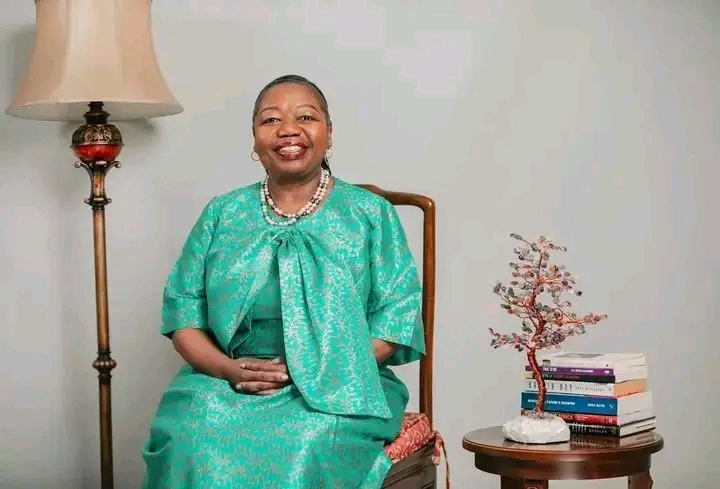
⬆️ COMMENTARY | Dolika Banda’s Lonely Lesson in Opposition Politics
Dolika Banda is learning politics the hard way. Barely months after her name began to feature as a potential 2026 presidential contender, her attempt at a partnership with the People’s Alliance for Change has collapsed. On HotFM she tried to explain why. The story she tells is one of principle and clarity. The story that emerges is one of a newcomer learning just how messy Zambian opposition politics really is.
She insists that her main sticking point with PAC was constitutional compliance. Documents that she asked for did not meet her expectations, and she was not satisfied with what was placed before her. That may sound noble, but it also betrays political naivety.
Zambian opposition parties have long been weighed down by weak structures and paperwork that barely survives a court test. If Banda thought she could enter politics and find neat, well-oiled systems, then she underestimated the terrain she has stepped into.
Her rejection of the rumour that she tried to “buy” PAC was necessary. The whispers of money changing hands had started to define her image before she had even properly entered the race. Yet here lies another fault line. Banda is learning that in politics, perceptions often weigh more than facts. By the time she explained herself on radio, the damage had already been done. It is a reminder that controlling the narrative is just as important as controlling the paperwork.
She argues that alliances must be built on values and vision, not just the race to State House. “If in an alliance everyone is only focused on becoming president, then that’s not good for Zambians,” she said. The problem is that her observation is correct, but her timing is off. Zambia’s opposition has been fractured for decades precisely because every party leader wants the title of “president” above all else. To expect unity around values is to wish for a culture that does not exist.
The idea of alliances sounds neat on paper. In practice, they are graveyards of ambition. From the UDA experiment of 2006 to the bitter collapse of smaller coalitions in the 2010s, opposition alliances rarely last beyond a few months. Even the Tonse Alliance, once hailed as a unifying moment, is today reduced to squabbles over who leads the PF. Banda is therefore discovering that her noble-sounding conditions for partnership are almost impossible in a climate where politics is not about values but about survival.
She is also talking of alliances while partyless. That in itself is telling. Without a registered party, without MPs, and without visible grassroots structures, her bargaining power is thin. She may be banking on her professional background and clean reputation to give her credibility, but politics is unforgiving to outsiders. Without a base, she risks becoming a perennial guest in other people’s houses rather than the host of her own movement.
Still, Banda’s tone reveals a certain freshness. She speaks of integrity, accountability, and a collective vision. These are words rarely heard in the raw, transactional language of Zambian opposition politics. That freshness may appeal to some citizens disillusioned by the same old faces. But freshness alone will not survive the ruthless grind of Zambian campaigns. At some point, she must either build a structure of her own or be swallowed by stronger personalities with deeper roots.
Dolika Banda has begun her journey. Her interviews show that she is earnest, perhaps too earnest for the arena she has entered. Her fault lines are clear: she is partyless, she is untested, and she is discovering that alliances in Zambia are less about vision and more about positioning. For now, she is learning in public. And in politics, lessons learned in public often come at the highest cost.
© The People’s Brief | Commentary
I did advise her to keep her money for her family. She’s too raw for current Zambian politics
Dolika Banda wants to be a chief but without any Indians to lead. How’s that possible?