

🇿🇲 BRIEFING | ECZ Meeting Exposes Deepening Party Fragmentation Ahead of Polls
A high-level engagement convened by the Electoral Commission of Zambia on Friday has laid bare the growing fractures within Zambia’s opposition landscape, after rival factions from the same political parties appeared simultaneously as presidential aspirants.
The meeting, which brought together over 50 aspiring presidential candidates, was intended to provide procedural clarity ahead of the August 2026 general elections. Instead, it quickly turned into a moment of institutional tension and political exposure, as questions emerged over legitimacy, representation, and the coherence of party structures.
The most striking development came from the Patriotic Front, where both Makebi Zulu and Miles Sampa attended as aspiring presidential candidates, effectively presenting two competing claims to leadership within the same party. The dual presence underscored the unresolved legal and political battles that continue to define the PF, even after recent court rulings.
A similar pattern emerged within the National Democratic Congress, where Saboi Imboela and Arthur Musukwa also appeared as separate presidential contenders under the same party banner.
It was Imboela who escalated the moment.
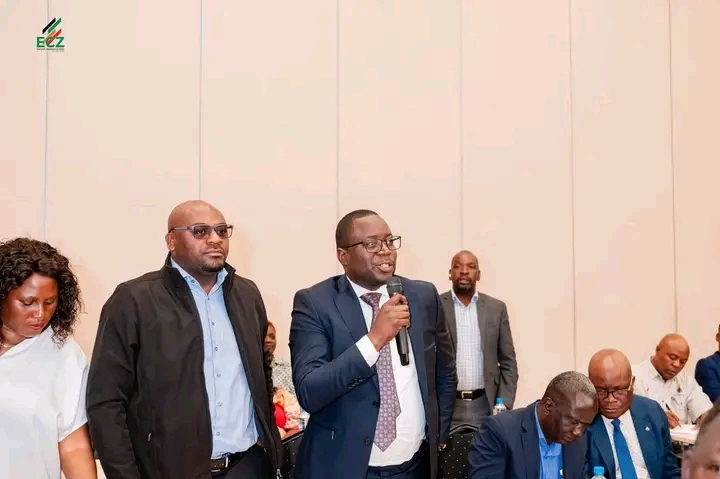
Rising on a point of order at the outset, she directly challenged the Commission, questioning how invitations had been extended to multiple candidates from a single political party and demanding procedural clarity. The intervention was not merely administrative. It struck at the core of electoral integrity, raising concerns about how the Commission intends to navigate internal party disputes in the nomination process.
The ECZ now finds itself in a delicate position.
On one hand, it must maintain neutrality and inclusivity in engaging all aspiring candidates. On the other, it must avoid legitimising parallel structures that could later trigger legal disputes, electoral petitions, or post-election instability.
The optics of the meeting were equally telling.
What was designed as a technical and administrative engagement instead reflected a fragmented opposition entering a critical election cycle without clear command structures. For voters and observers, the scene reinforced a broader narrative: while the electoral calendar is advancing with precision, sections of the political class remain entangled in internal legitimacy battles.
With nominations imminent, the question is no longer theoretical.
Which faction represents the “real” party?
And more importantly, who will the ECZ ultimately recognise when it matters most—on the ballot.
As the 2026 elections draw closer, Friday’s meeting may be remembered less for its procedural purpose and more as a defining snapshot of Zambia’s contested political order.
© The People’s Brief | Ollus R. Ndomu
How is political party division the fault of ECZ ?
Political parties which have unresolved leadership issues shouldn’t even have attended this briefing.
Exactly! Only those parties with legal title so to speak should be recognized by ECZ.