🇿🇲 BRIEFING | ECZ Unveils 70 New Constituencies Following Delimitation
The Electoral Commission of Zambia has officially released the new constituency boundaries following the delimitation exercise anchored on the enactment of Bill 7, marking one of the most significant structural changes to Zambia’s electoral map in recent years.
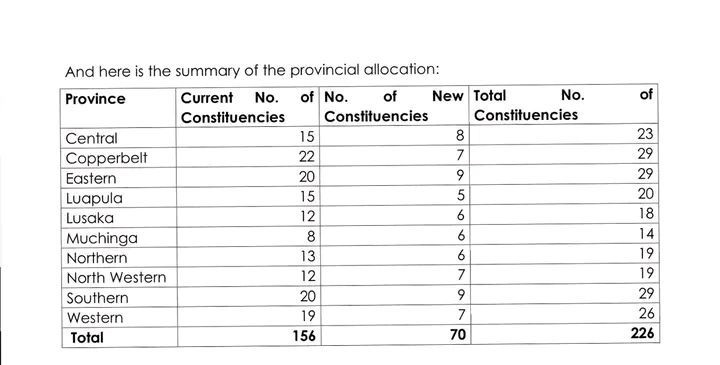
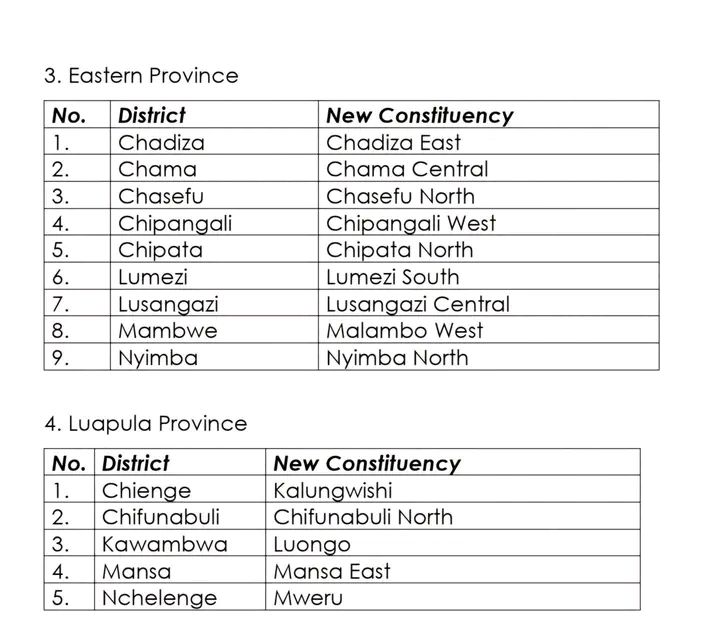
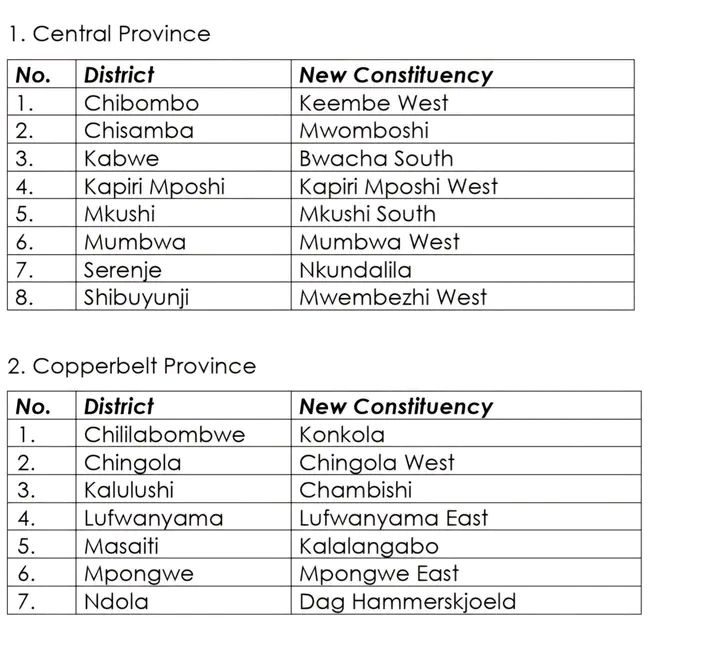
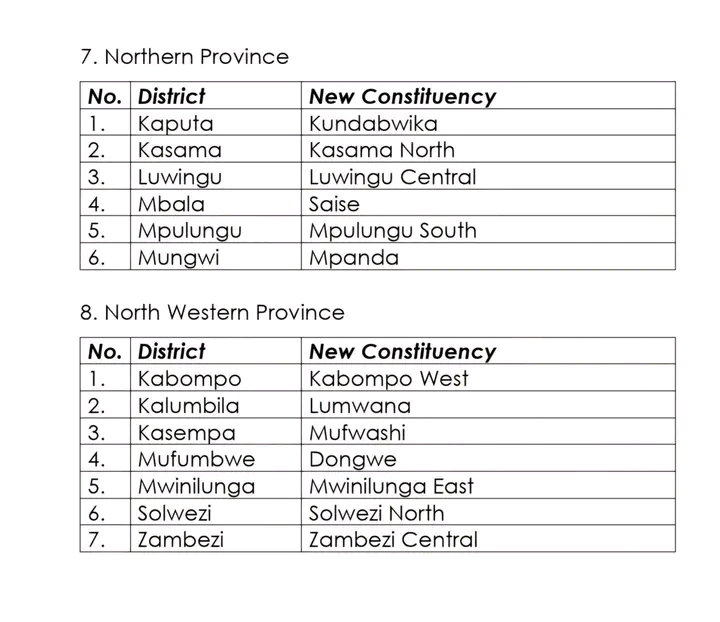
In documents issued by the Commission, a total of 70 new constituencies have been created across all ten provinces, expanding representation and reshaping the country’s political landscape ahead of the August 2026 general elections. The move is intended to address population growth, improve voter representation, and reduce the geographical burden on existing constituencies.
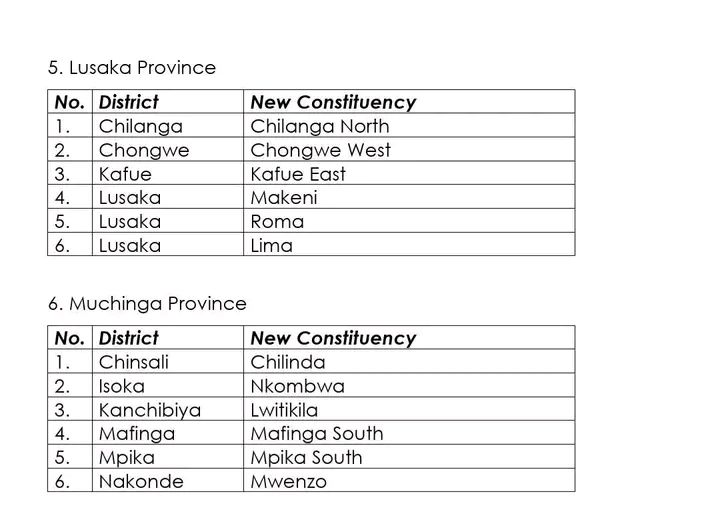
Central Province has gained new constituencies such as Keembe West, Mwomboshi, and Bwacha South, while the Copperbelt sees additions including Konkola, Chambishi, and Chingola West. Lusaka Province has also been significantly reconfigured with new constituencies like Makeni, Roma, and Lima, reflecting rapid urban expansion.
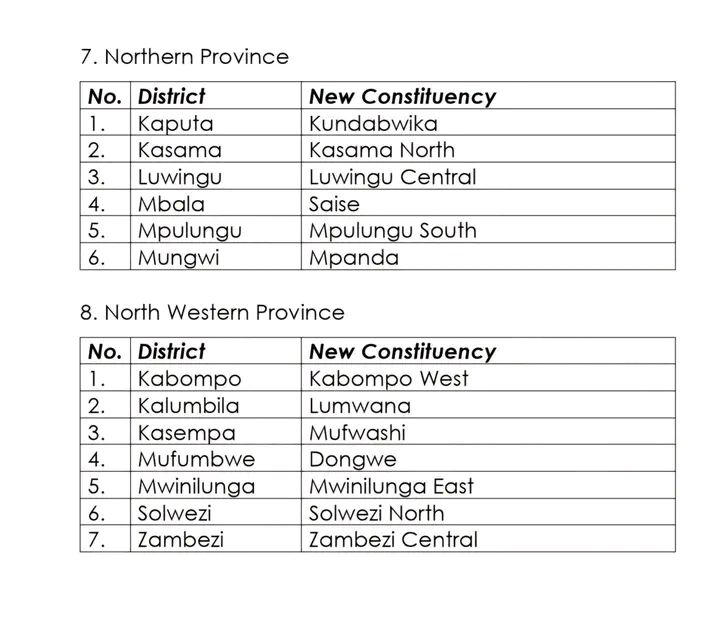
In Eastern Province, new seats such as Chipata North, Lundazi South, and Chama Central have been introduced, while Northern Province now includes constituencies like Kasama North and Mpulungu South. Muchinga, North-Western, and Luapula provinces have also recorded notable increases, with areas like Chilinda, Solwezi North, and Mansa East added to the electoral grid.
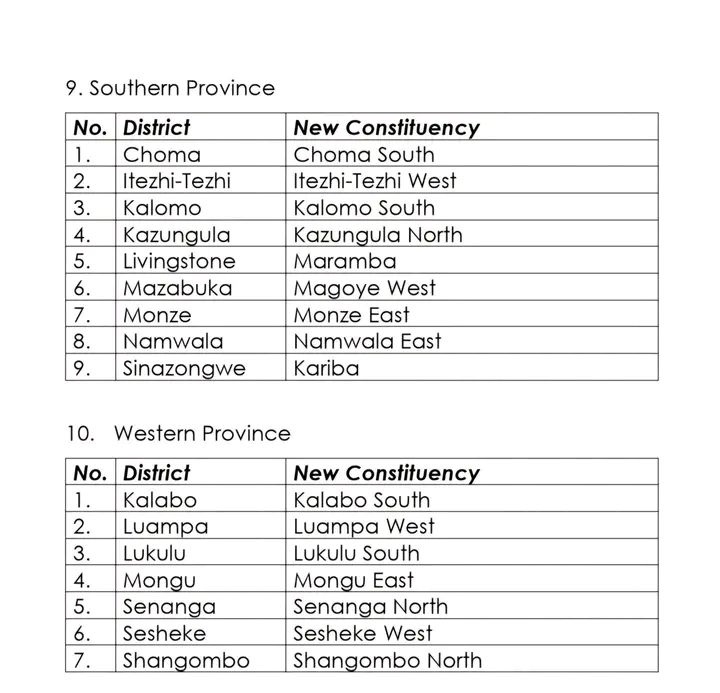
Southern Province has seen the creation of constituencies such as Choma South, Monze East, and Itezhi-Tezhi West, while Western Province now includes Mongu East, Sesheke West, and Shangombo North, among others.
The delimitation exercise follows constitutional provisions aimed at ensuring equitable representation, particularly in fast-growing districts and previously underrepresented rural areas. It also reflects shifting demographic realities, with urban centres and emerging economic zones gaining increased political weight.
This development is expected to have immediate implications for political parties as they prepare for candidate adoption. New constituencies mean fresh political battlegrounds, new voter dynamics, and potential recalibration of strongholds across both ruling and opposition parties.
With electoral processes already underway, the revised constituency framework sets the stage for a more competitive and geographically balanced election, while also introducing logistical and strategic challenges for all players in Zambia’s 2026 electoral cycle.
© The People’s Brief | Mwape Nthegwa