ECL Family Writes to South African Government
Lungu family demand answers over secret postmortem
… Family says police unlawfully seized body and barred relatives
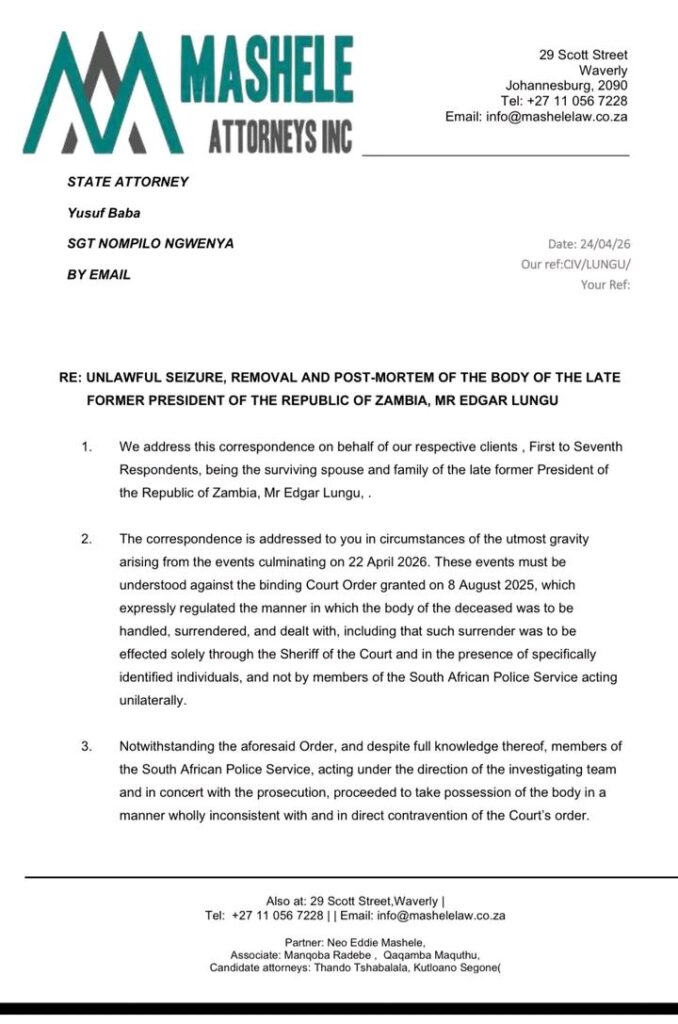
FORMER First Lady Esther Lungu and the family of late former president Edgar Lungu have accused the South African Police Service (SAPS), prosecutors and Zambian diplomatic officials of unlawfully seizing his body, conducting a post-mortem and DNA sampling without their consent or presence.
Through their Johannesburg-based lawyers, Mashele Attorneys Inc., the family has written to State Attorney Yusuf Baba and SAPS investigating officer Sergeant Nompilo Ngwenya, demanding an urgent explanation over the flagrant disregard of binding court orders.
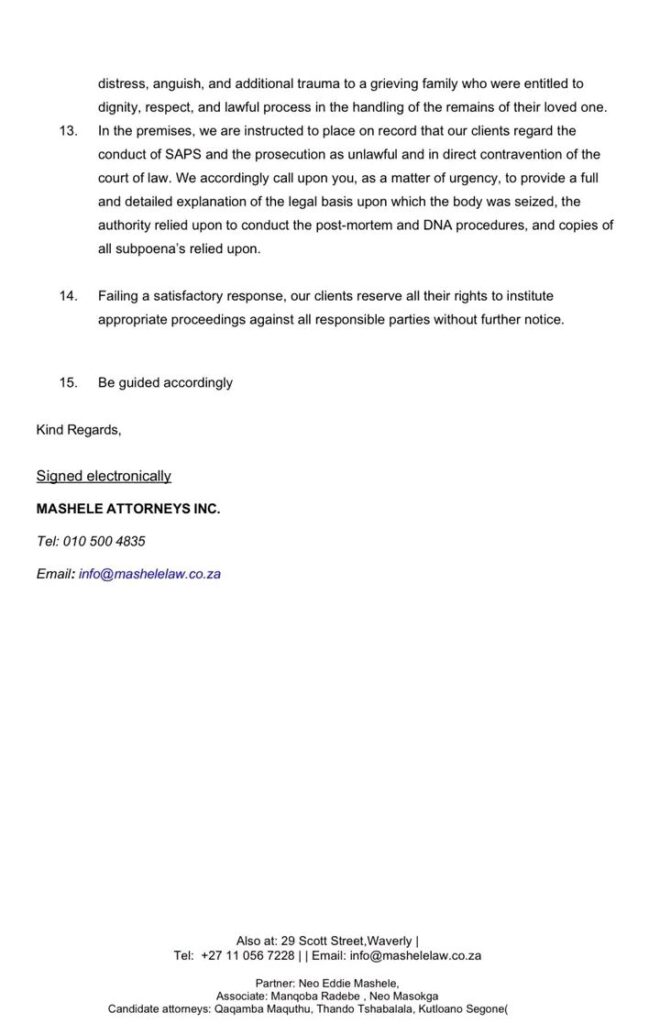
“Our clients regard the conduct of SAPS and the prosecution as unlawful and in direct contravention of the court of law, and they demand a full explanation on the legal basis upon which the body was seized and a post-mortem conducted,” the lawyers said.
In the April 24, 2026 legal letter, the family said the actions culminating on April 22 were in direct violation of an August 8, 2025 High Court order which had expressly stated that the body of the late former president was only to be handled and surrendered through the Sheriff of the Court and in the presence of specifically identified individuals.
The lawyers argued that despite full knowledge of that order, SAPS officers, acting with the investigating team and prosecution, took possession of the body unilaterally and contrary to the court’s directive.
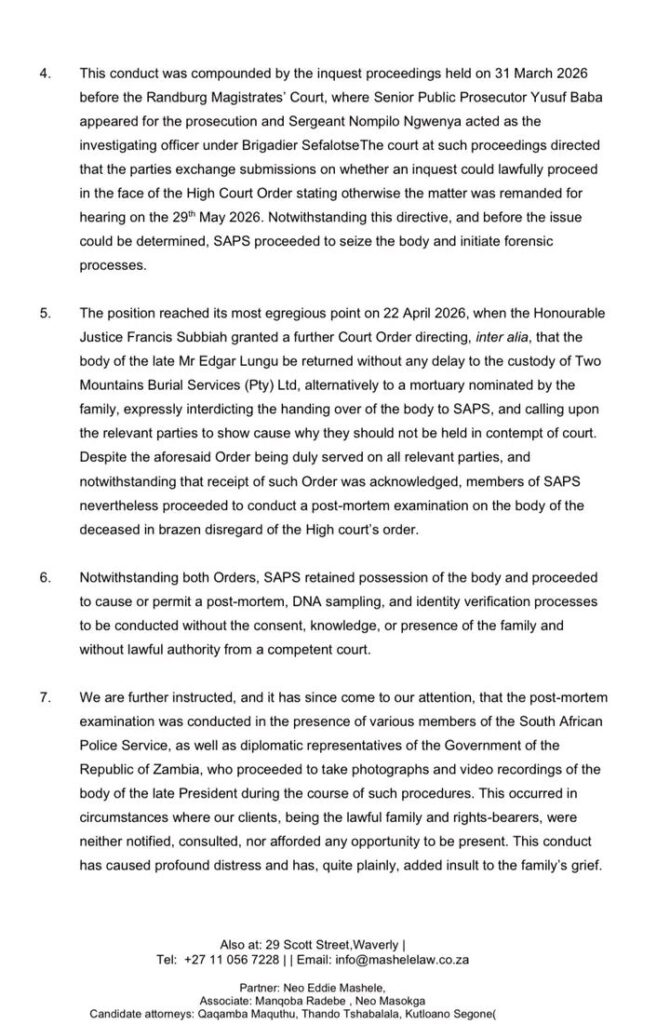
They further stated that during inquest proceedings held on March 31, 2026 before the Randburg Magistrates’ Court, Senior Public Prosecutor Yusuf Baba and Sergeant Ngwenya had been directed to exchange submissions on whether an inquest could lawfully proceed in light of the existing High Court order.
The matter had been adjourned to May 29, 2026 for hearing, but before the issue could be determined, SAPS allegedly moved ahead and initiated forensic processes on the body.
The family said the matter worsened on April 22 when Justice Francis Subbiah granted another court order directing that the body be returned without delay to Two Mountains Burial Services or another mortuary nominated by the family.
The order also expressly interdicted the handing over of the body to SAPS and called upon relevant parties to show cause why they should not be held in contempt of court.
Despite being served and acknowledging receipt of that order, the family said SAPS still proceeded with a post-mortem examination, DNA sampling and identity verification without lawful authority, family consent or their presence.
Mashele Attorneys said SAPS officers, together with diplomatic representatives of the Zambian government, were present during the post-mortem and took photographs and video recordings of the late president’s body.
The family said they were neither notified nor consulted and were denied an opportunity to be present during the procedure.
“This conduct has caused profound distress and has, quite plainly, added insult to the family’s grief,” the lawyers stated.
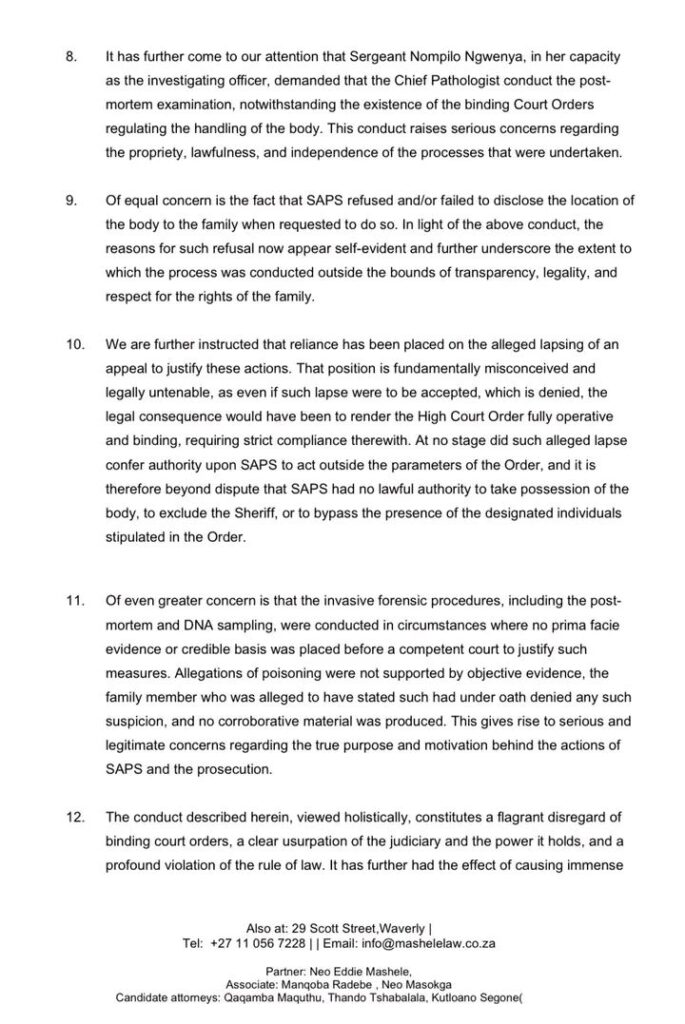
They also said Sergeant Ngwenya directly instructed the Chief Pathologist to proceed with the post-mortem despite the existence of binding court orders regulating the handling of the body.
The family complained that SAPS refused to disclose the location of the body when requested, saying this raised serious concerns about transparency and legality.
They rejected claims that the alleged lapsing of an appeal justified the police action, arguing that even if such lapse existed, it would only have made the original High Court order fully binding and enforceable.
The lawyers also questioned the basis for the invasive forensic procedures, saying no credible evidence had been presented before any competent court to justify claims of poisoning or the need for a post-mortem.
They noted that a family member allegedly linked to poisoning claims had denied such suspicions under oath.
The family has now demanded copies of all subpoenas and legal authority relied upon by SAPS and prosecutors and warned that failure to provide satisfactory answers would result in legal proceedings against all responsible parties without further notice.