

🇿🇲 EDITORIAL | When Facts Arrive, Propaganda Must Retreat
There is something deeply revealing about how quickly the tone has shifted.
For months, the national conversation around the Electoral Commission of Zambia delimitation exercise was drenched in suspicion, fear, and in some cases, outright fabrication. Civil society voices and sections of the opposition, including platforms such as the Oasis Forum, amplified a narrative that the exercise was a calculated political project. The accusation was blunt. Constituencies were allegedly being engineered to favour the ruling party, tilt electoral outcomes, and ultimately entrench power.
Some went further. Bill 7 was framed not as a constitutional reform process, but as a pathway to something far more sinister. The language used was dramatic. Words like “life presidency” were thrown into public discourse with alarming ease.
Now the numbers are out. And reality, as it often does, has disrupted the noise.
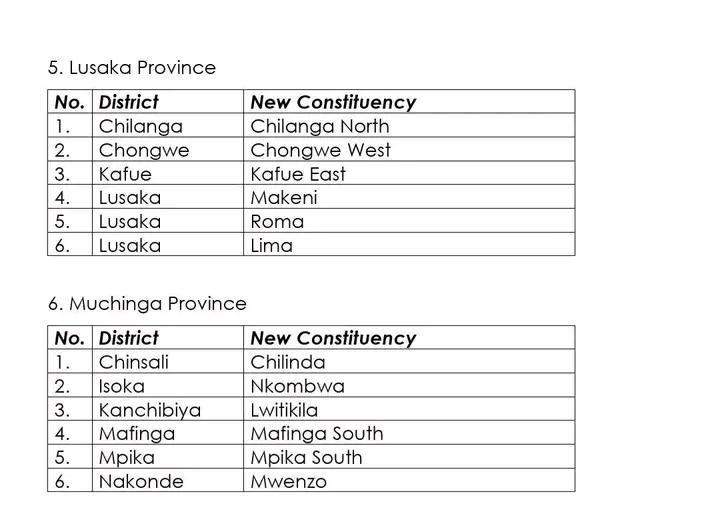
The distribution of the 70 new constituencies tells a very different story. Eastern and Southern provinces each receive nine. Central gets eight. Copperbelt, North-Western, and Western receive seven each. Lusaka, often assumed to be a political prize, gets six. Muchinga and Northern also receive six, while Luapula receives five. There is no overwhelming concentration in any single political stronghold. There is no obvious pattern that supports the earlier claims of manipulation.
What emerges instead is a fairly balanced spread, consistent with population dynamics, geographic considerations, and administrative logic. This is where the problem lies.
The opposition and sections of civil society did not merely question the process. They attempted to define it before facts were available. Figures were circulated without basis. Expectations were built on speculation. Citizens were told to anticipate an outcome that could not be justified by any known delimitation criteria.
Simon Mulenga Mwila, an opposition figure himself, has now said what many are quietly realising. The problem was not the process. The problem was the narrative built around it. In his own admission, expectations such as Southern Province receiving “25 constituencies” had no factual foundation.
This is not oversight, but irresponsibility.
A functioning democracy depends on credible opposition and disciplined civil society. Their role is not to agree with government. Their role is to interrogate, question, and hold institutions accountable. But accountability must be anchored in facts. Once it drifts into speculation, it stops being oversight and becomes propaganda.
Propaganda is dangerous because it lowers the standard of public debate. It trains citizens to react emotionally rather than think critically. It replaces evidence with suspicion. Over time, it erodes trust not just in government, but in every institution that shapes national life.
What has happened here is a credibility test. And on this issue, the opposition and some civil society actors have failed it.
This does not mean the delimitation process is beyond scrutiny. No public process should be. Questions can still be asked about implementation, boundary definitions, and future electoral implications. That is legitimate. That is necessary.
But it must start from an honest position. Facts first. Arguments after.
Zambia’s political space is maturing. Voters are increasingly informed. They can distinguish between analysis and alarmism. When leaders speak without grounding, it shows. And when reality contradicts months of messaging, the cost is credibility.
The lesson here is simple but uncomfortable.
Opposition politics cannot be built on permanent outrage. Civil society cannot substitute evidence with suspicion. And public trust cannot survive repeated exaggeration. If anything, this moment should reset the tone.
Criticise where necessary. Support where deserved. But above all, respect the intelligence of the people. Because in the end, facts always arrive.
And when they do, they expose everything.
© The People’s Brief | Editor-in-Chief