

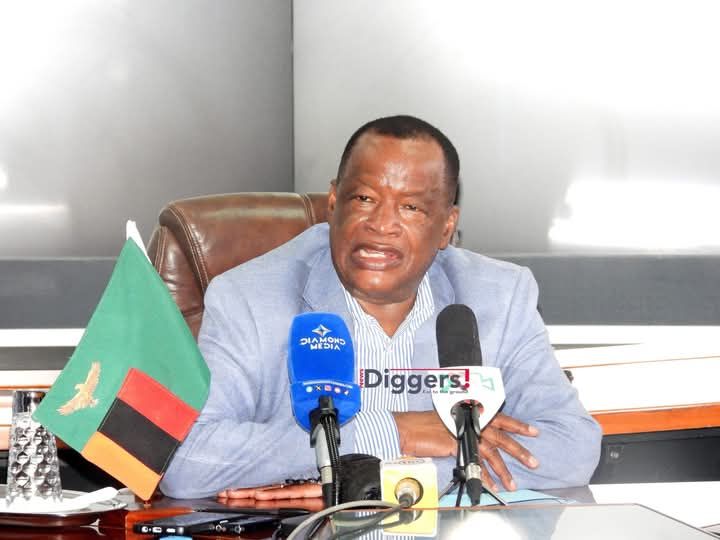
We are a listening Government, Mwiimbu redefines public gathering after outcry
Before hanging his title as the Home Affairs and Internal Security minister, Jack Mwiimbu has reminded citizens that the UPND is a listening Government and announced the amendment of the Public Gathering Bill.
After public outcry, Parliament amended the number of people required to constitute a public gathering from three to seven, under the newly passed Public Gatherings Bill of 2026.
This comes as the National Assembly approved the Public Gathering Bill, which is designed to repeal and replace the Public Order Act of 1955.
Before Parliament Adjourned Sine Die yesterday, Mwiimbu dismissed assertions that the government is restricting people from meeting or that that the Bill referring to a meeting of three people as a public gathering was new.
He clarified that the requirement already existed under the current Public Order Act.
“Because of the outcry and the plea from members of the public, we have listened and we have made an amendment on this matter.”
“Our definition of public gathering means an assembly, meeting, procession, demonstration or event of seven or more persons convened for a political, social, religious, civic or other public purpose,” Mwiimbu explained.
He said the Bill which was crafted by more than 100 stakeholder organisations, is aimed at aligning with constitutional rights, as it moves away from a permission-based regime to a notification system.
Mwiimbu said if signed into law by President Hakainde Hichilema, the Public Gathering Act will regulate public meetings, protests, political rallies and demonstrations.
The 1955 law has faced decades of criticism from opposition parties, civil society groups and human rights organisations for allegedly restricting freedom of assembly.
“The Bill will help protect constitutional freedoms while promoting public order and accountability among law enforcement officers,” Mwiimbu added.
Accountability measures for police officers who are fond of abusing their authority, will also be introduced under this law.
Citizens, including those in government, are subjected to the same requirement of notifying police before holding public gatherings during elections.
According to legislation, restrictions on public gatherings do not apply to meetings held by the President, Vice President, the Speaker and Deputy Speakers, or Ministers, nor do they affect Members of Parliament, mayors, and councillors performing their official duties within their respective constituencies or wards.
Exemptions also extend to public officers performing government functions, religious services at registered places of worship, funerals, traditional ceremonies, and weddings.
Furthermore, the legislation excludes indoor meetings of registered companies, NGOs, trade unions, and political parties as long as these sessions are held to discuss internal affairs
It also does not encompass meetings convened for the lawful purposes of State institutions.
However, the legal immunity for presiding officers, ministers, and local representatives is strictly revoked during election campaigns, throughout the voting period, or following the dissolution of Parliament.
By Sanfrossa Mberi
Kalemba May 13, 2026