

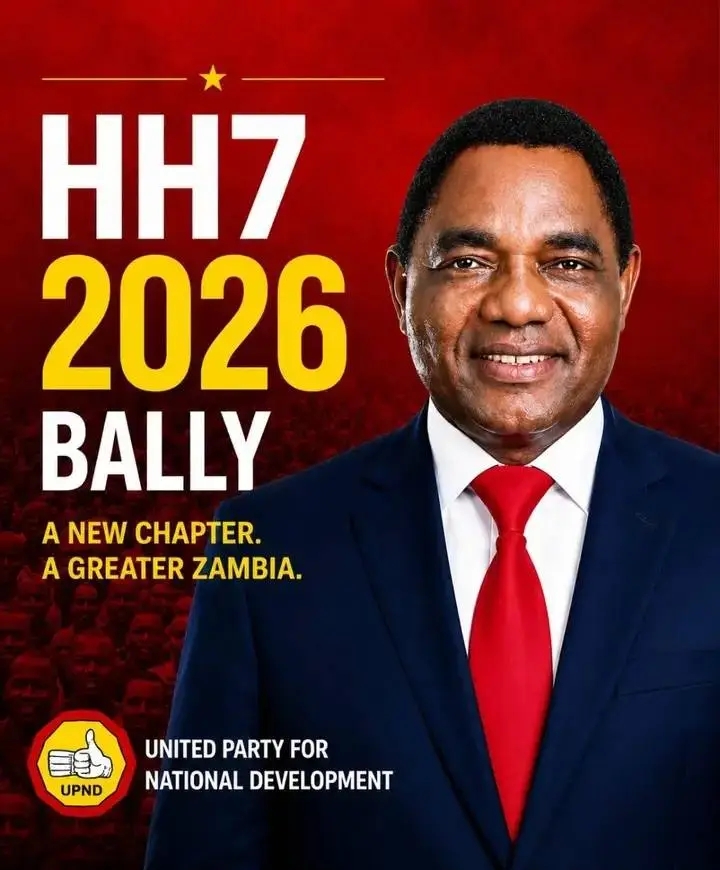
🇿🇲 BRIEFING | Hichilema Returns to the Ballot Amid Fragmented Opposition
Five years after filing his nomination papers under the banner of what supporters then called the “New Dawn,” Hakainde Hichilema today returns to the Electoral Commission of Zambia as the clear front-runner in a tense and increasingly chaotic election season.
The significance of the moment was amplified this week by First Lady Mutinta Hichilema, who reflected on the 2021 nomination filing with unusual emotional clarity. “It wasn’t just his name on the nomination papers, it was the weight of so many dreams resting on his shoulders,” she wrote, recalling the atmosphere that preceded the UPND’s historic victory after years in opposition.
But unlike 2021, this year’s nomination period has unfolded under political turbulence.
Across parts of Southern and Central provinces, parliamentary and local government nominations have been marred by violence, confusion, and internal disputes. In some constituencies, rival candidates reportedly emerged holding separate adoption certificates from the same party, exposing growing tensions inside adoption structures as political survival instincts intensify ahead of August 13.
Yet despite the temporary party disorder, Hichilema enters the presidential race from a position of structural advantage.
The UPND remains electorally dominant across its traditional “red bases” of Southern, Western, and North-Western provinces, where the party routinely polls overwhelming margins. In Central Province, once fiercely contested between the UPND and the Patriotic Front, the balance has also shifted significantly in favour of the ruling party following opposition fragmentation and sustained UPND inroads through by-elections and defections.
The opposition, meanwhile, enters the race divided, crowded, and strategically uncertain.
Figures such as Brian Mundubile, Harry Kalaba, and Fred M’membe remain visible challengers, but none currently commands broad national consensus across Zambia’s complex regional voting blocs. While each carries pockets of influence, the opposition still struggles with its oldest problem: too many presidential ambitions and too little consolidation.
M’membe retains intellectual and ideological appeal within urban and activist circles but continues to face limitations translating that into grassroots electoral mobilisation. Kalaba remains active and energetic but has yet to establish a decisive national coalition beyond parts of the northern corridor. Mundubile, now increasingly elevated within Tonse Alliance conversations, carries institutional experience but still operates within a fractured PF ecosystem battling legal and organisational instability.
The result is an electoral terrain where the incumbent benefits not necessarily from universal satisfaction, but from comparative coherence.
This explains why today’s filing matters beyond ceremony.
It marks the formal beginning of a re-election campaign that will likely centre on continuity, infrastructure, free education, recruitment drives, CDF drive, and economic recovery messaging from the ruling party. The opposition, by contrast, still appears trapped between anti-government rhetoric and unresolved leadership arithmetic.
The deeper political reality is this: Zambia’s presidential elections are rarely won purely in Lusaka press briefings or online outrage. They are built through durable regional strongholds, organisational structures, and the ability to expand beyond core support bases into swing provinces and urban constituencies.
At this stage, Hichilema possesses that machinery more clearly than any challenger.
As Hichilema formally enters the race today, Zambia’s political season now shifts from speculation to confrontation. The slogans will grow louder. The rallies larger. The attacks sharper.
But beneath the noise, the numbers, structures, and geography of power remain central.
And for now, those fundamentals still favour the incumbent.
© The People’s Brief | Mwape Nthegwa; Ollus R. Ndomu