

POSTMORTEM | Hichilema’s 3-Hour Press Conference; The Church Factor & Civic Tension
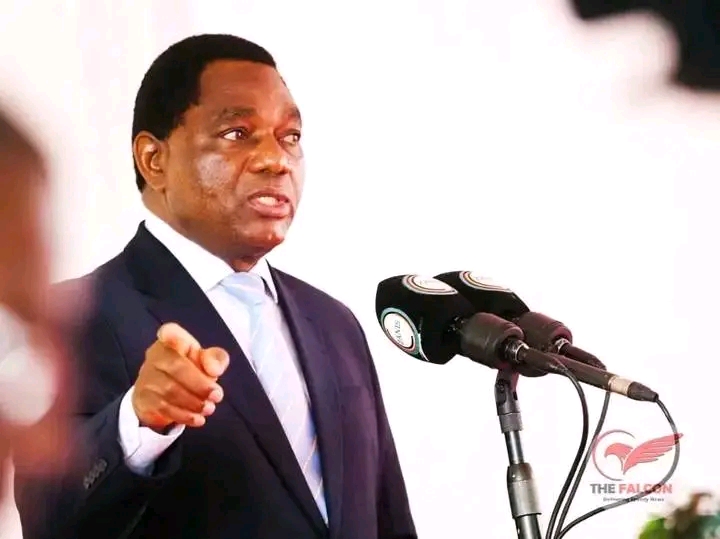
President Hakainde Hichilema walked into the State House press auditorium carrying the load of a week defined by clerical fire, civic mobilisation, and constitutional uncertainty. By the time the three hour press conference ended, one message was unmistakable: the President had chosen to confront the rising clerical opposition head on.
For the first time, State House cast the priest wing of the debate, along with its allied civic voices, as political actors rather than neutral moral referees.
The President’s sharpest lines were reserved for unnamed priests whose recent homilies have inflamed public sentiment over Bill 7 and political violence.
“The level of hatred for me is shocking. You can see and even touch the venom,” he said.
“I did not choose where I was born. None of us did. Do not preach hatred and hide in the name of the church or political party.” The tone was deliberate.
His target audience was a public trying to make sense of recent regional clerical interventions that have sounded more political than pastoral.
The background to this confrontation stretches back weeks. Archbishop Alick Banda of Lusaka warned that selective policing could push Zambia toward “strife, blood bath, and destruction of innocent lives and property.” Archbishop Ignatius Chama of Kasama urged Christians to join the Oasis Forum protest scheduled for November 28, describing it as “a sacred civic responsibility.”
In parishes, radio programmes, and Catholic social platforms, specific priests have called out the proposed constitutional reforms as dangerous and rushed. Some insist the country had entered “a decisive moment” that required resistance.
Insiders say authorities have been tracking a wave of “clandestine meetings” between senior clergy and opposition figures. The President used history to refer to current happenings.
Ahead of the 2021 General Elections, a certain catholic priest was quoted as saying it would have been “better to rig the 2021 election than allow him to rule.” Hichilema called the statement “un-Christian” and “divisive,” adding that “while the international community is seeing opportunities in Zambia, some of our own citizens are advocating for violence.”
To underline the point, the seemingly verbally constipated President invoked the trauma of PF era brutality. “We will never allow a return to caderism,” he said. “We are seeing attempts by some former PF cadres to regroup and reignite violence.”
The subtext was clear. State House views the current clerical heat not as isolated moral concern, but as connected to political networks hoping to trigger a legitimacy crisis around Bill 7 as Zambia enters the 2026 cycle.
The President pushed back against the argument that constitutional reform cannot happen in an election period. “UNIP, MMD, PF amended the Constitution in election years,” he reminded.
“There was no problem, no street fights.”
He accused some actors of shielding a political agenda under the cloak of civic righteousness. “Why after 2026? There is someone you are waiting for,” he said, a thinly veiled reference to those believed to be waiting for a regime change.
President Hichilema also accused some clerics of abandoning neutrality. “The Church has become a host of negative talk,” he said. It was one of the strongest public criticisms any Zambian president has issued against Catholic leadership since the friction of the Mwanawasa and Sata eras.
His complaint reflects a growing view within government that certain clergy have shifted from watchdogs to partisans, using the pulpit to amplify opposition narratives rather than call for balanced engagement.
But even as the President delivered his strongest confrontation on clerical actors, the ground shifted under the feet of anti-Bill 7 voices. Minutes after the press conference, the Constitutional Court dismissed the application by CSOs to halt the Bill 7 process.
Hours earlier, the Oasis Forum had confirmed that it had engaged State House for dialogue scheduled for Wednesday, after suspending its Black Friday mobilisation. Government officials interpreted the timing as vindication. Critics saw a coordinated strategy to deflate momentum.
Still, the central tension remains unresolved. Maverick Catholic priests believe Bill 7 threatens the constitutional balance. CSOs aligned with the Oasis Forum insist the process lacks transparency. Government says the Technical Committee “consulted citizens from all provinces,” and the President argues that protests are an unnecessary escalation.
Hichilema’s warning was blunt: “Go to court or come to State House instead of toyi toyi. You will prevent investors.”
The country now waits for the Oasis Forum’s reaction to a press conference that framed them as potential sources of instability. Their dialogue meeting at State House remains uncertain. The priests who have driven the moral argument must decide whether to temper their tone or sharpen it. The political class is watching. So is the diplomatic corps. And so are citizens who understand that Zambia’s stability often hinges on the relationship between State House and the Church.
This evening, the postmortem reads like this. Hichilema has chosen confrontation over caution. Priests have chosen confrontation over quiet mediation. Bill 7 has become the battlefield.
The next forty eight hours will determine whether dialogue softens the fault lines or whether Zambia moves deeper into a constitutional showdown in which the Church, the courts, the streets, and State House collide.
: The Falcon
© The People’s Brief | Gathering —Francine Lilu; Analysis —Ollus R. Ndomu; Fact-checking —Goran Handya