

Hichilema’s measured statesmanship on Tanzania, exposes a dangerous, destructive streak in opposition ranks
By Michael Lombe
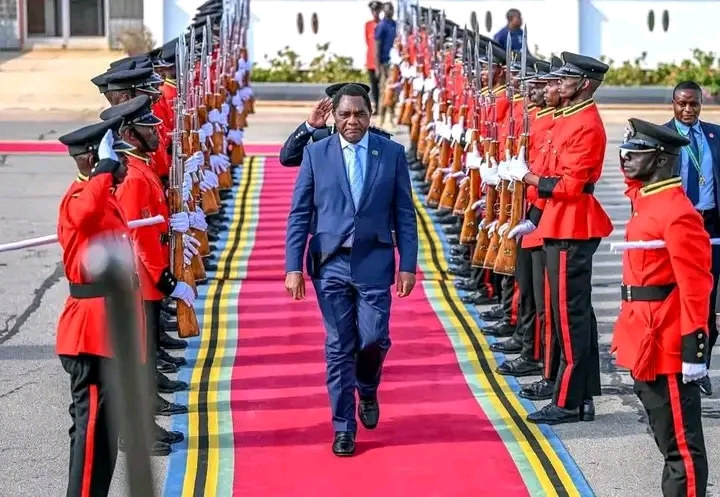
President Hakainde Hichilema’s attendance at the inauguration of Tanzanian President Samia Suluhu Hassan offered Zambians a clear choice between steady, sober statecraft and a dangerous politics of hatred and destruction. His speech, measured, wise and profoundly timely, contrasted sharply with the rabble-rousing reactions of certain opposition figures.
Throughout Tanzania’s recent election cycle, and especially over the past month, some Zambian opposition leaders like Harry Kalaba , Nason Msoni, Fred M’membe and others eagerly predicted the collapse of Tanzania’s democratic process, apparently intent on drawing parallels with what they wish to see happen in Zambia. Their alarmist and hostile posturing reached a new low when they were widely perceived, rightly or wrongly, to be rooting for instability abroad as a template for change at home. Even long-standing critics of the government have in recent years publicly flirted with praise for coups and extra-constitutional action elsewhere in the region, a fact that should alarm any citizen who values constitutional order.
Those hastily-aired predictions and celebrations were premature. President Hichilema used his platform in Dodoma to deliver one of the most moving and statesmanlike addresses of his presidency. He reminded Tanzanians that peace is a costly but essential commodity: when it is lost, entire communities suffer. He warned against taking to the streets to destroy property or endanger lives, and he urged restraint and dialogue. At the same time he called on his counterpart, President Samia Suluhu Hassan, to reach out to opponents and pursue a reconciliation that recognizes the grievances of those who feel hurt.
Reports from around Africa and Tanzania itself, have praised President Hichilema’s intervention as sober and mature, a presidential performance rooted in principle rather than spectacle. It was a demonstration of leadership that recognizes the value of national unity and the human cost of unrest.
This raises urgent moral and political questions for Zambians. Is it acceptable for anyone who aspires to govern this country to openly or tacitly celebrate chaos in a neighboring state, or to suggest that violence and disorder are legitimate paths to power? Can leaders who appear willing to sacrifice peace, or who traffics in hate that targets the president’s ethnicity and, by extension, the cohesion of the nation, be trusted with the responsibilities of governance? What kind of country would emerge if those who wish to rule are the same people prepared to see a neighbor “burn” to make a point?
Those are not rhetorical niceties. They are questions of conscience and consequence. Zambians must decide whether to entrust the nation to leaders who prize destruction over dialogue, bitterness over reconciliation, and short-term gain over the long, painful work of nation-building.
If leadership is measured by wisdom, restraint and the ability to hold a country together in moments of tension, President Hichilema’s performance in Tanzania was a clear demonstration of those qualities. In contrast, a politics that celebrates instability and seems to hunger for spectacle above peace is one Zambians should reject if they wish to safeguard the country’s future.