

HISTORIC SHIFT – HOW THE PRESIDENTIAL CONSTITUENCY ENERGY INITIATIVE WILL CHANGE ZAMBIA’S “CONSTITUENCY” FUTURE
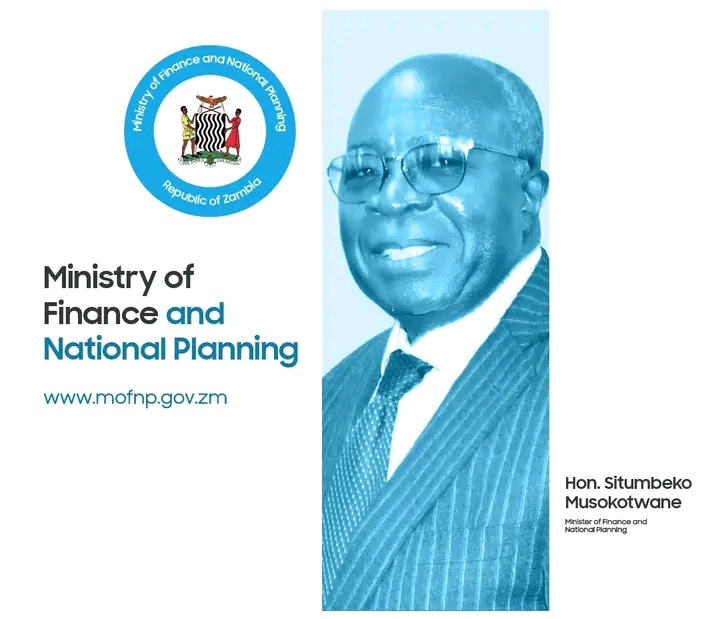
– By Dr Situmbeko Musokotwane, MP, Minister of Finance and National Planning,
A few days ago, on 24 November 2025, Cabinet approved a decision that quietly but fundamentally reshapes how development will reach ordinary Zambians.
The Presidential Constituency Energy Initiative (PCEI) redefines what the Constituency Development Fund (CDF) truly means. It transforms CDF from being primarily a social support tool into a powerful engine of investment, ownership, and long-term local wealth creation.
For the first time in our history, each of Zambia’s 156 constituencies will receive dedicated CDF financing to build a 2-megawatt solar power plant. Each project is valued between K65 million and K85 million and will stand as a permanent, income-generating public asset owned by the people of that constituency.
This is visionary leadership in practical form, and I commend His Excellency Hakainde Hichilema for combining bold national vision with grounded developmental pragmatism.
The initiative means that communities will no longer merely be recipients of the Government’s support. They will now produce power, participate directly in national infrastructure development, and become shareholders in the country’s energy future.
This decisive step builds on the deliberate policy shift that began in 2021, when CDF was increased from just K1.6 million per constituency to over K35 million by 2025 and will be K40 million per constituency, in 2026. The increase is never about numbers alone. It is about transferring real economic power to the grassroots. With the PCEI, that power now takes visible form in solar panels rising from local soil, producing electricity, income, and jobs that remain within the constituency.
This energy leap is anchored in a broader transformation of the Constituency Development Fund itself. Since 2022, CDF has become one of the most powerful instruments for delivering equitable, inclusive, and sustainable development, generating a scale of community-level transformation not witnessed by many areas, since independence.
From 2022, more than 2,800 classroom blocks have been constructed and 422 rehabilitated, while about 670,000 desks have been procured, countrywide (as at September, 2025).
In health, 132 posts and 195 maternity annexes have been built, with additional facilities rehabilitated, bringing safer maternal care closer to families.
Access to clean water has expanded through the drilling of 1,941 boreholes, the installation of 531 water schemes, and the construction of 228 ablution blocks.
At the same time, 82,652 secondary school learners have received boarding bursaries, 151,518 youths have enrolled in skills-training programmes, and 47,246 women and youth groups have been empowered with grants alongside 14,773 who accessed loans to grow businesses.
These achievements are not abstract statistics but reflect a child who is now able to sit on a desk and concentrate on studies, a mother delivering safely in a modern maternity ward near home, communities drawing clean water from nearby boreholes, and young entrepreneurs building livelihoods within their own districts. This is the lived power of CDF.
The 2026 National Budget has further strengthened this trajectory. Government has increased the allocation to the Constituency Development Fund to K6.2 billion, translating to K40 million per constituency, up from K36.1 million in the previous year—an increase of K3.9 million per constituency.
This rising fiscal commitment confirms that decentralisation is no longer an administrative promise but a sustained national investment strategy.
From a public finance perspective, the PCEI model is both smart and sustainable. Part of the electricity generated by these solar plants will be sold to ZESCO, creating steady income that flows back to the constituencies that own the projects.
Over time, this will progressively reduce dependence on monthly Treasury grants and build permanent, locally controlled financial resources.
Communities will no longer wait endlessly for central funding. They will earn their own through excess power sales.
The ripple effects across the economy will be far-reaching. Local businesses that have long been locked out of large public contracts will now access meaningful work. Jobs will be created in construction, transport, supply chains, maintenance, administration, and security. Young people and women in rural districts will be able to find dignified work near their homes instead of being forced into overcrowded towns in search of survival.
At the same time, Zambia will gain cleaner energy, greater resilience to climate shocks, and stronger energy security for households and local industries.
This initiative also reflects a deeper national change in how public money is managed.
The hard reforms of recent years i.e. strengthening oversight, digitising payments, enforcing accountability, and decisively shutting down the leakages that once drained billions into private pockets, have allowed public resources to return to their rightful owners: the Zambian people. Every kwacha saved from previous waste and corruption is now being converted into something visible and useful: a solar panel in Chienge, a classroom in Shang’ombo, a clinic in Kaputa, and a job for a young person in Chavuma.
The success of this programme rests on disciplined leadership and collective resolve. It reflects the vision of President Hakainde Hichilema and the collective commitment of Cabinet to ensure that every kwacha delivers full value to citizens.
The Presidential Constituency Energy Initiative is therefore more than an energy venture. It is proof that decentralisation can be real, not just promised. It shows that public money can be made to work exactly where people live. It demonstrates that when governance is firm, disciplined, and honest, development stops being an abstract idea and becomes light in homes, work in communities, and hope in villages.
In practical terms, once the respective projects are complete across the provinces, it means the school child in rural Zambia will study under proper light instead of a smoky candle, with the ability to use computers and modern learning tools.
It means the salon and barber shop will operate longer hours, serve more customers, and grow into stable local businesses.
It means welders and carpenters will power their equipment consistently, increasing productivity, income, and skills transfer.
It means the mother who bakes to raise money for her children’s or grandchildren’s school fees will do so with reliable power, lower costs, and greater output.
It means domestic livestock keepers will power simple processing, storage, and security systems that protect and add value to their livelihoods. In these everyday victories—in homes, workshops, classrooms, and markets—the real meaning of decentralisation will be felt.
I therefore affirm that the Presidential Constituency Energy Initiative, is fiscal responsibility with a human face. It is not just about balancing books in Lusaka.
It is about ensuring that public resources touch every corner of the country and lift the lives of ordinary Zambians.
The PCEI is, quite simply, money working where our people live—because it is investment right where our people live.
Once again, I commend President Hichilema for his visionary leadership and his practical, developmental acumen.
I also commend the people of Zambia for their patience and supportive spirit in seeing that the Government implements economic transformation programmes, without leaving anyone, any region, behind.
Ends.