

EXPLAINER | How Zambia’s New Electoral System Will Work Under Bill 7
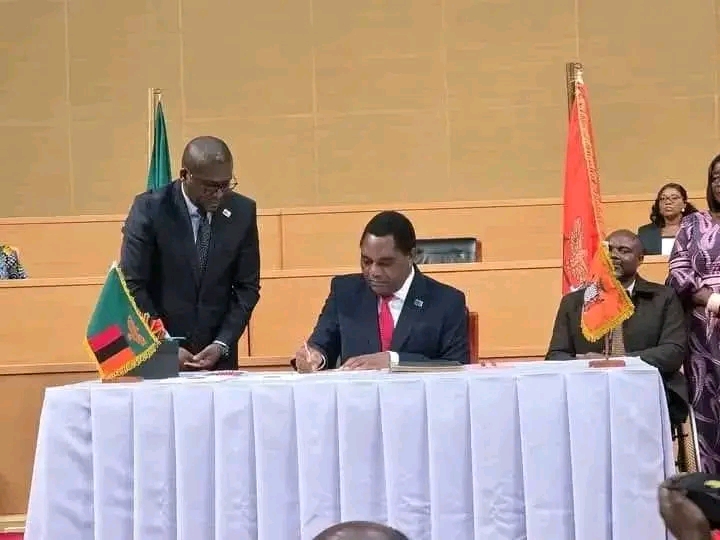
With President Hakainde Hichilema having signed Constitution Amendment Bill No. 7 into law, Zambia has entered a new electoral era that blends constituency elections with proportional representation. The change has generated confusion, speculation, and misinformation, particularly around the phrase “national vote for each party.”
This explainer sets out, plainly and factually, how the system will operate.
Under the amended Article 68, Zambia has not introduced a separate ballot for proportional representation. Voters will continue to cast a single parliamentary vote in their constituency, just as they always have. What has changed is how that vote is counted beyond the constituency level.
Every vote cast for a parliamentary candidate now serves two functions. First, it determines who wins the constituency seat. Second, it contributes to that political party’s total national vote. In effect, when a voter in Kanyama votes for a UPND candidate, or a voter in Mansa votes for a PF candidate, that vote does not end at the constituency tally. It is added to all other votes cast for that same party across the country.
After elections, the Electoral Commission of Zambia will aggregate all valid parliamentary votes received by each political party nationwide. This combined figure becomes that party’s national vote. The ECZ will then calculate what share of the total national vote each party has obtained. It is this national percentage that determines how the 40 proportional representation seats are allocated.
If, for example, the United Party for National Development secures the largest share of parliamentary votes nationwide, it will receive the largest portion of the proportional representation seats. If the Patriotic Front finishes second nationally, it will receive a smaller but corresponding share.
Smaller parties such as the Socialist Party, the National Congress Party, or the Party of National Unity and Progress would also qualify for proportional seats if their national vote reaches the required threshold under the allocation formula. Independent candidates, by design, do not benefit from proportional representation because the system is party-based.
The proportional seats are not filled by voters choosing individuals on election day. Instead, political parties will submit ranked party lists to the ECZ before elections. These lists must comply with constitutional categories: women, youths, and persons with disabilities. Once the ECZ determines how many proportional seats a party has earned based on its national vote, it fills those seats from the party’s submitted list, in line with the required categories.
This means a vote cast in a rural constituency that a party does not win still matters nationally. Under the old system, votes cast for losing candidates had no further effect. Under the new system, those votes are no longer wasted. They still shape the overall balance of Parliament by influencing how many proportional seats a party receives.
The practical consequence is a Parliament that more closely reflects how Zambians voted across the country, not just who won individual constituencies. A party that performs strongly nationwide but narrowly loses many seats will still see that support translated into representation.
Conversely, a party that wins constituencies with slim margins but performs poorly nationally will no longer dominate Parliament disproportionately.
This hybrid system does not abolish constituency representation. Zambia will still elect 226 constituency Members of Parliament. What it does is correct distortions created by population growth, urban expansion, and winner-takes-all outcomes, while constitutionally guaranteeing the presence of women, youths, and persons with disabilities in the National Assembly.
In short, Zambians will vote once, but their vote will count twice. It will choose a local representative and help shape the national balance of power. This is the core logic of Zambia’s new electoral framework under Bill 7, now part of the country’s supreme law.
As the country moves toward the 2026 general elections, understanding this system will be as important as participating in it.
© The People’s Brief | Ollus R. Ndomu