

‼️🔥💥🇮🇷/ 🇺🇸 Iran to Trump: The Victor Sets the Terms, Not the Man Posting on Truth Social
____
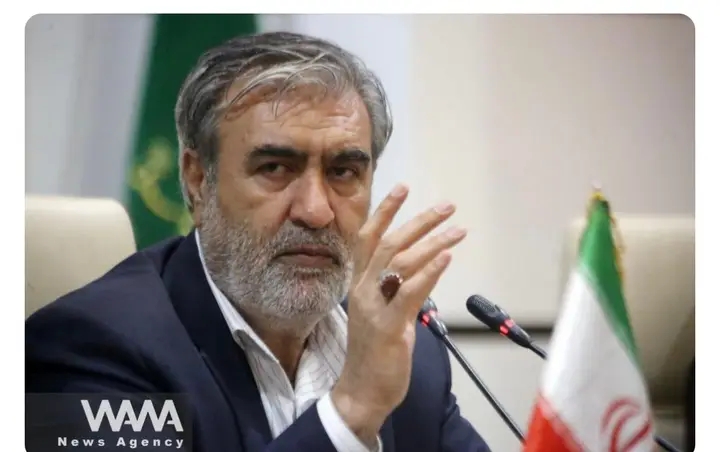
🔺 Head of Iran’s parliamentary security commission: “Iran sets the terms” as the “victor on the field”
Ebrahim Azizi, head of the Iranian parliament’s National Security and Foreign Policy Commission, pushed back sharply Friday on Trump’s Truth Social post claiming a deal framework had been reached that included maximalist demands, saying Iran “as the victor on the ground, sets the terms: cash for cash, credit for credit, nothing for nothing — and that applies only to issues actually under negotiation, not to his fantasies.”
The statement comes as sources cited by Fars News Agency described Trump’s claims about the deal as “a mix of truth and lies” and an attempt to project a fabricated victory, saying the agreement is still in its final stages of approval in Iran and no decision has been made.
Yesterday, Azizi had laid out Iran’s red lines directly: “Iran will not be pushed back by Trump’s rhetoric from its red lines: the right to enrich uranium, possession of enriched uranium, authority over the Strait of Hormuz, and the removal of sanctions.” He added that Trump, “seeking a way out of this strategic deadlock, alternates between issuing threats and appealing for an agreement.”
____
The fact is that despite the massive bombardment of Iran, Iran has still managed to prevail and remain standing in this war. Its military infrastructure remains largely intact, and Iran’s missile capability has not been eliminated. Reports and assessments have suggested that a significant portion of Iran’s ballistic missile arsenal remains available. Iran learned long ago from the U.S. invasion of Iraq that air power alone can be followed by regime-change operations. As a result, Iran spent decades building hardened underground missile facilities, tunnel networks, and so-called “missile cities” designed to protect and rapidly deploy its strategic arsenal even under heavy attack.
The United States also expended a substantial amount of missile defense resources during the conflict. THAAD interceptors are among the most expensive missiles in the U.S. arsenal, costing millions of dollars per interceptor, and large-scale defensive operations inevitably consume stockpiles. This is one reason why Trump has repeatedly complained that the United States has transferred significant quantities of missiles, artillery, and military equipment to Ukraine during the war with Russia.
Given Trump’s current limitations, he essentially had three options:
1. Walk away and allow Iran to fully control the Strait of Hormuz.
2. Negotiate and agree to some of Iran’s demands.
3. Relaunch and escalate the war.
Option one was never likely because it would effectively acknowledge Iran as the dominant regional power controlling one of the world’s most important energy chokepoints. Roughly one-fifth of globally traded oil passes through the Strait of Hormuz, making it strategically important to both the United States and its allies.
Option three—returning to war—is also problematic. The United States has already expended significant military resources, regional bases have faced repeated attacks and disruptions, and Iran’s control of the Strait of Hormuz is not viewed as an existential threat to the United States itself. If Washington truly viewed it as an existential threat, it would likely force the issue militarily regardless of the costs.
That leaves option two: negotiation.
One version of the proposed U.S.-Iran peace framework currently being discussed reportedly includes the following elements:
1. A $300 billion reconstruction fund for Iran, described as an international investment fund that the United States would facilitate as part of a final agreement. This comes as Iran continues to demand compensation and reparations for war-related damage.
2. The Strait of Hormuz would remain open to international shipping, with mines and other maritime obstacles removed within 30 days.
3. U.S. restrictions and blockade measures on Iranian oil exports would be lifted, allowing Iran to return to global energy markets.
4. Iran would agree not to pursue a nuclear weapon.
5. Discussions would begin regarding uranium enrichment levels, stockpiles, and disposal mechanisms.
6. The United States would discuss sanctions relief and broader financial measures.
7. Humanitarian assistance and the flow of civilian goods into Iran would be expanded.
8. A broader settlement could include efforts to end the Israel-Hezbollah conflict in Lebanon.
The biggest question is how any of this would work in practice. Iran’s leadership repeatedly argues that it does not trust the United States because previous agreements were abandoned or altered. Trust remains one of the largest obstacles to any final deal.
Then there is Lebanon. Israel has accelerated military operations and expanded its activities in southern Lebanon. Many observers believe Israel is attempting to establish stronger positions before any future ceasefire takes effect. Others argue that delays in formal negotiations may be giving all sides additional time to improve their military position before a final agreement is reached.
At the same time, there are serious questions about enforcement. Even if a ceasefire is signed, will all parties respect it? Previous ceasefires between Israel, Hamas, and Hezbollah have seen accusations of violations, retaliatory strikes, and disputes over what constitutes a legitimate target.
These are the questions many people are asking. Until any agreement is formally negotiated, signed, and implemented, Iran continues to exert influence over the Strait of Hormuz, U.S. restrictions on Iranian oil remain a major issue, uncertainty continues to affect global energy markets, and exchanges of fire between Israel and Hezbollah are likely to continue.