

Iran Uses Ceasefire To Dig Out Buried Missile Launchers As US Intelligence Warns Of Rapid Military Reconstitution
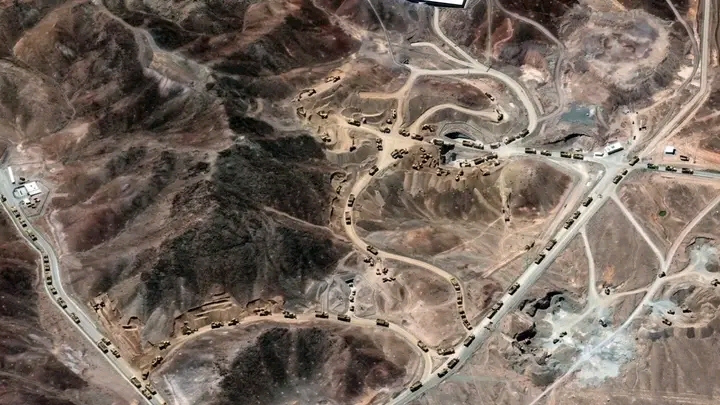
Satellite images taken on April 10, 2026, reveal Iranian forces actively clearing debris from the entrances of underground missile bases during the ongoing ceasefire. Front-end loaders and dump trucks were spotted at facilities near Khomeyn and south of Tabriz, working to reopen tunnels that had been sealed by US and Israeli airstrikes.
Throughout the five-week conflict, American and Israeli forces deliberately targeted the entrances and ventilation shafts of Iran’s underground missile infrastructure, commonly known as “missile cities,” in a strategy aimed at trapping launchers inside rather than destroying the missiles directly. The approach proved partially effective, but analysts note the damage was never permanent.
US intelligence now assesses that roughly half of Iran’s missile launchers remain intact after a month of fighting, many of them buried underground rather than destroyed. Iran is assessed to still hold more than 1,000 medium-range ballistic missiles from a pre-war stockpile of approximately 2,500.
Military analysts were not surprised by the recovery effort. Sam Lair of the James Martin Center for Nonproliferation Studies noted that ceasefire periods inherently allow adversaries to rebuild degraded military capacity. He added that Iran’s missile city doctrine was specifically designed for this scenario: absorb an initial strike, dig out, and prepare to launch again.
An Israeli official separately warned that the damage inflicted on Iran “is not irreparable,” and that without a significant diplomatic agreement, military action may have to resume.
Vice President JD Vance is expected to lead a potential second round of nuclear and missile negotiations with Iranian officials before the ceasefire expires next week.
Sources: CNN, Wall Street Journal, Times of Israel, James Martin Center for Nonproliferation Studies
Military Cognizance