

Kafwaya Slams UPND’s Priorities, Calls for Focus on Cost of Living Crisis
Lusaka, March 4, 2025
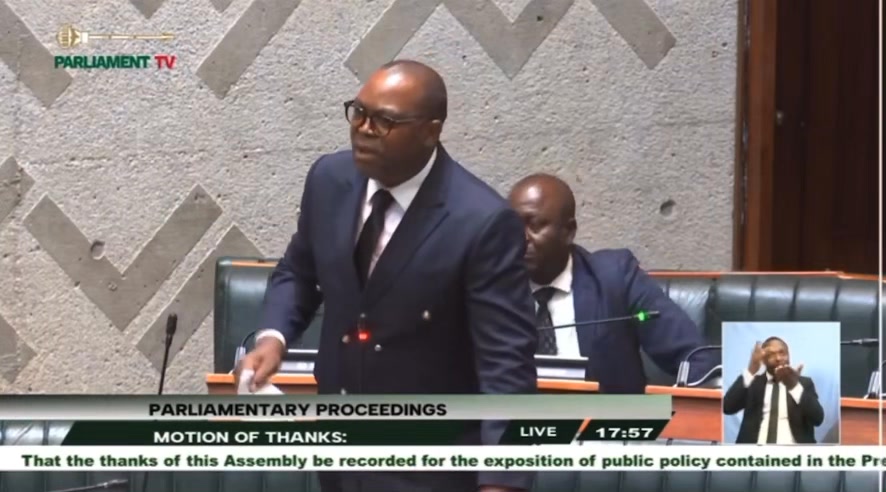
LUNTE Member of Parliament, Hon. Mutotwe Kafwaya, has strongly criticized the UPND government’s priorities, arguing that their focus on constitutional amendments and increasing constituencies is misplaced at a time when Zambians are grappling with economic hardships.
Debating the motion on thanks to the President’s address delivered during the State of the Nation Address (SONA), Hon. Kafwaya questioned the government’s rationale in pushing for constituency delimitation while citizens struggle with high mealie meal prices, fuel costs, and electricity shortages.
“Madam Speaker, how can a government that knows its people are hungry, that the cost of living is high, and that the debt mountain is growing, start considering delimiting constituencies?” Kafwaya asked. “Where will the money come from? This chamber cannot even contain the members who are here now. Are you telling me that you have to expand this chamber? Where will that money come from?”
The Lunte lawmaker accused the UPND administration of focusing on expanding government structures rather than addressing the pressing economic crisis.
“Madam Speaker, constituencies around the country do not even have constituency offices. They have to rent. The National Assembly has not finished building constituency offices. Where will the money come from?” he pressed.
He further challenged the logic behind increasing constituencies when the government claims it lacks funds for critical sectors such as agriculture and energy.
“People are experiencing load shedding for eight to twelve hours a day. Why don’t you put that money into importing electricity so that businesses can thrive? Why don’t you put money into agriculture so that the cost of living can start coming down?” he argued.
Hon. Kafwaya accused the government of prioritizing political convenience over the needs of ordinary Zambians.
“This government is thinking about putting money into leaders instead of the people. Constitutional amendments are not a priority for this country. What is a priority is solving the high cost of living, solving the debt mountain,” he emphasized.
Citing the President’s speech, Hon. Kafwaya also took issue with the government’s approach to governance, particularly the financial burden of ministerial involvement in council meetings.
“Let me give you an example, Madam Speaker. In Northern Province, in Kaputa, where a Member of Parliament is also a minister, every council meeting means a minister, a driver, a protocol officer, and fuel expenses for the people this is an additional cost to government. Is this the time to start thinking about increasing the cost of running government?” he questioned.
Hon. Kafwaya reiterated that the government’s focus should be on reducing the cost of essential commodities rather than expanding political structures.
“Madam Speaker, a 25kg bag of mealie meal is very expensive for ordinary Zambians. A bottle of cooking oil, not a container, but a bottle, is very expensive. Even 1kg of sugar is too expensive. These are the things the government should be focusing on because people are suffering now,” he charged.
He reminded the House that the opposition had previously warned the government against exporting maize and electricity, decisions he said have worsened the economic situation.
“We told them, ‘Don’t export maize.’ We told them, ‘Don’t export electricity.’ But what did they do? They exported. And where are we now? The cost of living is unbearable. Where are we now? How much is a 25kg bag of mealie meal today? Where is the electricity?”
Concluding his debate, Kafwaya firmly rejected any move to expand the cost of governance, stating that leaders must prioritize the people over political convenience.
“Madam Speaker, it is grossly irresponsible for leaders to be thinking about themselves. This is the time when they should be talking about reducing the cost of running government and putting the savings into the bellies of the people,” he said.
The debate continues as opposition leaders push for immediate economic interventions while the UPND government defends its governance strategy.