

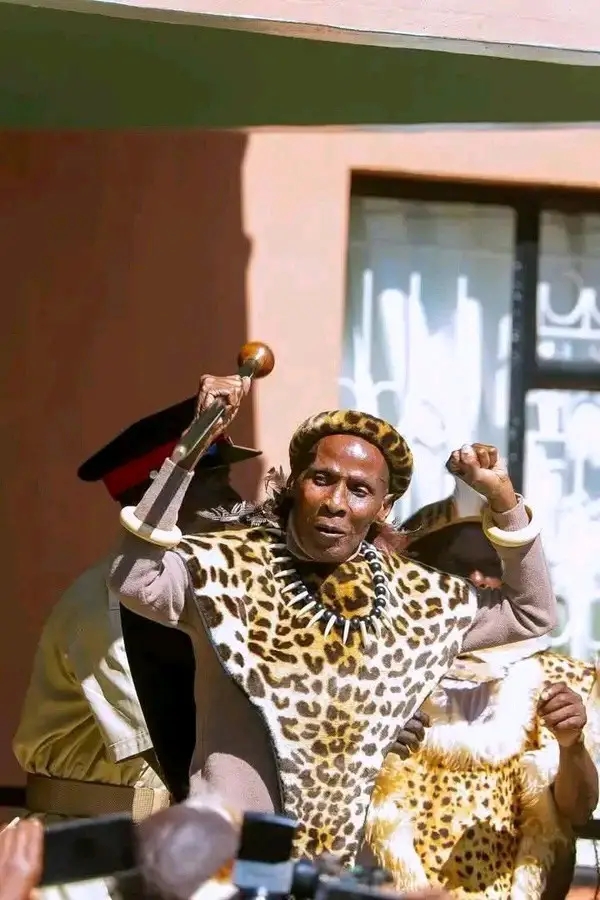
‘Next Mpezeni is Kambwili’s son’
By Samuel Ngoma
The question on many lips since the demise of Paramount Chief Mpezeni IV is who will inherit the throne.
To outsiders, Mpezeni’s passing might appear to create a power vacuum as the late Paramount Chief is survived only by a daughter.
However, truth be told, for true Ngonis, succession has never been the cause of confusion and 2026 is to be no exception.
The Ngoni custom is emphatic: succession follows the male line.
Political maneuvering around the Ngoni throne is anathema. Any attempt to impose a stooge would face stout resistance from traditional authorities and fall on its sword ..
The Ngoni insistence on continuity has governed transitions for generations and, in this instance, points clearly to the son of the late chief’s older brother.
A brief look back at Ngoni history explains why the matter is straightforward. Mpezeni IV, David Njengembaso Jere, who ruled for 44 years, was never the intended heir.
His older brother, Kambwili Jere the true successor by custom, died while their father, Mpezeni III, was on the throne.
At the time of Mpezeni III’s death, the rightful heir, Kambwili’s son, George Kambwili Pontino Jere (commonly known as Kambwili Pontino Jere) was still too young to assume the crown.
The Indunas therefore installed David Njengembaso as a regent-king until the heir came of age.
Forty-four years later, Njengembaso’s long rule has ended through death without producing a male successor, leaving Kambwili’s son as the surviving legitimate successor.
All those in the know, indicate that Kambwili Pontino Jere, who is now 49 or early 50s and was last known to be employed at the Lusaka main post office, is the undoubted legitimate successor. By customary law and precedent, he is the rightful candidate to succeed at Luangeni. No one else.
Ngoni succession is strictly patrilineal. A daughter’s existence does not confer a claim; lineage through the father is decisive. Nor do maternal origins disqualify a claimant.
Whether a prospective chief’s mother is Mozambican, Malawian, Chewa, Nsenga, Bemba, Lozi or Tonga is immaterial: what matters is a direct Ngoni paternal line.
The situation mirrors other Ng’uni-speaking monarchies in the region. For example, the current King Misuzulu Zwelithini of KwaZulu-Natal in South Africa, traced his legitimacy to the paternal line despite his mother’s Eswatini origins.
To those unfamiliar with Ngoni history, some of these particulars might seem arcane.
In reality, they are the backbone of a succession system designed to preserve continuity and forestall external interference.
If tradition holds, the next Mpezeni will be Kambwili’s son, a return, in form, to the rightful line of descent which outsiders may not know.
The Author is a veteran Journalist and immediate past Deputy Ambassador to Brazil.
This is click bait
But why’s succession being discussed before burial? Hasn’t Senior Chief Nzamane warned against that? And who’s looking for information about who the next Mpezeni should be? This is surely premature.
So David Njengembaso Jere was supposed to rule as a regent after all. It therefore follows he must have refused to give up the throne after the rightful claimant had become of age.
In real traditions, the successor should have been known way before the death on the one on the throne like the kazembe kingdom in Luapula. The successor to Mwata Kazembe even dances during the umutomboko ceremony and master of ceremony doe recpgnise him as heir to the throne. So the kambwili Potino Jere should have been closer and freinds to the late during his reign
@Chishala you are 100% RIGHT!! AFRICAN we are poor when it comes to inheritance. We think as if we will LIVE FOR GOOD or forever. It’s a Bad habit.