

“Pollution, Graft, and Cancelled Summits: How China and the USA Soured Zambia’s Democratic Love Affair”
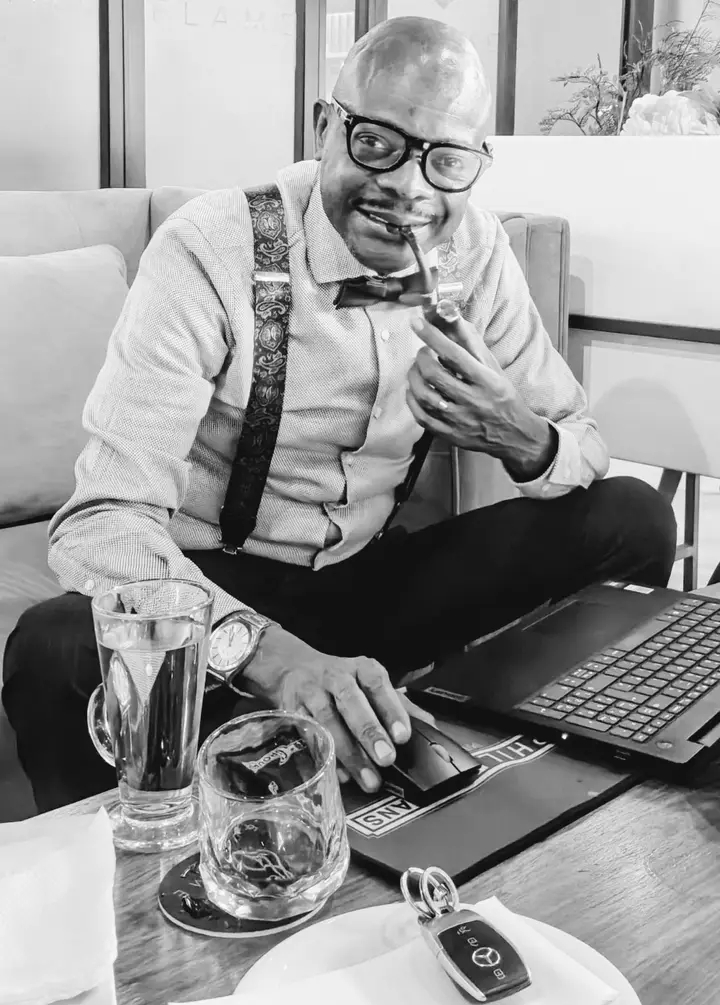
Amb. Anthony Mukwita wrote:
6th May 26
Zambia has once again managed to shoot itself in the foot, this time by cancelling RightsCon 2026, the world’s largest human rights and technology summit, just days before it was due to open in Lusaka.
I say this with lot’s of love for the motherland.
More than 2,600 delegates had booked their flights, polished their speeches, and prepared to debate the future of rights in the digital age.
Instead, they were told to stay home because the event did not “align with national values.”
The irony is so thick you could cut it with a rusty machete. Daily Nation Zambia
A country that once prided itself on being a beacon of democracy in southern Africa now looks like a nervous client state, bowing to external pressure, allegedly.
The whispers are not whispering anymore: China leaned hard on Zambia to cancel the summit because Taiwanese delegates were on the guest list, according to reports. Zambia hasn’t explained the truth.
Beijing, ever allergic to Taiwan’s presence, flexed its economic muscles, and Lusaka folded like a cheap tent. President Hakainde Hichilema, who once basked in the warm embrace of Washington and Brussels, now finds himself accused of kowtowing to Beijing.
The love affair with the USA and EU, once celebrated with champagne and glowing press releases, is waning fast. What was supposed to be a marriage of democratic values now looks like a messy divorce, a loveless marriage on the brink of collapse.
Outgoing U.S. Ambassador to Zambia Michael Gonzales did not mince his words. In his farewell speech, he slammed Zambia for rampant graft, pointing to billions in illicit cash flows and the suspension of $50 million in health aid.
He went further, condemning Chinese companies polluting Zambian waters, warning that such negligence could cause disease and death among ordinary citizens. Gonzales’ disgust was palpable, his gloves off.
He reminded Zambians that corruption and pollution are not abstract concepts—they kill, they maim, they rob the nation of dignity.
The cancellation of RightsCon is not just a bureaucratic hiccup; it is a geopolitical blunder. Amnesty International called it a serious setback for civic space. Human Rights Watch dismissed the government’s excuses as flimsy.
The U.S. State Department expressed concern that Zambia’s democratic credentials are being shredded. These are not fringe voices; they are the global arbiters of rights discourse, and their verdict is damning.
WHAT ABOUT THE CONSEQUENCES?
The negative implications are manifold. First, Zambia’s reputation as a democratic state under Hichilema is in tatters. Second, civil society has been denied a platform, reinforcing fears of shrinking freedoms.
Third, the economic fallout is real: hosting RightsCon would have boosted Lusaka’s profile as a hub for global dialogue, but cancellation signals instability to investors in the future and now.
And let us not forget the optics—Zambia now looks like a country that cannot be trusted to host major ‘small’ international events.
The sad story is that Lusaka will not be considered for such gatherings in the future. The world does not reward unreliability. It doesn’t forgive.
Is Zambia independent? Formally, yes. But in practice, the cancellation shows Lusaka caught in the crossfire of two big powers—East and West. It its true.
China brings the loans, the roads, the mines, and the pollution. America brings the democracy talk, the aid, and the lectures. Zambia does not need this endless tug of war.
What Zambia needs is to grow its own economy, build its own resilience, and stop being a pawn in someone else’s chess game.
From my perspective as an international relations analyst, the tragedy is that Zambia has the potential to stand tall but keeps choosing to kneel.
The satire writes itself. A government that claims to champion democracy cancels a democracy summit.
A president who promised transparency is accused of hiding behind “national values.”
A nation that fought colonialism now risks being recolonized by debt and pollution. And the timing could not be worse: with the August 2026 elections looming, Hichilema’s misstep will haunt him.
The irony is global. The EU and USA, once enamoured with Hichilema, now look at him with suspicion.
The honeymoon is over, the love wanes. Zambia, once the darling of democratic renewal, is now the cautionary tale whispered in diplomatic corridors.
“Do not trust Lusaka with your summit,” they will say. “Do not trust Lusaka with your aid.” And the saddest part is that they will be right.
Spain’s poet Antonio Machado once wrote: “In my solitude I have seen things very clearly that were not true.”
Zambia must ask itself whether cancelling RightsCon was clarity—or a costly illusion. The truth is that the decision was neither about values nor sovereignty in my humble view.
It was about fear, dependence, and the inability to say no to powerful friends. And until Zambia learns to say no, it will remain trapped in the middle, a pawn in a chess game it cannot win.
Did You know this below?
ONE CHINA POLICY ACCEPTED BY THE WORLD
The One China Policy is the diplomatic principle that recognizes the People’s Republic of China (PRC) as the sole legitimate government of China, with Taiwan considered part of that whole. In a few words, it means: “One China, no Taiwan independence.”
Nearly every country in the world, including the United States and the European Union, formally accepts this framework, even if they maintain unofficial ties with Taipei.
….
Amb. Anthony Mukwita is an International Relations Analyst and Author. His latest book, ‘China in Africa, the Zambia story’, is available on Amazon, Takealot, and many other online bookstores, Bookworld, and Grey Matter.