

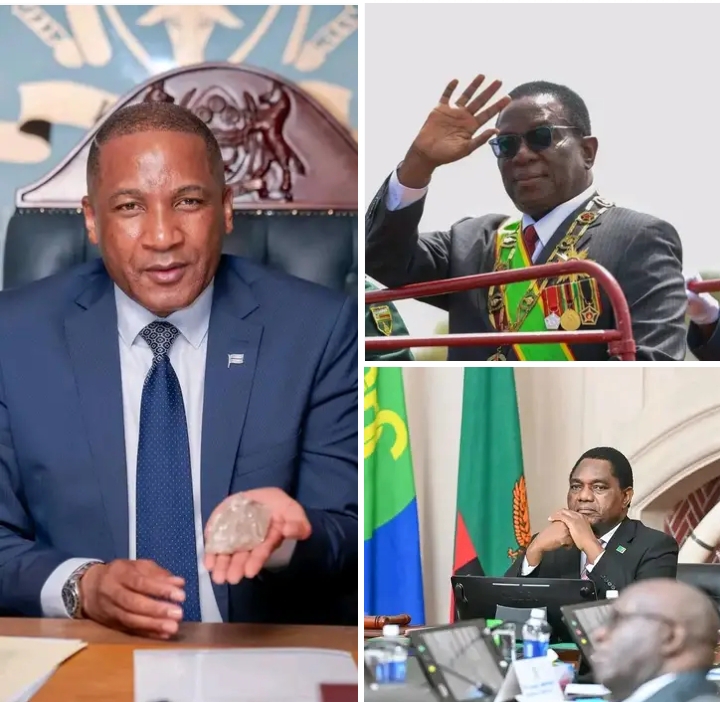
⬆️ Southern Africa Draws a Line | Sovereignty, Minerals & the Inevitable US Response
Southern Africa has delivered an unusually coordinated message this week. Zambia, Zimbabwe and Botswana have each taken positions that, while distinct in tone, signal a firmer posture toward Western engagement, particularly where health financing, mineral access and diplomatic protocol intersect.
Zambia has reportedly rejected a proposed US funding package valued at over $1 billion, citing misalignment with national interests. Zimbabwe formally withdrew from a $367 million health Memorandum of Understanding with Washington, prompting a public expression of regret from the US Embassy in Harare.
“We will now turn to the difficult and regrettable task of winding down our health assistance in Zimbabwe,” said US Ambassador Pamela Tremont, noting that the MOU would have represented the largest potential health investment in Zimbabwe by any international funder.
Botswana, for its part, has made headlines after President Duma Boko declined a White House invitation, insisting that discussions over Botswana’s natural resources must take place in Gaborone, not Washington.
“Any party genuinely interested in doing business with Botswana should come here,” Boko said, framing it as a matter of commercial logic and sovereign dignity.
These developments are not isolated. They come amid a global mineral rush driven by demand for copper, lithium, cobalt and rare earth elements critical to artificial intelligence infrastructure, electric vehicles and green energy systems.
Zambia is Africa’s second-largest copper producer after the Democratic Republic of Congo. Zimbabwe holds significant lithium reserves and recently moved to ban raw lithium exports in favour of domestic value addition. Malawi earlier signaled similar restrictions on exporting unprocessed minerals. President Hakainde Hichilema has repeatedly told international partners, including visiting World Bank officials, that Africa must move beyond raw exports toward beneficiation and industrialisation.
Washington’s approach under Donald Trump has been openly transactional. The US Embassy in Harare underscored that the proposed MOUs are built on “mutual accountability, transparency, and shared commitment.”
Sixteen African countries have reportedly signed similar health collaboration frameworks, representing over $18.3 billion in new health funding, including $11.2 billion in US assistance and $7.1 billion in co-investment. The US position is that foreign assistance is not charity but a strategic investment aligned with American taxpayer interests.
Such framing suggests Southern African governments should anticipate a response. Under Trump’s “America First” doctrine, policy instruments have included tariffs, aid suspension, diplomatic pressure and tighter scrutiny of trade privileges. Zimbabwe’s experience with sanctions and targeted restrictions offers precedent.
Zambia, which has been rebuilding international creditworthiness through debt restructuring and IMF-backed reforms, will likely weigh carefully any external economic fallout. Botswana, one of Africa’s most stable democracies and a key US partner in health and security cooperation, may face more calibrated engagement rather than overt retaliation.
It is also important to avoid oversimplification. Neither Zambia nor Zimbabwe has publicly framed its decisions as anti-American. Lusaka’s Health Ministry as quoted by Reuters stated that the draft agreement “did not align with the position and interests” of the country, leaving room for renegotiation. Zimbabwe assured Washington it remains committed to sustaining the fight against HIV/AIDS.
Meanwhile, Zambia’s State House and US Embassy in Lusaka have yet to issue detailed public commentary clarifying the mineral dimension of the reported proposal.
What is clear is that the regional mood has shifted. Sovereignty over natural resources is no longer rhetorical currency; it is becoming operational policy. The question now is whether this assertiveness will translate into deeper intra-African trade, stronger beneficiation capacity and reduced dependency, or whether fiscal constraints will eventually pull governments back toward negotiated compromise.
For policymakers in Lusaka, Gaborone and Harare, the balancing act is delicate. Health systems remain partly donor-supported. External financing still matters. But so does long-term control over mineral wealth in an era where copper and lithium underpin the global energy transition.
Southern Africa has made its opening move. Washington’s reply whether through negotiation, leverage or quiet recalibration, will shape the next chapter.
© The People’s Brief | Ollus R. Ndomu