

Suspending the IMF Programme Is Not Principle. It Is Pre-Election Panic.
By Thandiwe Ketiš Ngoma
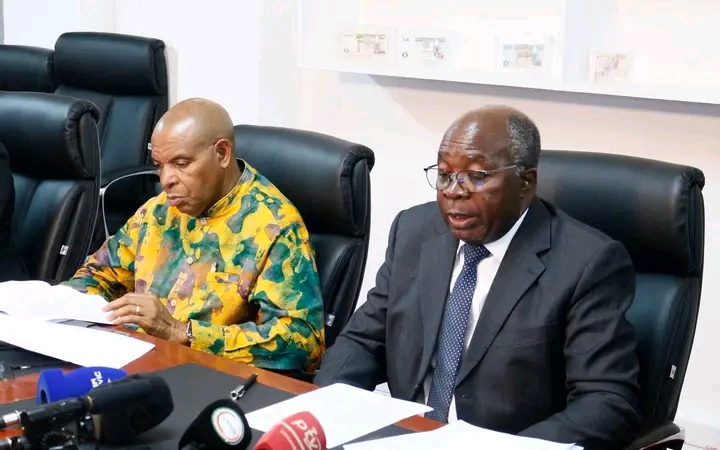
On 8 January 2026, the Minister of Finance, Honourable Situmbeko Musokotwane, held a press briefing in Lusaka in which he announced that the Zambian government had decided to shelve plans to extend the International Monetary Fund’s Extended Credit Facility (ECF), which has been in effect since October 2022
Under the original agreement, Zambia’s ECF programme was supposed to run for three years and should have expired in October 2025. However, as early as February 2025, the government had openly declared its intention to seek a one-year extension and had been in discussions with the IMF for months. That is why the sudden suspension of these plans came as a surprise to many.
There was no national consultation, no parliamentary debate, and no honest explanation. The announcement came abruptly, quietly, and conveniently.
Zambians must not be deceived. This decision is not born of principle. It is not a rejection of IMF ideology. It is a cold political calculation driven by the approaching 13 August 2026 general elections.
The truth is uncomfortable but undeniable: IMF programmes are incompatible with democracy in an election year.
At their core, IMF programmes are not designed to develop economies like Zambia’s. They are designed to protect creditors, enforce austerity, and subordinate national policy to external approval. The IMF’s economic model assumes that cutting government spending, removing subsidies, liberalising prices, and restraining wages will somehow produce growth. In reality, these policies shrink economies, deepen inequality, and transfer the cost of adjustment onto the poorest citizens.
For more than three years, the UPND government has faithfully implemented this ideology.
Under the IMF’s watch, Zambia has pursued austerity in a country that needed expansion. It has prioritised fiscal targets over livelihoods. It has reduced the role of the state in agriculture, energy, and social protection while expecting the market to fill the gap. This is textbook IMF economics, and it has failed Zambia repeatedly.
In agriculture, subsidy reductions and delayed support have weakened small-scale farmers, the backbone of the rural economy. IMF orthodoxy treats subsidies as distortions, yet in Zambia they are survival tools. The result has been higher input costs, uncertainty in fertiliser access, and increased vulnerability to climate shocks.
In the energy sector, cost-reflective pricing has meant endless tariff increases and fuel price hikes. IMF theory assumes households can “adjust.” In reality, these costs are passed through the entire economy, driving up food prices, transport fares, and production costs. Inflation becomes policy-induced.
The cost of living crisis gripping Zambia is not accidental. It is engineered. Wage suppression, reduced public spending, higher consumption taxes, and price liberalisation are all core IMF prescriptions. These policies protect balance sheets while breaking households.
IMF programmes are also anti-jobs by design. Austerity reduces public employment, freezes hiring, and suppresses domestic demand. When demand falls, businesses stop expanding and jobs disappear. Growth becomes something discussed in reports, not something felt by citizens.
Perhaps most damaging is the loss of economic sovereignty. Under IMF programmes, national budgets are no longer political documents shaped by citizens’ needs. They become technical submissions designed to satisfy external benchmarks. Policy space shrinks. Democracy weakens.
These are not side effects. They are the system working as intended.
Now, with elections approaching, the same government that defended these policies as “necessary reforms” suddenly wants distance. Not because IMF economics have failed, but because IMF economics are impossible to defend in front of hungry voters.
If these policies were truly good for Zambia, they would be proudly maintained. If they were delivering jobs, growth, and dignity, there would be no need to suspend them. The retreat exposes the lie.
Zambians were told to endure pain for long-term gain. Now that the political cost has become too high, the government wants to quietly step back without accountability.
Suspending the ECF now does not undo the damage. It does not restore lost incomes, closed businesses, or broken livelihoods. And it does not absolve those who imposed these policies while dismissing public suffering.
Zambia needs an economic vision rooted in people, production, and sovereignty, not austerity, obedience, and external approval.
As 13 August approaches, the people are watching.
And they will remember.
I never read any more, just from the title, shes boring