

The Hypocrisy of Europe: Rights for the weak, Silence for the Strong
On 3 January 2026, US Special Forces abducted Venezuelan President Nicolás Maduro and his wife from Caracas. This was a military invasion of a sovereign state and a flagrant breach of Article 2(4) of the UN Charter. Remember what was the European Parliament’s response? An emergency debate, “concern,” and calls for a “peaceful democratic transition.” What was conspicuously absent was any clear condemnation of the kidnapping itself and let alone a demand for release.
As a policy analyst, I begin with a clear statement: European Union is quick to condemn and sanction when it concerns African leaders but conveniently opts to massage the situation involving superpowers. This is an open portrayal of double standards.
On 27 November 2025, the European Parliament passed a resolution by 539 votes to 0 condemning post-election violence, demanding the “immediate and unconditional release” of opposition leader Tundu Lissu, and pushing the EU to freeze €156 million in annual aid.
Similary, on 17th September 2026, the European Parliament adopted a resolution on post-electoral developments and human rights in Zambia following the August 2026 general elections. It calls for an impartial investigation into the violence and the death of opposition figure and former government minister Mutotwe Kafwaya. It also raises concerns over the use of national security laws, demands an end to the detention and intimidation of opposition figures, and insists on transparent court proceedings and access to legal counsel. The resolution was adopted by 562 votes in favour, 1 against and 33 abstentions.
Rewind to 20 January 2026. The European Parliament did hold a plenary debate on Venezuela. But what was its title? “The situation in Venezuela following the abduction of Maduro and the need to ensure a peaceful democratic transition.” The title alone completes a narrative Europe is selling to the world: the military abduction of a sitting head of state is repackaged as a “transition” problem. To date the European Parliament has not passed any formal resolution demanding Maduro’s release.
The European Parliament’s selective outrage follows a clearly discernible pattern. On Tanzania, it completed the full cycle from resolution to frozen funds within two weeks. On Venezuela, it chose “assessing the situation” over “condemning aggression.” Toward African leaders, Parliament habitually wields sanctions, name-and-shame tactics, and demands for the “immediate and unconditional release” of opponents. Toward an American abduction, it retreats behind the bunker of diplomatic euphemism.
This double standard is no accident. Human rights and the rule of law have always been diplomatic instruments in service of interests. Toward small African states, Europe freely flexes its “values-driven diplomacy.” Toward the United States, it chooses strategic ambiguity and interest-based compromise.
Citizens of Zambia and Africa have every right to ask: if international law can be so easily shredded in Caracas with no consequence, then what were those solemn votes in the European Parliament over Zambia and Tanzania’s dead really for? Is the action for justice, or crucification of Africa?
The EU needs to be honest with itself. A Europe that turns a blind eye to the lawlessness of superpowers has no moral standing to swing the human rights hammer at African states. True international rule of law is not a rope for the strong to bind the weak, but a rule all states must obey equally.
Europe will only deserve the name it claims for itself when the European Parliament can condemn Washington’s abductions with the same force it condemns African governments. Europe will be regarded as the beacon of justice when the cry of “immediate and unconditional release” can travel past geopolitical calculation and reach every unjust prison cell. Then and only then, will Europe earn it’s trust and respect across the African continent and beyond. This choreographed hypocrisy is costly:
1. The cost is a world where law is only for the weak: If a sitting president can be seized by foreign commandos and Europe’s response is a debate title, then Article 2(4) is not law. It is a suggestion for countries without aircraft carriers. Every small state learns the same lesson: sovereignty is a function of firepower, not principle. That lesson does not produce peace. It produces proliferation, arms races, and desperate alliances with anyone willing to sell a missile.
2. The cost is Africa’s trust and Europe’s leverage: When Europe can demand the release of an African opposition leader within days but cannot name the abduction of a Latin American president, it confirms every accusation Beijing and Moscow have ever made. It confirms accusations that Western human rights are a weapon, not a principle. African governments will not simply resent this. They will use it. They will vote with rivals in UN bodies, buy arms elsewhere, and shut EU governance programmes out of their capitals. Europe will lose the very influence it seeks to build over migration, security, critical minerals, and reform.
3. The cost is paid by the victims Europe claims to defend.: The greatest casualty is not Maduro. It is the Tanzanian activist, the Zambian journalist, the Congolese dissident, the Ugandan opposition supporter. Every double standard hands their oppressors a ready-made excuse: “Human rights is just neo-colonialism.” That is a gift to every abuser and a betrayal of every victim who believed Europe when it said its concern was universal.
4. The cost comes home: If the rule becomes that powerful states can abduct leaders they dislike, no EU leader, diplomat, or soldier is safe. The precedent does not stay in Caracas. It travels to every capital with a grievance, an extradition treaty, and a willing superpower. A world without head-of-state immunity is a world where diplomacy becomes hostage.
Sadly, this is how the rules-based order dies. It is not in the heat of a war, but with a plenary resolution that refuses to say the word “kidnapping.” A world where the strong abduct and the weak are lectured is not order. A society that crushes those who are learning democracy but protects those preaching democracy when they commit similar crimes is not a fair society. A court that glorifies special forces who abduct a sitting head of state of another country and sentences to death special forces who crush a military insurrection in defence of democracy is not after serving justice.
It is clear that Europe’s normative power will not be destroyed by its enemies; it will be euthanised by its own selective silence. Hypocrisy is not a victimless sin. It is a subsidy to every abuser and a death sentence to every victim who trusted Europe’s promises.
We do not write this out of contempt for Europe. We write it out of love for what Europe at its best has always stood for: accountability, democracy, and social justice. These are the very values that demand a level playing field, not a hierarchy of victims where the powerful are pardoned and the weak are punished. It is not Europe we reject; it is the hypocrisy that betrays those noble values when Brussels bows to Washington while lecturing Lusaka.
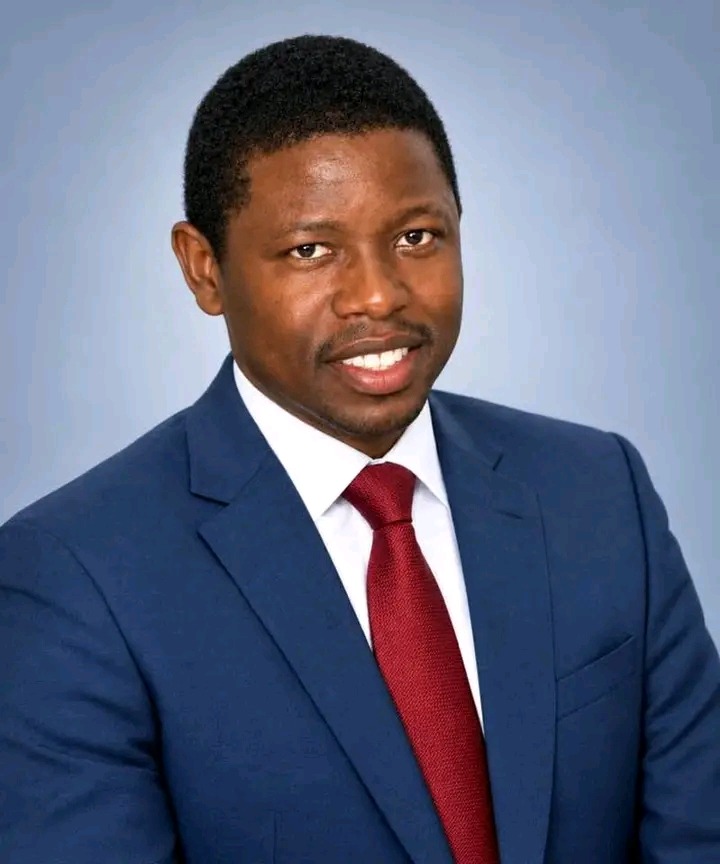
Dr. Martin Mushumba
Public Policy Specialist and Higher Education Quality Assurance Expert
I equally do not agree with the European Union’s Parliament discussions and resolutions on human rights issues in Zambia. While the protection of human rights and the rule of law are important principles, international responses should also take into account the sovereignty, legal institutions, and particular circumstances of the countries concerned.
There is also a broader concern about the application of international law and the use of foreign assistance as instruments of influence. Many African countries have long expressed concerns that international institutions and powerful states apply principles and standards inconsistently, with weaker states bearing greater pressure than more powerful ones. These concerns deserve serious and open discussion.
Similarly, the promotion of democracy and political pluralism in Africa should respect the independence and sovereignty of African states. External engagement should strengthen democratic institutions rather than contribute to political divisions or perceptions of external interference.
Regarding the detention of opposition political leaders in Zambia, due process should be allowed to take its course. Allegations should be addressed through Zambia’s established legal and judicial institutions, with the rights of all parties protected. At the same time, legitimate concerns about human rights should be addressed through constructive diplomatic engagement and respect for Zambia’s sovereignty.
The European Union, like any international partner, has a legitimate interest in human rights and democratic governance. However, diplomatic engagement is most productive when it is based on mutual respect, dialogue, consistency, and recognition of the sovereignty of partner states. Zambia and the EU should be able to discuss these difficult issues openly without such engagement becoming perceived as threats or undue external pressure.