

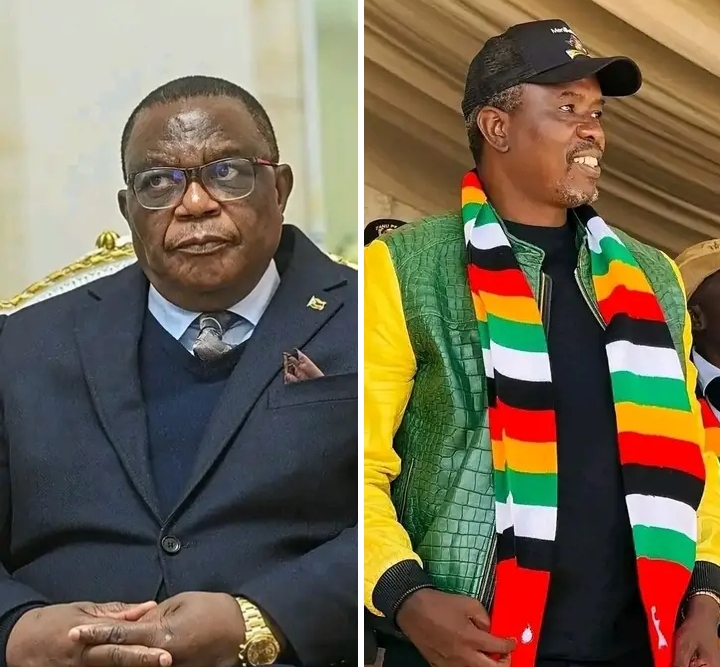
THE MEN WITH GUNS VS THE MEN WITH MONEY: THE GENERALS, TAGWIREI AND THE BATTLE FOR THE SOUL OF ZANU PF
The Sunday Political Read
By Gabriel Manyati
The ZANU PF Politburo meeting scheduled for the afternoon of 9 October 2026 never took place. Members had already begun assembling at the party headquarters in Harare when the session was abruptly cancelled. Official explanations spoke of a clash of programmes. The real collision was political.
President Emmerson Mnangagwa and Vice President Constantino Chiwenga were at loggerheads over proposals to rewrite the party constitution so that it matched the far-reaching changes introduced by the Constitution of Zimbabwe Amendment (No. 3) Act, signed into law on 7 July 2026.
Most commentary has framed the confrontation as a classic succession fight between two men. That reading is too narrow and ultimately misleading. The deeper contest is over who will control the ruling party, the distribution of state appointments and the flow of public money after Mnangagwa eventually leaves office. On one side stand the men with guns: the military and security figures whose intervention in November 2017 removed Robert Mugabe and installed the current president. On the other stand the men with money: politically connected businessmen whose commercial interests, party financing and growing presence in formal political structures give them a direct stake in how the next leader is chosen. The generals supplied the coercive power that delivered State House. The tenderpreneurs, led most visibly by Kudakwashe Tagwirei, are accumulating the financial and institutional leverage that may decide who occupies it next. The question now is whether the military establishment will retain its commanding position or become subordinate to a new class of commercially connected actors.
The 2017 Settlement and Its Unfinished Business
In November 2017 the Zimbabwe Defence Forces, under the command of then Defence Forces Commander Constantino Chiwenga, intervened to end the long rule of Robert Mugabe. The operation, publicly presented as a targeted action against criminals surrounding the president, removed Mugabe from power within days. Major-General Sibusiso Moyo became the public face of the intervention when he appeared on national television to explain the military’s position. Other senior commanders secured key installations, managed communications and ensured the transition proceeded without broader institutional collapse. Mnangagwa, who had been dismissed as vice-president days earlier and had fled the country, returned from exile and assumed the presidency. Chiwenga moved from the barracks into the vice-presidency. Military figures took senior positions in the new administration and retained substantial influence over security policy and political direction.
The 2017 settlement was not a democratic handover. It was a demonstration that the men with guns could determine the outcome of a national leadership crisis. That demonstration created lasting expectations. Those who had risked institutional legitimacy to remove Mugabe expected to retain a decisive voice in the succession that would eventually follow Mnangagwa. The arrangement that emerged after 2017 rested on a clear understanding: the men who had supplied the coercive capacity would continue to shape the rules of political survival inside ZANU PF. Nearly nine years later that understanding is under sustained pressure from a different source of power. Businessmen who once operated in the shadow of state contracts are now moving into formal party and governmental positions. Their rise forces a re-examination of who actually controls the instruments of succession.
The Ascent of the Men with Money
Kudakwashe Tagwirei has become the clearest illustration of this new force inside ZANU PF. A businessman whose commercial interests have long intersected with government procurement and state-linked enterprises, Tagwirei was co-opted into the party’s Central Committee in 2025. Under the expanded appointment powers created by Constitutional Amendment No. 3 he received a Senate seat. On 8 October 2026, days before the cancelled Politburo meeting, he was appointed Minister of Economic Development and Investment Promotion. The portfolio places a man still under United States and United Kingdom sanctions in charge of attracting investment into the country.
Each step in this trajectory carries specific institutional weight. Central Committee membership gives a businessman a formal voice in the ruling party’s decision-making structures and a platform from which to influence internal debates. A Senate seat provides parliamentary presence and direct access to the legislative body that, under the amended constitution, will elect the next president. A ministerial portfolio offers day-to-day influence over policy areas that determine commercial opportunity, including investment promotion, economic planning and the interface between state and private capital. Tagwirei’s rapid movement from commercial operator to Central Committee member, senator and minister shows how proximity to the state can be converted into formal political office within a remarkably short period.
He is not an isolated case. Wicknell Chivayo, another businessman closely associated with government contracts across multiple sectors, died in a helicopter crash on 30 September 2026. His death removed one high-profile figure from the network of commercially connected actors whose fortunes rose sharply under the current administration. Other names, including Paul Tungwarara, appear repeatedly in accounts of state-linked business activity spanning fuel procurement, mining, gold trading, energy projects and large-scale government tenders. These individuals operate in sectors where government decisions determine the distribution of opportunity. Their wealth is not merely private accumulation. It functions as political capital that can finance party activities, underwrite mobilisation efforts and secure continued access to senior officials.
Public procurement and party finance are tightly linked in practice. Those who win government business are frequently those best positioned to contribute to the ruling party’s operational costs, conference logistics and electoral machinery. Those contributions, in turn, strengthen claims on future contracts and political consideration. The relationship is reciprocal and self-reinforcing. Commercial access generates political influence. Political influence protects and expands commercial access. Over time this cycle produces a class of actors whose primary interest lies in preserving and expanding the systems of preferential access from which they benefit. That interest is not identical to the institutional interests of the military establishment that delivered the 2017 transition.
Constitutional Amendment No. 3 and the Battle Over Succession
Constitutional Amendment No. 3 fundamentally altered the architecture of succession. Signed into law on 7 July 2026, it extended the terms of the president, Parliament and local authorities from five to seven years and applied the change to the sitting president, pushing Mnangagwa’s current term from 2028 to 2030. More significantly, it replaced the direct popular election of the president with election by a joint sitting of the Senate and National Assembly. It also expanded the Senate and shifted certain electoral functions. The subsequent effort to align the ZANU PF party constitution with these national changes brought the underlying conflict into the open and triggered the confrontation that led to the cancellation of the 9 October Politburo meeting.
A parliamentary election of the president elevates the importance of controlling party structures, parliamentary loyalties and the financing of political mobilisation. Direct popular election, however imperfect and contested it may have been in previous cycles, still required some measure of national campaigning and public appeal. Selection by parliament concentrates power inside the institutions that the ruling party already dominates. In that environment those who can finance candidates, secure parliamentary support, influence internal party processes and shape the composition of key committees gain decisive leverage. Businessmen with deep commercial ties to the state are structurally well placed to operate in such a system. Military figures whose primary political asset is institutional command and the residual authority of the 2017 intervention face a different and less favourable calculation.
The constitutional changes and Tagwirei’s rapid advancement are mutually reinforcing. Extending Mnangagwa’s tenure buys time for the consolidation of commercial and political positions. Shifting presidential selection to parliament increases the value of controlling the very institutions into which commercially connected figures are now being inserted. The institutional route is clear. Those who finance party activity, occupy Central Committee and parliamentary seats, and hold ministerial portfolios that intersect with economic policy are better positioned to influence a parliamentary succession process than those whose power rests primarily on the chain of command. The cancelled Politburo meeting was the moment at which this reality became impossible to ignore inside the party’s highest decision-making body.
Why the Men with Guns Have Cause for Concern
Chiwenga’s reported opposition to the party constitutional amendments reflects more than personal presidential ambition. The military establishment that installed Mnangagwa has institutional interests that extend beyond any single individual. Those interests include continued influence over senior appointments, a decisive voice in succession and protection of the political role the defence forces claimed in 2017. The accumulation of formal political positions by commercially connected figures threatens to dilute that role.
The cancelled Politburo meeting was not an administrative mishap. It was a symptom of resistance to a reconfiguration of power inside the party. If businessmen can move from Central Committee membership to Senate seats to ministerial office while the rules of presidential selection are rewritten to favour parliamentary processes, the military’s historic claim to determine leadership outcomes becomes progressively harder to sustain. Control of the ruling party’s machinery, influence over appointments, capacity to finance political mobilisation and access to government contracts are all shifting. The more these functions concentrate in the hands of commercially connected actors, the less indispensable the military’s political patronage becomes. The generals may retain their ranks, their institutional authority and their capacity for coercion. They risk becoming junior partners in a system whose most consequential beneficiaries are those who control contracts and party finance.
This is not a claim that every general opposes every businessman or that commercial interests form a single coordinated bloc. It is a claim that the underlying distribution of power is changing and that the military establishment has concrete reasons to resist that change. The stakes are measurable in appointments, contracts, party positions and the rules that will govern the next presidential selection.
Beyond Ordinary Factionalism
It is possible to describe the current crisis as ordinary ZANU PF factional politics, a generational transition or a contest between two presidential hopefuls. That description is incomplete and ultimately inadequate. A conventional succession battle is about who inherits the presidency. This struggle is also about who controls the financial resources, public appointments, party structures and commercial opportunities attached to the presidency. The evidence of Tagwirei’s appointments, the timing of the constitutional changes, the death of a major commercially connected figure days earlier, and the military faction’s resistance points to a contest over the institutional distribution of wealth and authority, not merely a rivalry of personalities.
Not every businessman supports Mnangagwa. Not every general supports Chiwenga. Commercial interests are not monolithic. The argument does not require uniformity of alignment. It requires recognition that a new centre of power has emerged inside the ruling party and that its interests are not identical to those of the military establishment that delivered the 2017 transition. Reducing the crisis to a personality contest obscures the structural shift that is underway.
The Changing Character of the Party
In November 2017 the military establishment demonstrated that it could decide the outcome of a national leadership crisis. Nearly nine years later the question is whether it can still decide who succeeds Mnangagwa when party financing, commercial patronage and constitutional design have become more important determinants of political outcomes. ZANU PF still draws legitimacy from liberation-war credentials. Its military connections remain consequential and visible. Yet the distribution of government contracts, the financing of party activities and the advancement of businessmen into formal political office indicate a party increasingly shaped by the interests of those who profit from preferential access to the state.
The men with guns helped decide who would rule Zimbabwe in 2017. The men with money, with Tagwirei now the most prominent among them, want a decisive say in who rules it next. The cancelled Politburo meeting of 9 October 2026 was the moment that contest became impossible to disguise.