

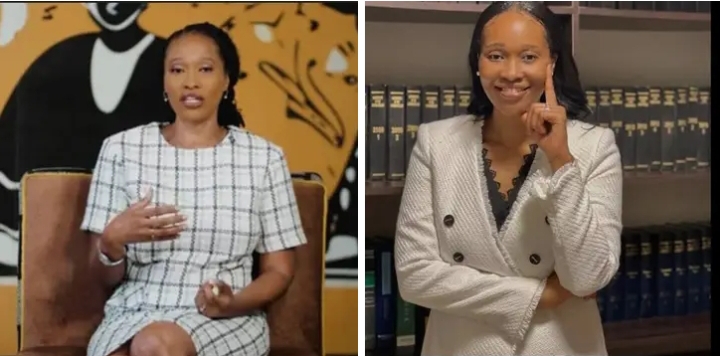
The Wrong Messenger: Why Mcqueen Zaza Is the Last Person Who Should Be Lecturing a Sitting Judge on Professional Conduct
When a government’s defenders attack an independent judge, the quality of the attack matters. So does the record of the attacker
By Ambassador Emmanuel Mwamba • 16th April 2026
Judge B.G. Shonga’s public statement about being passed over for elevation was, by any measure, a model of professional restraint. She expressed disappointment, acknowledged the appointing authority’s prerogative, refused to draw conclusions about her omission, and affirmed her commitment to continued service. It was the statement of a person who takes both her feelings and her professional obligations seriously — and who trusts the public with both.
The response it drew from Lusaka-based lawyer Mcqueen Zaza was something rather different. In a widely shared social media post, Zaza accused Judge Shonga of having “an inflated sense of entitlement,” suggested she “consider resigning,” and declared it “not fitting for a judge to publicly express frustrations, particularly against the President.” He also asked, rhetorically, “Who is Muhabi Lungu in the current political era” — referencing the judge’s brother by name — as if the political identity of a judge’s sibling were a legitimate basis for assessing a judicial career.
There is much to say about the substance of that post. But before addressing the argument, it is worth establishing who is making it.
The Record of the Critic
In October 2021, just weeks after the UPND government came to power, Lusaka police arrested Mcqueen Zaza and charged him with extortion. According to a police statement issued by spokesperson Rae Hamoonga, Zaza had approached a businessman who held a Ministry of Defence contract, purporting to be President Hichilema’s personal lawyer and legal adviser, and claiming connections with Home Affairs Minister Jack Mwiimbu. The businessman was taken to a police station, and K40,000 subsequently changed hands. Zaza was charged under Section 279 of the Laws of Zambia and released on police bond pending court appearances.
Zaza later denied the extortion, claiming the money was a bribe he had accepted in order to report the businessman to the Anti-Corruption Commission. Whatever the courts ultimately make of that defence, the underlying facts of the episode are not in dispute: a man who now publicly positions himself as a defender of the President’s judicial appointments was, in 2021, arrested for falsely claiming to be the President’s lawyer in order to extract money from a government contractor.
This is the individual who has decided that Judge B.G. Shonga — a sitting officer of the court with a distinguished record, invited by the International Bar Association to speak on judicial independence — has an “inflated sense of entitlement” and should consider leaving the bench.
The Argument, Such as It Is
Zaza’s post makes three substantive claims, each of which deserves brief examination.
First, he asserts that promotions are the responsibility of the Judicial Service Commission, not the President, and asks why the President is being brought into the discussion. This is technically accurate and substantively evasive. The JSC recommends appointments. The President makes them. The Attorney General — former UPND candidate for Kabwe constituency [and purported cousin of the First Family]— sits on the JSC. To claim the President bears no responsibility for outcomes that emerge from a process he both initiates and ratifies, through a body whose composition includes his own AG and staffed by his selected appointees, is to describe a constitutional formality while ignoring a political reality.
Second, he invokes the name of Muhabi Lungu — Judge Shonga’s brother, a critic of the Hichilema administration — as if to suggest that family political association is an irrelevance that should not affect a judge’s career. But he raises it in a post that is plainly designed to delegitimise the judge’s concerns. If the association is irrelevant, why mention it? The rhetorical move answers itself: Zaza invokes the brother precisely to imply that critics should expect consequences, while maintaining plausible deniability about making that implication.
Third, and most troublingly, he declares it “not fitting for a judge to publicly express frustrations, particularly against the President.” Judge Shonga expressed no frustration against the President. She explicitly declined to draw any conclusion about why she was overlooked and affirmed her respect for the appointing authority. What she did do was speak candidly about her professional experience and emotional reality. Zaza’s characterisation of that as an attack on the President reveals precisely the mindset that critics of these appointments have been warning about: the assumption that judicial silence is owed to the executive, and that any judge who speaks publicly without flattering those in power has committed an impropriety.
What the Attack Actually Reveals
There is a long tradition, in governments that have compromised their judiciaries, of treating vocal, independent judges not as professional assets but as institutional threats. In Poland, judges who spoke out about political interference were called “enemies of the state.” In Benin, a judge who resigned from a politically captured court and fled the country later described his colleagues as “enforcement agents” rather than magistrates. The silencing of judges — not through formal removal but through social pressure, reputational attack, and the suggestion that independent public speech is professionally unbecoming — is a well-documented precursor to more formal forms of judicial subordination.
Zaza’s post does not, of course, represent government policy. He is a private citizen making a social media comment. But he is a private citizen with a documented pattern of publicly defending the Hichilema administration’s legal record, and his post attracted significant amplification within UPND-aligned networks. Its message — be quiet, know your place, the President owes you nothing, and if you disagree you can leave — is the message that governments send to independent institutions before they stop sending messages and start sending consequences.
Judge Shonga said she must reconsider her social media visibility. She noted that “only a fool does not heed wise counsel.” The counsel she received, it seems, came from those who understand that visibility, in the current environment, carries professional risk for judges who cannot be assumed to be “user friendly.”
That Mcqueen Zaza — a man whose own public profile is built on vocal government support — is one of those now advising a sitting judge to retreat from public life is an irony that does not require underlining.
Judge Shonga was invited by the International Bar Association to speak on judicial independence under the title: Natural Selection? From Where Should Judges Come? She called the timing ironic. It is also, now, a question that answers itself. Judges, it appears, should come from networks that are compatible with those in power — and those who are not should, as Mcqueen Zaza helpfully suggests, consider establishing their own firm.
The irony is that in telling a distinguished judge to resign and go into private practice, Zaza has inadvertently made the strongest possible case for why these appointments matter. Because a judiciary whose independent members are advised to leave, and whose compliant members are elevated, is not a judiciary at all – It is a branch of the executive that wears robes.
.
Ba Mwamba, look at the message not the messenger. For a judge to be active on social media is, to me, a big No, No. It demeans the office of judge. The mere fact that her grievances are in the public domain (read social media) is also a source of concern and raises issues of emotional intelligence.
A promotion is not an entitlement.
True, this judge sister to muhabi lungu was appointed high court judge by late ECL, slightly before her dad died- mukondo lungu and the dad was extremely happy. This means she has not even served 15 years as a judge but already she wants a promotion. What signifacant contributions has she made to the judiciary? Late her join us in farming so that she can start complaining to God for poor harvest
And we also ask the question whether or not there are no other Hon. Judges who have been at the bench longer and are more senior but were “left out” from promotion.