

Trump Freezes Taiwan Weapons Deal After Closed-Door Clash With Xi — Beijing Warns of Military Conflict
One of the most explosive issues behind the closed-door summit between Donald Trump and Xi Jinping was Taiwan — a topic Xi reportedly described as China’s “thickest red line.”
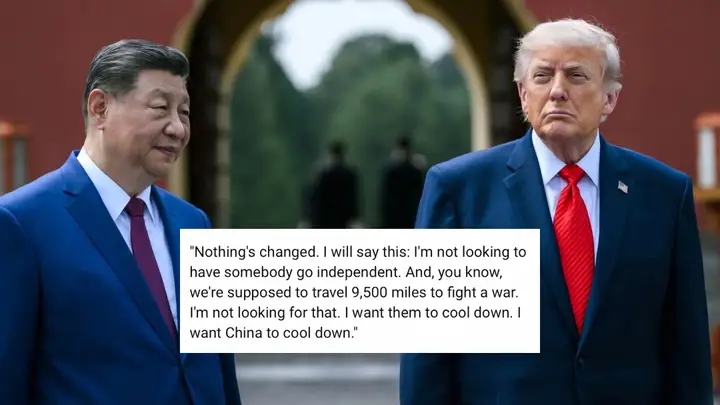
During the summit in Beijing, Trump signaled a major shift in tone compared to previous U.S. administrations. Speaking afterward, he openly stated:
“I’m not looking to have somebody go independent.”
The remark was widely interpreted as a warning toward Taiwan not to push toward formal independence under his watch.
Trump also questioned the cost of defending Taiwan militarily, complaining that the United States would have to travel “9,500 miles” to fight a war he says he does not want. Instead, he stressed that he wants “China to cool down” and reduce military pressure around the island.
Behind closed doors, Xi Jinping reportedly delivered a direct warning to Trump, insisting Taiwan remains a non-negotiable “core interest” of China and demanding that Washington fully respect the One-China principle.
But the biggest shock came aboard Air Force One on the return flight.
Trump confirmed he still has NOT approved a massive U.S. weapons package for Taiwan worth up to $20 billion, including Patriot air defense systems and advanced missile technology already backed by Congress.
When asked if he would sign off on the deal, Trump responded:
“I may do it. I may not do it.”
He added that he would first speak with “the people running Taiwan” before making a final decision.
The revelation triggered backlash in Washington after Trump admitted he discussed Taiwan weapons sales directly with Xi Jinping during negotiations in Beijing — something previous U.S. administrations traditionally avoided under longstanding security assurances to Taiwan.
Analysts now believe Trump may be using Taiwan as leverage in a broader geopolitical bargaining game:
• Pressuring China for massive trade concessions and economic deals
• Pressuring Taiwan to increase defense payments and shift more semiconductor production into the United States
• Avoiding direct military confrontation with Beijing while still keeping leverage on the table
Meanwhile, members of both parties in Congress are now pressuring Trump to immediately approve the weapons transfer, warning that delaying military support could weaken deterrence and encourage Beijing to escalate pressure against Taiwan.
As tensions rise across the Indo-Pacific, the Taiwan issue is once again emerging as the most dangerous flashpoint between the world’s two largest powers.