

🇿🇲 BRIEFING | UPND Sets Merit-Based Adoption Criteria as Defections Come into Focus
The governing United Party for National Development (UPND) has outlined its approach to candidate adoption ahead of this year’s general election, placing emphasis on merit, grassroots endorsement, and electability.
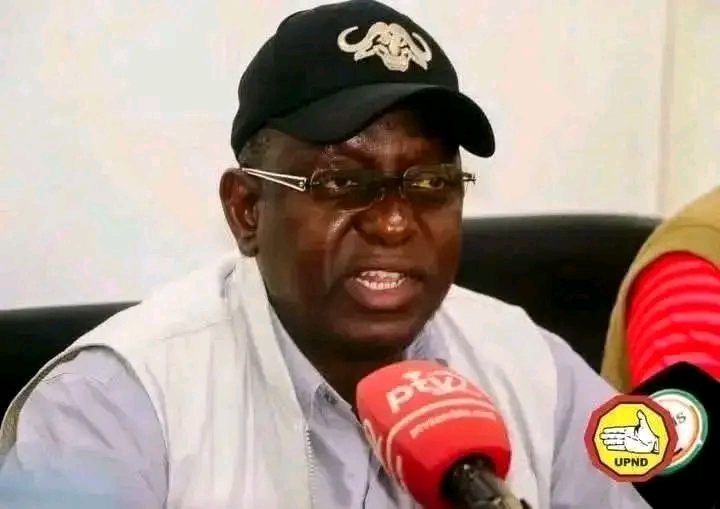
Speaking on ZNBC’s Sunday Interview, UPND Elections Chairman Likando Mufalali said the party does not recognise a distinction between so-called new members and long-standing insiders when it comes to adoption.
He indicated that individuals perceived as recent entrants have, in many cases, maintained informal alignment with the party over time. Some, he said, were advised to remain in their original parties to avoid triggering by-elections while still working in coordination with UPND structures.
“A lot of them approached us a long time ago and UPND being a democratic party, welcomed them but allowed them to continue representing their parties to avoid by-elections.
“So people should stop saying new members maybe considered for adoptions, because these people have always been, and working with us. We have been working as a team,” he said.
This framing introduces a deliberate repositioning of defections. It shifts the narrative from recent political movement to long-term alignment. It also provides internal justification for allowing such individuals to compete in adoption processes without being treated as outsiders.
Mufalali said adoption will be driven from the grassroots, with party structures tasked to identify candidates based on popularity and local relevance.
He stressed that seniority within the party will not guarantee adoption, stating that performance and public support will be the determining factors.
“We are trying to avoid making mistakes of adopting people that have failed to perform in their respective areas and are not popular to the people. Politics is about numbers and if a new member is popular on the ground who are we not to adopt them?” Mufalali said.
The position formalises internal competition. It signals that incumbents and long-serving members may face credible challenges where performance is questioned.
At the same time, Mufalali acknowledged a structural difficulty within the process. He noted that it is not always possible to verify whether candidates recommended by the majority genuinely reflect the will of the grassroots until after adoption decisions are made.
“Politics can be difficult to tell on how one manages to go through, but we will go with what the people on the ground have decided on which member they want. We are not going to impose leaders,” he added.
This introduces an element of uncertainty within an otherwise rules-based approach. The system depends on internal structures that may themselves be contested.
Mufalali also addressed the likely fallout from competitive adoptions. He said the party has mechanisms to manage those who are not selected, with an emphasis on maintaining unity and avoiding internal conflict.
He indicated that unsuccessful aspirants may be reassigned to other roles within the party structure.
The direction is clear. Adoption will be contested. Loyalty alone will not be sufficient. The process will rely on structures, but its credibility will depend on how those structures hold under pressure.
© The People’s Brief | Goran Handya