

WIDOW’S RIGHTS VS STATE POWER: LUNGU BURIAL APPEAL TESTS LAW AND AUTONOMY
By Brian Matambo – Sandton, South Africa
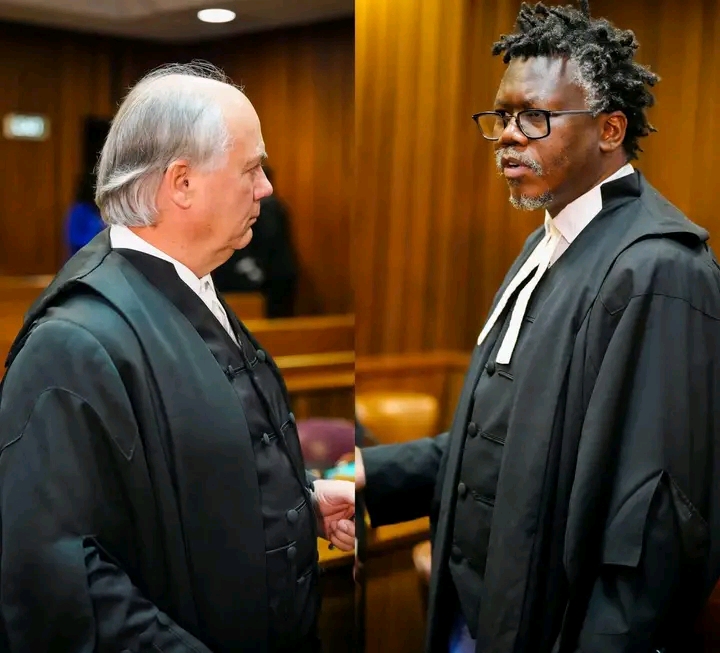
Pretoria – The Pretoria High Court was a stage of weighty argument and probing questions on Monday as a full bench of three justices considered whether to grant the Lungu family leave to appeal the earlier order compelling the repatriation of former Zambian President Edgar Lungu’s remains to Lusaka for a state funeral. The case, unprecedented in South African jurisprudence, forces judges to weigh the widow’s right to decide her husband’s burial against the claims of a foreign state asserting national interest.
The hearing was presided over by Acting Judge President Aubrey Ledwaba, Deputy Judge President Sulet Potterill, and Justice Modau.
A QUESTION OF LAW AND CONNECTION
At the heart of the debate lay the classic conflict of laws dilemma: which legal system governs a dispute when multiple jurisdictions are involved. Advocate Tembeka Ngcukaitobi, representing the Lungu family, pressed the view that once the lex loci, the law of the place where the agreement was concluded, is accepted as South African, it governs the entire dispute. Splitting the matter into contract law on one side and burial rights on the other, with Zambian law applied to the latter, was described as illogical and unworkable.
“If you followed my learned friend’s reasoning, you would end up with conflicting outcomes,” Ngcukaitobi told the bench. “Once we have decided the lex loci, then everything falls under that law. Zambian law becomes irrelevant.”
For the Zambian state, the case could not be so neatly divided. Their counsel insisted that two issues are present: the agreement itself, properly governed by South African law, and the burial right, which by its very nature has its closest connection to Zambia, the home country of the deceased and the place of his national significance.
CAN YOU CONTRACT OVER A CORPSE?
Perhaps the most sensitive point was whether the law recognizes any enforceable contract over human remains. Ngcukaitobi argued forcefully that it does not. Citing authorities from Blackstone through to Roman-Dutch scholars, he maintained that a corpse is outside commerce and cannot be the object of a contract.
“Food and Huber are clear,” Ngcukaitobi said. “There is no enforceable South African contract over human remains. If we accept otherwise, we create a new and dangerous precedent.”
The state countered that what was at issue was not a contract commodifying the body, but rather the transfer of burial rights, a recognized legal interest that can, in exceptional cases, be ceded to another party. They pointed to earlier South African cases where provincial governments arranged funerals for public figures despite family wishes, suggesting that public interest can trump private autonomy.
WIDOW’S AUTONOMY UNDER THREAT
For the family, the case turns on the principle that the surviving spouse holds the primary right to determine burial. South African courts have traditionally recognized this right as “uncodified but absolute,” unless the spouse is deceased, in which case children step in.
Ngcukaitobi warned that the High Court’s earlier decision had opened a “dangerous road” where governments, even foreign ones, could override widows in the name of national interest. “South African law has never countenanced this outcome,” he stressed. “If this judgment stands, it sends out a precedent that the wishes of a spouse can be overridden by the state.”
That, he argued, is inconsistent with constitutional protections of dignity, privacy, and family life. It risks undermining bodily integrity at the most personal and sensitive moment.
THE ROLE OF ZAMBIAN LAW
A large part of the debate focused on whether Zambian law should have any role at all in the South African court’s decision. The state insisted it should, noting that Lungu was a Zambian national, only temporarily in Pretoria, and that his burial carried national significance for Zambia.
But the family countered that foreign law must be proven as a matter of fact, not assumed. Ngcukaitobi pointed out that no expert affidavit on Zambian law had been placed before the court. The only authority cited, the Kaunda judgment, was said to be narrow and fact-specific, not a definitive statement on burial rights in Zambia.
Even if Zambia’s common law were to be considered, he argued, it mirrored English common law in treating human remains as outside commerce and recognizing the spouse’s authority.
PRESIDENTIAL BENEFITS AND THEIR LIMITS
One striking submission concerned the link between presidential benefits and burial rights. Ngcukaitobi argued that because Lungu had lost his presidential benefits before death, those benefits could not be “reinstated on a corpse.” The right to a state-funded burial was an attendant benefit of office, not a right inhering in the body itself. “Once life ends, the rights also end,” he said, emphasizing that any benefits would flow to the widow, not to the remains.
This line of reasoning underscored the family’s position that the government’s case was built on a legal fiction, attempting to attach rights to a body that the law does not recognize as a legal subject.
JUDICIAL PROBING
The judges pressed both sides on the implications of their arguments. Could this dispute truly create a precedent, given its unusual facts? Would splitting the dispute into contract law and burial law not produce confusion? Is there a risk that public interest could swallow up family autonomy in future cases?
At several points, the bench questioned whether the matter deserved the authoritative attention of the Supreme Court of Appeal. Ngcukaitobi insisted that it did, precisely because of its novelty: “It is the first case we are aware of where a foreign state comes here to claim the bones of a deceased person against the wishes of the widow.”
WHAT IS AT STAKE
The outcome of this leave to appeal application will shape more than just where Edgar Lungu is buried. It will set a precedent on whether South African law permits contracts over burial rights, how far foreign states may invoke public interest in local courts, and whether a widow’s autonomy can be overridden by national claims.
If leave is granted and the family ultimately succeeds, South African law will stand firm on widow’s rights and the non-commodification of human remains. If leave is refused, the precedent will be that in certain exceptional cases, governments can legally override families to claim a body for state purposes.
In either outcome, the case highlights the collision of law, dignity, and politics, and why the Lungu dispute may resonate far beyond Pretoria’s courtrooms.
WHAT THE WHOLE TRIAL HAS NEGLECTED IS THE FACT THAT A MAN WHO ENTERED SOUTH AFRICA ILLEGALY OR OVERSTAYED DESERVES DEPORTATION OR PERSONA NAN GRATA STATUS.
DID THE MAN THAT ENTERED SOUTH AFRICA AS EDGAR CHAGWA LUNGU LEAVE SOUTH AFRICA AT THE PRESCRIBED TIME? IF NOT, HE BREACHED THE SOUTH AFRICAN IMMIGRATION REQUIREMENTS AND DESERVES REPERCURSIONS OF BREACHING THE SOUTH AFRICAN LAW WHETHER IN LIFE OR DEATH.
THE QUESTIONS THE RESPONDENTS MUST BE CONSIDERING ARE; WHO REALLY DIED? HAS ANYONE VERIFIED THE DNA OF THE PERSON THAT DIED?
WHY ARE THE PEOPLE OPPOSING A TRADITION LONG HELD IN THE COUNTRY RESISTING VERIFICATION AND REPARTRATION OF THE REMAINS OF A FORMER PRESIDENT TO A COUNTRY HE ONCE RULED?
DOES ANY LAW ANYWHERE IN THE WORLD ERASE THE STATUS OF ‘FORMER PRESIDENT’ WHEN THE DIE WHILE THEY VOLUNTEERED TO FLAUT THE COUNTRY’S LAWS?
SHOULD A FAMILY OF WIDOW HOLD A WHOLE NATION AT LARGE?
ARE THE PEOPLE BEING PROTECTED NATIONALS OF THE COUNTRY WHERE THE SUBJECT LATE PRESIDENT DIED?
LET THE BODY NOT BE USED AS A SHIELD TO ESCAPE JUSTICE.
@kasongo wabaluba
Kindly allow people More knowledgeable to comment on this issue. It’s not in your league,am afraid to say.
Your level is CDF, Imita Ufole, Cash for Work NAPSA withdrawals etc.
You are embarrassing your self.
This whole article makes an argument of fallacy. It makes South Africa the centre of the contest between foreign parties and conveniently and deliberately chooses to avoid the real issue. The focus and test should be on the stupidity of politics in Zambia under the disguise of “rule of law”. The law can be made and used for abuse.
The writer of the article is a PF manipulator trying hard to hide by pushing the PF agenda of trying to create doubts in the minds of citizens. The family lawyer failed to state the reasons to be granted leave to appeal, just like when he went to appeal straight to constitutional court to avoid arguing the merits of leave to appeal. His case was thrown out because he hard failed to make the case for direct access. His arguments were solely based on the constitution issue which he wanted to argue in the constitution court but a matter all together that was not on record. My view is he failed to make the argument for leave to appeal. Hence the reason he was asked whether he had read the judgement. The judgement or ruling had covered what he was trying to cover.
Going by Jeremiah 16:6 and 25:33, it is clear that the Lord is not happy with ECL that is why he cannot be buried. He will rot and smell even dogs won’t come near the corpse because of the stench.
Less tewa kwangasha. He looted a poor country, used national resources to buy hotels and houses abroad, planned to distabilise the country with his ill-fated plan B sitting pretty outside the country while we killed each other. But alas, the Lord saw this and he struck.
This looks similar to late Chiluba’s diabolical third term charade and later his Rupiah Banda nonsense. The Lord struck him before he could impose useless RB on us.
Zambia is protected by the Lord our God. We are the Jews of Africa. We may look full and sleepy of bovine but our protector overcomes all our enemies. Do even my brother HH will be struck if he is doing any dark corner machinations.
I rest my humble case.