

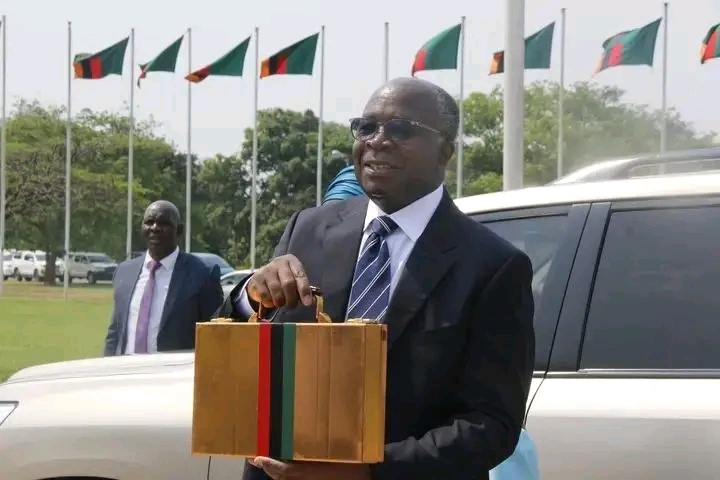
EDITORIAL | Zambia’s 2026 Budget Must Deliver More Than Numbers
Tomorrow, at 14:15, the Minister of Finance will walk into Parliament to present the 2026 National Budget. The speech will be heavy with figures, but the question is simple: will those numbers answer Zambia’s most pressing problems, or will they remain political slogans with little follow-through?
The Constituency Development Fund (CDF) is the first test. Last year, K5.63 billion was shared equally across 156 constituencies — K36.1 million each. Equity, however, is not equality. Lusaka Central has more than 150,000 registered voters. Some rural constituencies have fewer than 30,000. Yet both receive the same pot. The budget should keep the CDF ceiling but reform the formula: a base grant for all, topped up by population size and poverty levels. That way, the money follows people and pressure, not geography.
Accountability is as urgent as allocation. The Auditor-General has flagged underutilisation and weak oversight. A fix is within reach: a public dashboard showing quarterly disbursements, project completion rates, and beneficiaries, with geo-tagged photos of actual sites. No new approvals should be made while old projects remain incomplete. Citizens want usable CDF, not swollen figures on paper.
The binding constraint is energy. Drought has slashed hydro output by over 40%, forcing imports that drain hundreds of millions of dollars while homes and businesses endure eight-hour blackouts. The government cut ribbons at the 100 MW Chisamba solar plant in June, but the gap remains close to 1,000 MW.
Tomorrow’s budget should fund grid upgrades and demand a Capacity Tracker — how many megawatts are being added each quarter, how many hours of load-shedding are falling, and what the import bill is. Transparency matters. Zesco exports power under binding contracts, even as imports rise. That reality must be explained with quarterly figures on imports, exports, and net balances. Truth builds trust; bans do not.
Social protection must focus less on headlines and more on timeliness. The Social Cash Transfer remains at K800 per household and K1,200 for households with a person with disability. The value is fair. What is broken is payment reliability. A quarterly scorecard showing who was scheduled, who was paid, and how complaints were resolved would restore dignity. Cash-for-Work, introduced as drought relief, should be redesigned: pay on time, screen eligibility properly, and tie the work to short training courses that build skills for SMEs.
On foreign exchange and debt, the public deserves clarity. Copper production rose by double digits in 2024 and early 2025, yet the kwacha still swung violently between K22 and K28 to the dollar. Debt service is over K50 billion annually. Tomorrow’s budget should include a debt calendar and a stress test showing how a 10 percent shift in the kwacha changes spending. This costs nothing, but it cuts the uncertainty premium government and business face.
Finally, 2026 is an election year. The Electoral Commission projects the cost at K1.7 billion. That figure is unavoidable, but it must not paralyse other ministries. The budget should ring-fence election funding with a clear release schedule. Democracy cannot be funded at the expense of clinics, schools, and roads.
The bottom line is clear: hold CDF at K5.63 billion but reform how it is shared and monitored. Allocate more to grid upgrades and redesign Cash-for-Work. Maintain social transfers but make them timely. Disclose FX and debt risks openly. Budget for elections without choking the state.
Zambia does not need another budget of applause lines. It needs a budget that reflects arithmetic, withstands scrutiny, and proves that government is not only counting kwacha but counting citizens too.
Readers can share their views with us at editor.peoplesbrief@gmail.com
I am sure the budget shall be a good one to resolve most challenges people face.I hope pensioners of GRZ who have been waiting for their money have been allocated enough funds especially those that were retired under restructuring of government ministries in 1999.A lot have been waiting for pension difference, meaning the pension was paid but wrong calculations were used and were paid less .The other areas of interest is the road network in farming blocks, dams and communication towers.The solar energy solutions must be enhanced to full capacity in the rural areas.The water supply must be improved especially in our compounds throughout the country.