

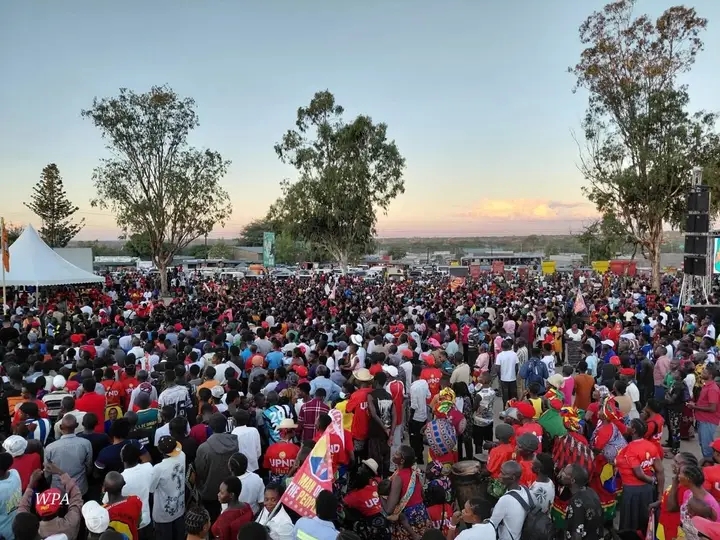
🇿🇲 EXPLAINER | Zambia’s New Public Gathering Bill: What It Actually Says
A wave of misinformation has followed Parliament’s passage of the Public Gathering Bill, 2026, with claims circulating online that Zambians will now require police permits to attend church services, weddings, funerals, parties, or traditional ceremonies. A closer reading of the Bill, however, shows that many of these claims are inaccurate or exaggerated.
The proposed law, which is yet to be assented to by President Hakainde Hichilema, seeks to repeal and replace the colonial-era Public Order Act of 1955. According to the memorandum attached to the Bill, its purpose is to “promote the protection of the freedom of assembly and association,” while also regulating public gatherings for “public order and public safety.”
One of the biggest misconceptions is that every gathering will now require police clearance. The Bill does not say that.
In fact, Section 3 explicitly exempts several categories of gatherings from the law’s notification requirements. These include religious meetings held in registered places of worship, funerals, traditional ceremonies, weddings, indoor meetings of companies and NGOs, and internal meetings of political parties held indoors to discuss party affairs.
This means ordinary church services, wedding ceremonies, funerals, and many indoor institutional meetings do not require notification under the proposed law. The widespread narrative that citizens will need police permits simply to worship, marry, or mourn is therefore not supported by the text of the Bill itself.
The law instead focuses primarily on what it defines as “public gatherings.” These include assemblies, demonstrations, meetings, or processions involving three or more people in public places such as roads, streets, markets, or open public spaces.
Another important shift is procedural.
Under the old Public Order Act, opposition parties and civil society groups frequently complained that the police treated notification as if it were a request for permission. The new Bill attempts to redefine this process. Section 6 states that organisers intending to hold a public gathering must notify police at least five days in advance, providing details such as location, purpose, estimated attendance, and safety arrangements.
However, the Bill also introduces timelines police must follow.
An authorised officer is required to acknowledge receipt of the notice within 24 hours. If no acknowledgment is issued within that period, the notice is automatically deemed received. Furthermore, police are required to approve or restrict the gathering within three days.
Significantly, Section 8(3) states that where notice is deemed received and authorities fail to issue approval or restriction, organisers may proceed with the gathering. This provision appears designed to address long-standing complaints where silence from police was effectively used to block opposition activities without formal refusal.
At the same time, the Bill still grants police broad powers to restrict gatherings under certain conditions. Authorities may intervene where another gathering has already been scheduled at the same venue, where the location creates crowd control concerns, where the event risks public disorder, or where public safety is threatened. Critics argue that these provisions, while framed around security, could still be vulnerable to selective interpretation depending on how they are enforced politically.
The legislation also strengthens restrictions around weapons and military-style attire at public gatherings. Individuals found carrying firearms or weapons outside lawful duty face heavy penalties, including imprisonment. Wearing attire associated with defence or security services at gatherings is also prohibited unless connected to theatre or official duty.
Another notable provision is media protection. Section 10 states that police, organisers, participants, and other persons must “respect and uphold the right of the media to monitor a public gathering.” In a country where journalists have at times faced restrictions at political events, this clause is likely to attract attention from press freedom advocates.
Politically, the Bill arrives at a sensitive moment.
Zambia is in an election season, Parliament is nearing dissolution, and public trust around assembly laws remains shaped by years of controversy under the old Public Order Act. Opposition parties and civil society organisations historically accused previous governments of using public order laws selectively against critics while allowing ruling party activities to proceed freely.
The significance of the new Bill therefore lies not only in what is written, but in how it will eventually be implemented. Supporters argue it modernises assembly regulation and removes colonial-era ambiguities. Critics remain cautious, warning that even well-worded legislation can become contentious if enforcement appears partisan.
For now, one fact is clear: the Bill does not require police permits for ordinary church services, weddings, funerals, or traditional ceremonies. Much of the confusion online stems from broad assumptions rather than the actual wording of the proposed law.
The real debate going forward will centre on enforcement, police discretion, and whether the new framework genuinely expands democratic space or merely reorganises existing powers under a different legal structure.
© The People’s Brief | Ollus R. Ndomu